
At a glance
“We’re seeing more of our reps hitting quota in 2026 versus 2025, and a big piece of that is Hyperbound.”
The problem
One small team, 1,000 reps
Klaviyo’s GTM motion went through a period of rapid change. The product expanded, the company pushed into new markets, and the playbook that had carried reps in the past stopped working in the present.
-
Reps were moving too quickly from discovery to demo. The discovery phase was thin, which made it harder to show how Klaviyo could meet a buyer’s needs.
-
Klaviyo had two populations to serve: junior sellers, some fresh out of college, and tenured sellers for whom what worked before wasn’t working now. One small enablement team served all 1,000 of them.
-
Whether a roleplay worked came down to which manager a rep had. That created messaging inconsistency and left enablement chasing managers and reps to confirm practice had happened.
Rolling out an updated Klaviyo narrative the old way would have taken weeks, and Cody wouldn’t even have visibility into whether the roleplays were happening. At a thousand reps, the old model wasn’t just slow. It was a bottleneck to the number.
“Practicing and pitching a new narrative had always been a blocker because it was so hard to scale.”
The solution
A voice reps believe
Plenty of AI roleplay tools can run a scenario, and Cody did his due diligence exploring all the options. His choice came down to one thing reps notice in the first ten seconds: whether the voice sounds real.
Practice moved from the calendar to kickoff.
At GTM kickoff, the team launched a fully updated Klaviyo narrative and built a custom Hyperbound scenario reps could run on their own, from discovery through the updated pitch. Instead of giving managers a month to schedule a roleplay, reps did it right there, at kickoff.
Then reps started asking for more. A culture formed around it. When a roleplay launches now, reps check the leaderboard and click into top reps’ calls to learn from them.
“With Hyperbound, we’re pulling people in. People are excited, and they’re finding me in the office asking for new roleplays.”
Kota collapsed roleplay creation from weeks to minutes.
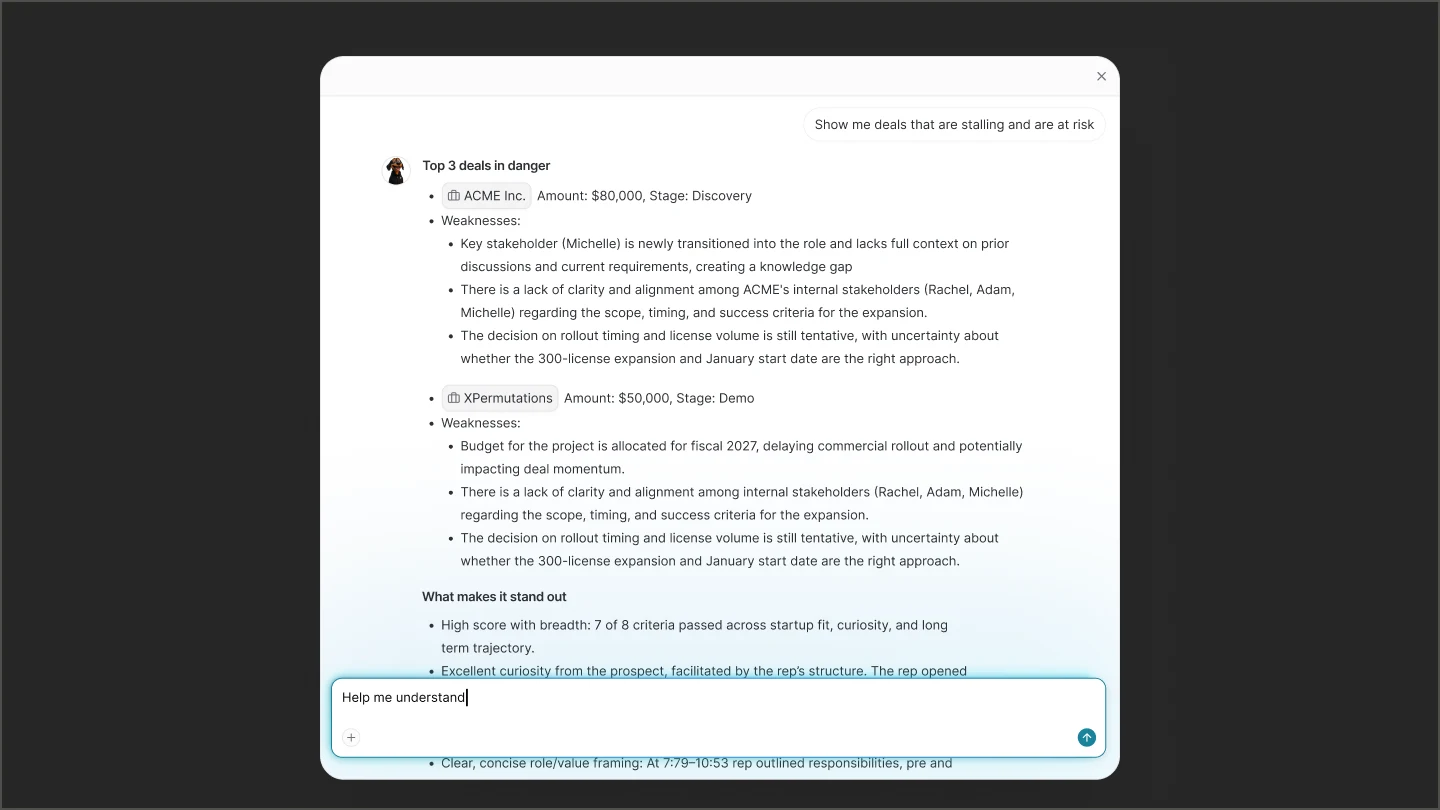
Kota, Hyperbound’s AI agent, builds roleplays quickly. The team feeds it a few resources they already have on hand, and it returns a near-perfect roleplay that needs only minor tweaks to be production-ready.
Before Hyperbound, building and fine-tuning a roleplay took days or weeks, and rolling out the kickoff narrative would have taken multiple weeks. Now the team feeds Kota a couple of existing resources and starts enabling the floor right away.
“That took us from spending days and weeks fine-tuning a roleplay the traditional way into five minutes of work.”
Reporting went from a project to a prompt.
By prompting Kota, Alec turns around reports with actionable insights. They cover where the team stands on performance, plus coaching, feedback, and what to do next.
Roleplays now take minutes to build, and reports take about 30 seconds.
“I can quickly turn around reports simply just by prompting Kota and it gives me very actionable insights.”
Managers got their time back.
The team is saving managers five to seven hours per week on roleplays and coaching, freeing them for higher-impact work instead of administering practice.
Before Hyperbound, enablement ran live sessions and relied on managers to follow up with roleplays, which depended on who the manager was. Now reps practice on their own.
“We’re saving managers anywhere from five to seven hours per week just on role plays and coaching.”
Hyperbound’s impact
More reps hitting quota
New-hire productivity per rep (PPR) climbed 42% YoY. Consistent, repeatable practice on the right conversations translated directly into ramping reps bringing in more revenue, sooner.
“What stood out about Hyperbound was the realism of the voice. Full stop. It genuinely felt like you were talking to a human, not an AI robot.”
New hires are ramping faster, with more confidence, and getting on the phones sooner. Faster ramp means reps start contributing to the number earlier, which compounds across a team of 1,000.
It also created consistency: every rep practiced the same scenario, the same messaging, the same standard. The system no longer depended on which manager ran the session.
At Klaviyo, the goal was never just better training. It was a GTM team that could scale with the business and keep hitting its number.
“Feeling that level of support from a vendor feels uncommon. It was such a relief, and we’ve felt empowered using the platform since day one.”