You've been there. The sales team is missing targets. Growth is stalling. So you sign a contract with a lead generation company that promises to deliver "highly qualified, warm leads ready to buy" directly to your inbox.
Two weeks later, you're staring at a CSV file containing 500 names, email addresses, and phone numbers of people who have never heard of your company and have no interest in your product. Congratulations—you've just paid thousands of dollars for what amounts to a glorified contact list scraped from LinkedIn.
Welcome to the dirty secret of B2B lead generation: the vast majority of "lead gen" companies are actually just data brokers wearing a fancy suit.
.png)
Before we go further, let's clear up what these terms actually mean:
True B2B Lead Generation is the process of sourcing and nurturing potential business customers for your products or services. This involves:
Data Brokering, on the other hand, is simply:
The critical difference? A genuine lead has shown some level of interest or engagement. A contact from a data broker is just a name on a list.
Here's your checklist to identify when a "lead generation" company is actually just selling you scraped data:
If a company guarantees a specific number of "warm leads" upfront, be skeptical. True interest cannot be predetermined—it must be cultivated. What you'll likely receive is a static list of contacts who match basic demographic criteria but have shown zero interest in your solution.
Ask how they find and qualify leads. If they dance around the question with marketing jargon or mention "proprietary AI algorithms" without specifics, they're likely just scraping data from LinkedIn, Apollo, or similar platforms.
Quality lead generation takes time. It requires research, engagement, and qualification. If a company promises thousands of leads in days, they're selling contacts, not leads.
A legitimate lead generation partner has a robust process that combines demographic and behavioral data to qualify leads. Ask them to define what a "qualified lead" means to them and how they measure it. If they can't articulate this clearly, run.
As one frustrated SaaS founder put it: "I went to desperate attempts to a few companies which ultimately sold me a CSV file from Apollo.io. My last experience was with a company which 'guaranteed' warm leads but again to no avail."
This is perhaps the most common scenario: paying premium prices for data you could have purchased directly from Apollo, ZoomInfo, or similar platforms at a fraction of the cost.
The damage from working with data brokers masquerading as lead gen companies goes beyond wasted budget:
When your sales team spends days calling unqualified contacts who have never heard of your company, morale plummets. As one sales leader shared with me: "My team went through 200 'qualified leads' and couldn't book a single meeting. They started questioning their abilities, but the problem wasn't them—it was the garbage data they were working with." This is why top teams invest in sales readiness. By using platforms like Hyperbound for AI-powered roleplays, reps can build resilience and sharpen their skills in a safe environment, ensuring they are prepared to convert the high-quality leads when they do come through.
Every hour your sales team spends on bad leads is an hour not spent on genuine opportunities. This dramatically increases your true customer acquisition cost, even if the initial lead purchase seemed affordable.
When you blast cold emails to thousands of unqualified contacts, you're not generating leads—you're generating irritation. This damages your brand reputation and can even result in your domain being flagged for spam.
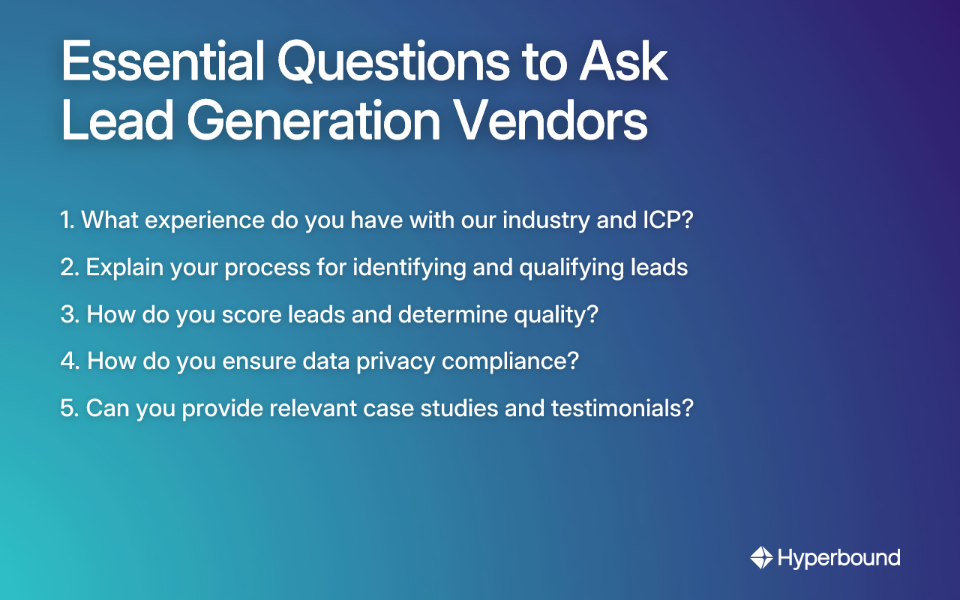
Before signing with any lead generation vendor, ask these critical questions:
Instead of wasting money on glorified contact lists, consider these more effective approaches:
The most successful B2B companies view lead generation as a core competency, not an outsourced function. This means:
As one Reddit user who had tested dozens of tools noted: "This is something I struggled with for months—there are just way too many tools popping up every week." After extensive testing, they found success with a streamlined stack:
The key is quality over quantity: "I trimmed everything down to three: uplead for solid data, instantly for automation, clay for enrichment/testing ideas."
Remember that a contact is not a lead until they've been nurtured. Implement a structured nurturing process that includes:
The explosion of generic lead generation tools has created an opportunity for niche-specific solutions. As one founder noted: "I think this is a huge market for developers, perhaps going more niche and target specific industries would see more traction earlier."
Look for providers that specialize in your specific industry and understand its unique challenges.
The hard truth is that there are no shortcuts to effective lead generation. The companies promising quick wins with "guaranteed warm leads" are almost always just selling you data you could get elsewhere for less.
Instead of chasing the illusion of easy leads, invest in building a sustainable pipeline:
The B2B landscape is saturated with data brokers masquerading as lead generation companies. By recognizing the difference and taking a more strategic approach, you'll not only save money but also build a sales pipeline that delivers sustainable growth.
Remember: You can't buy genuine interest—you have to earn it through value, relevance, and persistence.
The key difference is engagement and intent. True B2B lead generation involves sourcing and nurturing potential customers who have shown some level of interest in your solution, whereas data brokering is simply the act of selling lists of contact information. A genuine lead has been engaged, while a contact from a data broker is just a name on a list with no prior interaction.
A promise of "guaranteed warm leads" is a red flag because genuine interest cannot be manufactured on demand; it must be cultivated through a process of engagement and qualification. Companies that guarantee a specific number of leads are often just relabeling a static contact list that meets basic demographic criteria but lacks any real buying intent.
You can spot a data broker by looking for vague sourcing methods, promises of unrealistic speed and volume, and the lack of a clear lead qualification process. Ask them to detail their methodology. If they use buzzwords like "proprietary AI" without specifics, promise thousands of leads in a few days, or can't define what a "qualified lead" means to them, they are likely selling you a scraped list.
The biggest risks are wasting your budget, demoralizing your sales team, inflating customer acquisition costs (CAC), and damaging your brand's reputation. When your sales team spends all its time on unqualified contacts who have never heard of you, morale plummets. Furthermore, mass emailing cold lists can get your domain flagged for spam, harming your long-term outreach efforts.
Instead of buying lists, you should focus on building a sustainable in-house lead generation capability. This involves investing in a skilled SDR team, using high-quality tools for data and outreach, and implementing a structured nurturing process with personalized content. Treating lead generation as a core competency yields far better long-term results.
The most important questions should focus on their process, experience, and results. Ask them to walk you through their exact process for identifying and qualifying a lead, inquire about their experience in your specific industry, and request case studies or client testimonials with concrete metrics like meeting conversion rates or pipeline generated.










Use Cases
Legal