You've just landed your dream sales role. Excitement, ambition, and a touch of nervousness fill your mind as you prepare for day one. Then reality hits: a hastily assembled list of tasks with no instructions, convoluted software systems with zero training, and the sinking realization that you're completely on your own.
"90 days into my 1st Sales job and I haven't had any real or formal training. Day 1 consisted of a list of things to do with no instructions on where or how to get the info being requested," laments one sales professional on Reddit.
Meanwhile, another fortunate rep shares a drastically different experience: "Mine does! I had 7 (!!!!) weeks of onboarding and training. My company takes a ton of pride in its training."
This stark contrast reveals an uncomfortable truth in the sales world: quality onboarding is far from universal, despite its proven impact on performance, retention, and revenue.
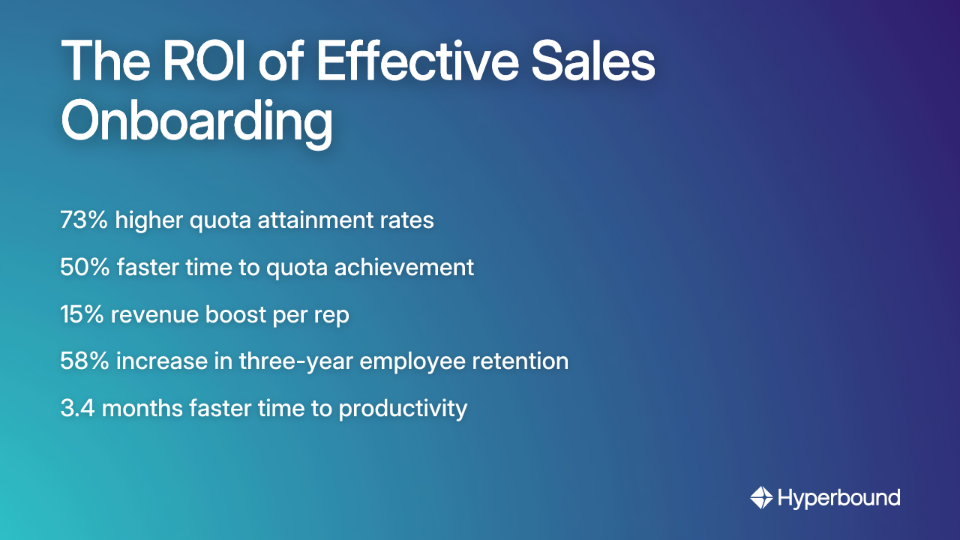
Before diving into what great onboarding looks like, let's understand why it matters through hard numbers:
The message is clear: comprehensive sales onboarding isn't a nice-to-have luxury—it's a strategic investment with measurable ROI.
As one sales veteran on Reddit bluntly advises: "If any young people are reading this, bail ASAP if you don't receive sales training, don't even stay for a single month."
Let's examine the core components that separate exceptional onboarding programs from the "half-hearted product training" many companies offer.
Exceptional onboarding isn't a one-week information dump; it's a carefully phased journey that gradually builds competence and confidence. Here's what this framework typically includes:
Days 1-30: Building the Foundation
Days 31-60: Practical Application & Skill Building
Days 61-90: Driving Independence & Measured Performance
No rep should feel like they're on an island. Elite onboarding programs leverage two types of guidance:
The Buddy System
Formal Sales Coaching
As one sales rep who experienced great onboarding shared, "My company takes a ton of pride in its training. I had an entire week of just learning the company and the product. Then two weeks where I shadowed other reps. Then four weeks where I was running my own calls with someone else on the line to help if needed."
Product knowledge is necessary but insufficient. Elite programs invest in formal sales methodology training that gives reps a repeatable framework for every stage of the sales process.
This might include:
Unlike the rep who lamented, "I hated my job, A LOT because I was not given any sales training until I learned everything myself from books," properly onboarded reps receive structured guidance in proven methodologies.

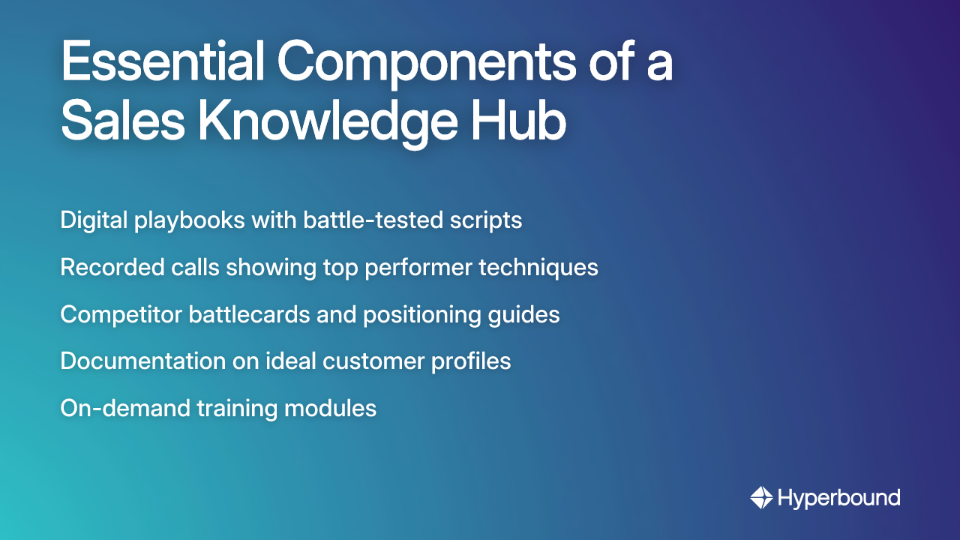
Effective onboarding programs provide new hires with a single source of truth containing:
Great onboarding isn't static—it evolves based on feedback and performance data. The best programs track:
Leveraging an AI Coaching platform provides a centralized dashboard to track these metrics, correlating training activities with performance outcomes to continuously refine the onboarding process.
While this article focuses on initial onboarding, elite sales organizations recognize that development never truly ends. The best companies provide:
Whether you're evaluating a potential employer or designing your team's onboarding program, recognize that proper sales training isn't a luxury—it's an essential investment with clear ROI.
As a sales professional, you deserve more than being thrown into the deep end with a list of tasks and no guidance. As a sales leader, your organization deserves the competitive advantage that comes from properly developing your talent.
The stark difference between "I almost want to cry finding all this out. I can't believe I have been put through such hell" and "I had 7 weeks of onboarding and training" isn't just about employee satisfaction—it's about building a sustainable, high-performing sales organization that consistently meets and exceeds its targets.
Demand better. Build better. The future of your sales career or organization depends on it.
Sales onboarding is a structured process designed to integrate new sales representatives into a company, equipping them with the knowledge, skills, and tools needed for success. It is crucial because effective onboarding directly impacts performance, retention, and revenue, leading to higher quota attainment, faster ramp-up times, and a significant boost in long-term employee retention.
A comprehensive sales onboarding process typically lasts for 90 days. This duration is often structured as a 30-60-90 day plan, allowing new hires to gradually build their skills and confidence. The first 30 days focus on foundational knowledge, the next 30 days on practical application and skill-building, and the final 30 days on driving independence and performance.
The key elements of a world-class sales onboarding program include a structured 30-60-90 day framework, a mentorship system with both a peer "buddy" and a formal sales coach, formalized sales methodology training (like Sandler or Dale Carnegie), a centralized knowledge hub with playbooks and call recordings, and clear metrics to measure success and drive continuous improvement.
A 30-60-90 day plan is a phased roadmap that outlines specific goals, training activities, and performance expectations for a new sales representative's first three months. The goal is to provide a structured journey from foundational learning (Days 1-30) to practical application (Days 31-60) and finally to independent performance (Days 61-90), ensuring a smooth and effective transition into the role.
If your company offers poor or nonexistent sales training, you should first try to be proactive by seeking out resources independently, such as books, online courses, and industry podcasts. Find an informal mentor within the company and ask to shadow top performers. However, a lack of investment in training can be a major red flag, so you should also evaluate if the company is a good long-term fit for your career growth.
A company can measure the return on investment (ROI) of its sales onboarding by tracking key performance indicators (KPIs). These include metrics like the time it takes for a new hire to make their first sale, the time to full productivity (ramp time), first-quarter quota attainment rates, and new hire retention rates at 3, 6, and 12-month intervals. Comparing these metrics before and after implementing or improving an onboarding program clearly demonstrates its value.











Use Cases
Legal