You're about to spend four hours making cold calls. Your stomach tightens. You've memorized a script, but it feels forced and inauthentic. You know prospects can sense that fakeness from a mile away. And deep down, you dread the inevitable awkward dance of false pleasantries before getting to the point.
What if there was a better way?
Let's acknowledge a painful truth: nobody enjoys cold calls. Not you, the Business Development Representative (BDR) making them, and certainly not the prospect receiving them.
As one sales professional put it: "The rudest action of the whole transaction is calling someone random out of nowhere." 1 When you interrupt someone's day without warning, typical small talk feels "disingenuous unless I personally know you." 1
Traditional sales tactics—creating false urgency, manipulating prices, or trying to trick prospects into listening—only make matters worse. They damage trust from the start and make your job harder.
Enter the "Upfront Method"—a brutally honest, transparency-first approach to cold calling. Instead of hiding the nature of your call, you acknowledge it immediately. Rather than trying to keep prospects on the line as long as possible, you race through the "no's" to find genuine interest.
This guide will walk you through this surprisingly effective method that builds trust through radical candor. And we'll show you how you can master it without risking live deals.
The foundation of modern sales isn't cleverness or persuasion—it's trust. And in an era of skepticism, transparency isn't just virtuous; it's a competitive advantage:
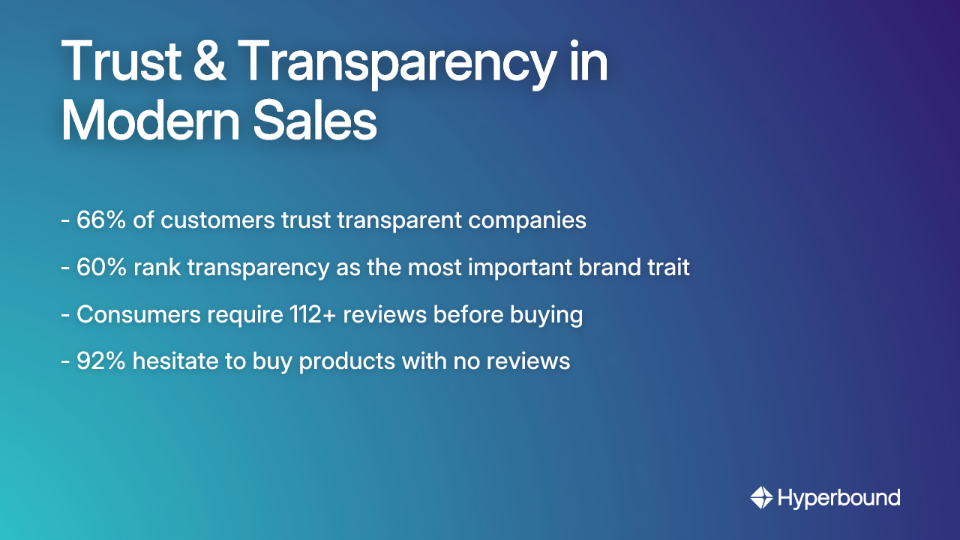
When you start a call with "full transparency, this is a bit of a cold call," you immediately disarm the prospect. You've acknowledged the elephant in the room—the social awkwardness of an uninvited call—which instantly makes you more human and trustworthy.
As one successful BDR explains, "I'm an advocate of just being straightforward. I try to meet them on a human level—not trick them into listening to me." 3
By leading with honesty, you're also setting the stage for social proof to be effective later in your pitch. After all, consumers trust other customers far more than they trust you:
When your opening is honest, your subsequent claims and testimonials become more believable.
The cornerstone of the Upfront Method is the "Upfront Contract"—a verbal agreement established at the beginning of your call that outlines the purpose, agenda, timing, and potential outcomes for both parties.
Here's how to create an effective Upfront Contract in three simple steps:
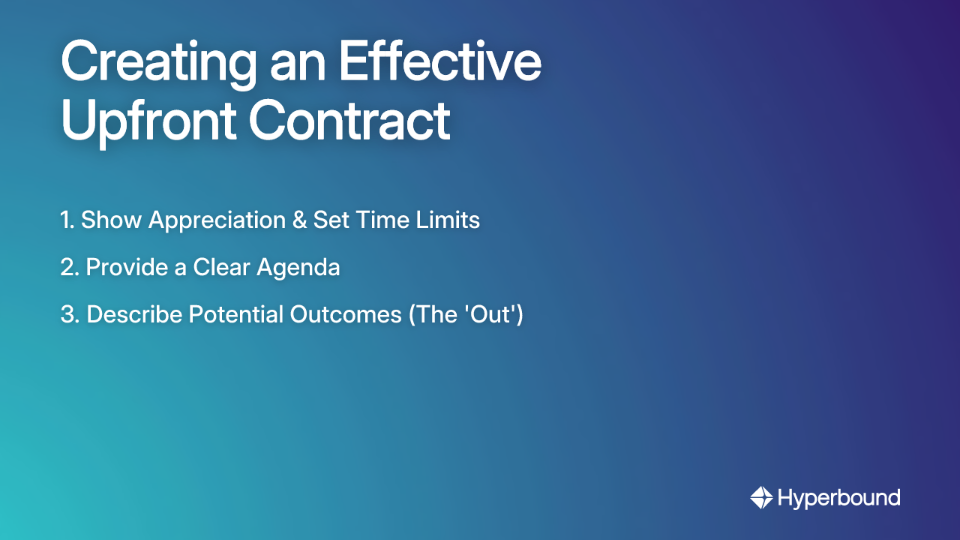
Here's a complete Upfront Contract example:
"Thanks for taking my call, John. Full transparency, this is a cold call. Can I take 60 seconds to explain why our solution might be valuable for your team? If it doesn't sound relevant after that, just say so and I'll get out of your hair. If it does, we can schedule a proper conversation. Sound fair?"
This approach respects their time while giving you permission to deliver your value proposition without resistance.
As one sales veteran notes, "There's no one-size-fits-all script." 3 However, these battle-tested openers exemplify the Upfront Method's principles:
"Hey [Prospect's Name], full transparency, this is a bit of a cold call. Would you like to hang up now or roll the dice for a minute?"
Why it works: It uses humor and honesty to break the pattern. As one BDR explained, it "injects a little humor around the fact that if it was socially acceptable they'd prefer to just hang up on you." 3
"Hey [Prospect's Name], I know you weren't expecting my call. Do you have a moment? I promise to be brief."
Why it works: It acknowledges the interruption while respecting their time—a key element of the upfront approach.
"Hi John, just want to start off by saying this is a cold call, but if you give me 60 seconds I can explain why [Your Solution] could be valuable for [Prospect's Company]." 1
Why it works: It combines honesty with a clear value proposition and a defined time commitment.

To master the Upfront Method, you must avoid these common mistakes:
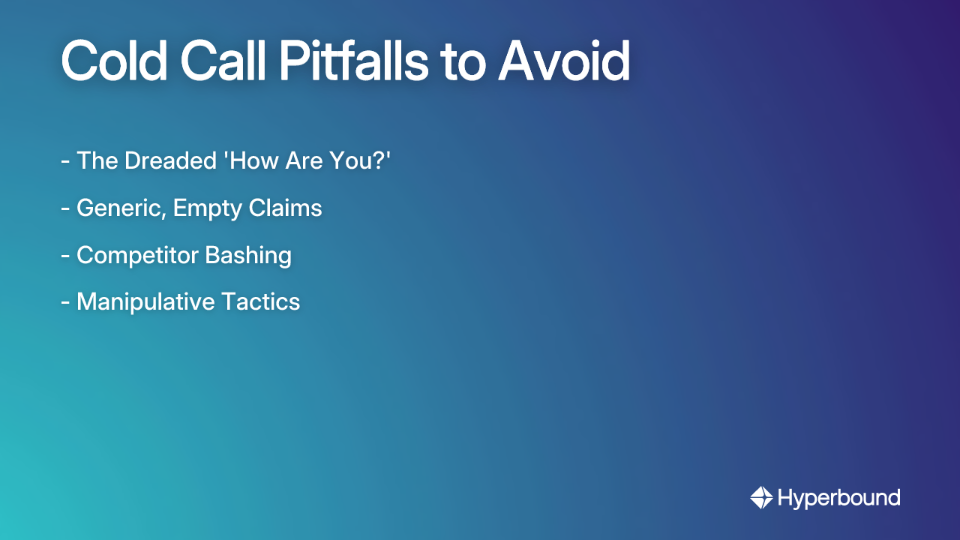
This seemingly polite question is a trap in a cold call context. Prospects immediately see it as "inauthentic and 'salesy'" because they know you have an agenda. 1 It's a pattern they associate with unwanted sales calls, putting their guard up instantly.
As one prospect puts it: "When someone cold calls me and interrupts my day, the question feels very fake." 1
Avoid statements like "we're the leading providers of..." without proof. They sound arrogant and meaningless to prospects who hear similar claims daily.
Criticizing competitors reflects poorly on you and your company, breaking the trust you're building with your upfront approach.
Avoid creating false urgency ("the sale is ending tomorrow") or manipulating prices. These sleazy tactics might yield short-term results but destroy long-term trust and referral potential.
The Upfront Method is more than a script—it's a philosophy of respecting your prospect's intelligence and time. It's about being human first, salesperson second.
By acknowledging the cold call nature upfront, setting clear expectations with a permission opener, and racing to the yes through honest conversation, you'll build trust faster and spend your valuable time with prospects who are genuinely interested.
For BDRs managing their CRM pipeline, this approach ensures higher-quality leads enter your rapport window. Your gatekeeper interactions improve when you're straightforward about your intentions. And when you finally deliver your value prop and pitch, it lands with more impact because you've established authenticity from the start.
Try one of these upfront opening lines on your next 10 calls. Embrace the "no's" as a way to clear the path to resounding "yeses." The goal isn't just to close deals but to build a reputation for integrity that pays dividends throughout your career.
After all, in a profession where trust is everything, brutal honesty might just be your greatest competitive advantage.

The Upfront Method is a cold calling technique that prioritizes transparency and honesty by immediately acknowledging the nature of the call. Instead of using traditional small talk or trying to disguise the call's purpose, this method involves stating upfront that it's a cold call. This builds trust, disarms the prospect, and sets clear expectations for the conversation, often through a verbal "Upfront Contract."
Being transparent is more effective because it immediately builds trust and disarms the prospect's natural skepticism towards unexpected sales calls. In an era where customers value authenticity, acknowledging the awkwardness of a cold call makes you more human and relatable. It moves the conversation away from a manipulative sales pitch and towards a genuine discussion, increasing the chances that the prospect will listen to your value proposition.
To create an Upfront Contract, you thank the prospect, state the call's expected length, provide a clear agenda, and offer them an easy way to end the call if they aren't interested. A simple script could be: "Thanks for taking my call. This will only take 60 seconds. I want to explain how we help companies like yours with [problem], and then you can tell me if it's relevant. If not, no problem at all. Sound fair?" This respects their time and gives them control, which lowers their defenses.
The biggest mistakes to avoid are starting with inauthentic pleasantries like "How are you?", making generic claims without proof, bad-mouthing competitors, and using manipulative tactics. These actions directly contradict the method's core principle of honesty. Sticking to radical candor and avoiding these pitfalls is crucial for the Upfront Method to succeed.
If a prospect rejects you, you should respect their decision and move on. The goal of this method isn't to eliminate rejection but to get through the "no's" more quickly. A quick "no" is a positive outcome because it saves you time and allows you to focus your energy on prospects who have a genuine interest.
You can practice the Upfront Method in a risk-free environment using AI-powered sales roleplay and coaching platforms. Tools like Hyperbound allow you to simulate realistic cold call scenarios with AI personas. You can practice your honest openers, handle objections, and receive instant, personalized feedback to build confidence before applying the technique to actual prospects.










Use Cases
Legal