
In today's frenzied sales environment, enablement leaders face mounting pressure to prove ROI while navigating an increasingly complex tech landscape. With skepticism about AI tools running high (as one sales leader put it, "a lot of people smoking hope-i-um on AI right now"), and teams drowning in disjointed tools that don't talk to each other, the challenge is clear: how do we create systems that actually deliver results?
The modern sales organization can't afford to have reps "constantly stuck waiting on technical validation or a deck tweak" that kills deal momentum. The goal is simple but elusive – get reps "spending less time chasing decks and more time running calls."
The future of sales enablement isn't about buying another point solution to add to your already bloated tech stack. It's about building interconnected, intelligent automation loops – self-improving systems that link process, data, and coaching to drive scalable, consistent performance.
Let's explore the five strategic automation loops that forward-thinking sales enablement leaders are already building for 2026.
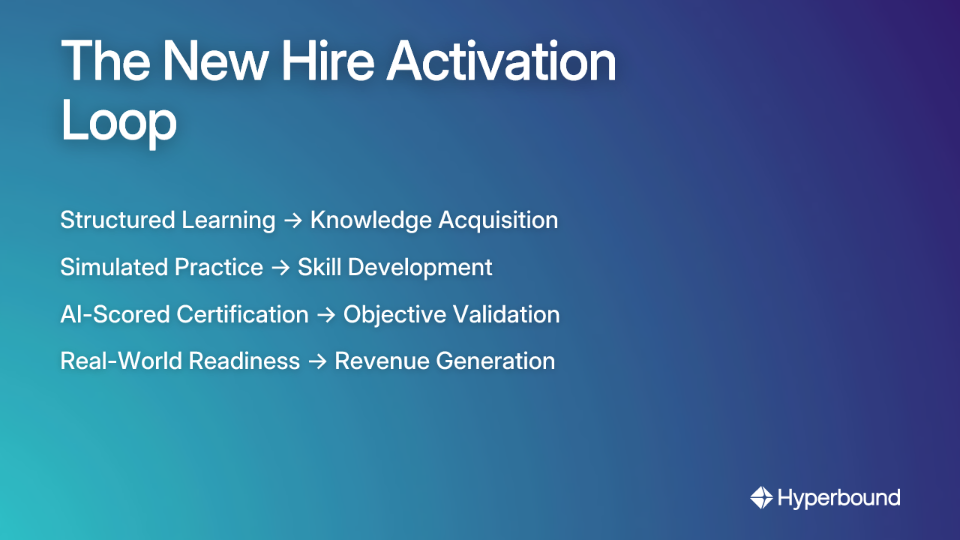
Traditional onboarding often amounts to a firehose of information with little practical application, leading to painfully long ramp times. By 2026, leading organizations will have replaced this with a systematic activation loop:
Structured Learning → Simulated Practice → AI-Scored Certification → Real-World Readiness
How to build it:
Impact: Companies implementing this loop report reducing ramp time by up to 40% while dramatically improving first-year quota attainment rates.
As one Reddit user bluntly stated, "the best tool is still the sales manager/leader who coaches on a regular basis." The problem? Managers are a bottleneck. They don't have time to review every call, and feedback often comes days later when the moment has passed.
By 2026, leading organizations will have automated this loop:
Live Sales Call → Automated AI Analysis → Instant, Personalized Feedback → Targeted Practice → Improved Performance
How to build it:
Sales reps waste valuable selling time "chasing decks" or searching for information. Content lives in silos and is hard to find when it matters most. By 2026, leading organizations will have solved this with a knowledge flow loop:
Rep Action in CRM → Trigger → Contextual Guidance/Content Delivered → Rep Applies Knowledge → Deal Progresses
How to build it:
Impact: Companies implementing this loop report reps spending 60% less time searching for information and up to 25% more time in active selling activities.
Reps are bogged down by manual data entry, call logging, and follow-up tasks. One sales leader mentioned their frustration with tools that don't automatically handle "notes + CRM sync." By 2026, leading organizations will have automated the operational aspects of selling:
Customer Interaction → Automated Data Capture → CRM Updated Automatically → Follow-up Tasks Created → Rep Focuses on Next Sale
How to build it:
Impact: Organizations implementing this loop report that reps gain back 5-10 hours per week of selling time previously lost to administrative tasks.
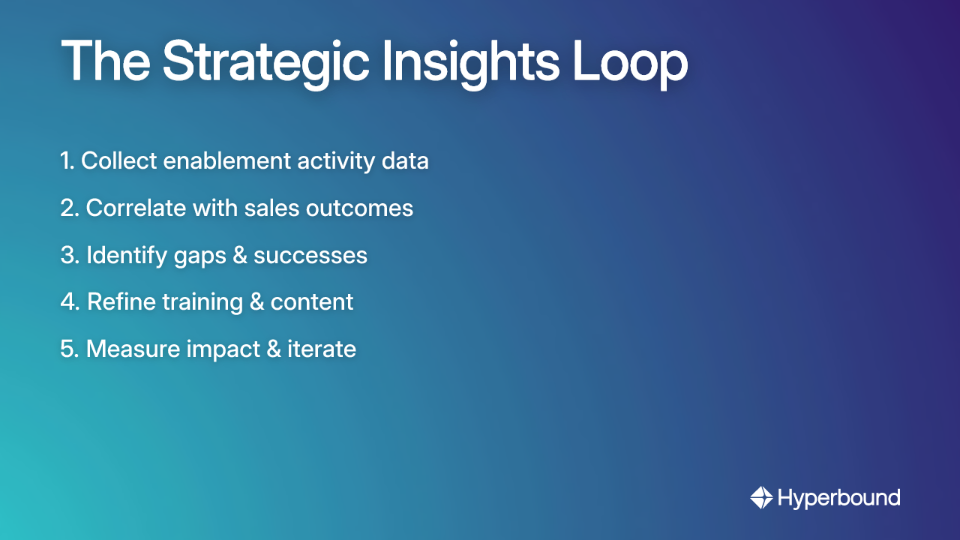
Enablement has traditionally struggled to prove its ROI without clear metrics. Leaders need data to show that their initiatives are working, addressing the need for "analytics I need to feel confident."
By 2026, leading organizations will have closed this loop:
Enablement Activity Data → Correlate with Sales Outcomes → Identify Gaps & Successes → Refine Training & Content → Measure Impact
How to build it:
Impact: Companies using structured feedback loops can see up to a 30% increase in team performance through targeted enablement initiatives.
These five automation loops aren't independent tactics; they form a unified system for building a high-performance revenue team. Each loop reinforces the others, creating a compounding effect on sales effectiveness.
But let's address the elephant in the room. As one sales leader wisely noted, "If anyone thinks a tool is going to solve the problem without human connection, then that's the real issue." These automation loops don't replace coaching; they scale it. They handle the repetitive, data-heavy tasks so managers can be better human coaches, focusing on strategy and complex skill development rather than data entry and call reviews.
The future belongs to sales enablement leaders who can orchestrate these intelligent systems while preserving the human elements that make great sales teams special. With the right technology foundation, you can build these loops today and be ready for 2026 and beyond.
If you're ready to see how AI-powered roleplays and coaching can activate your onboarding and skill development loops, explore Hyperbound's platform to see how you can scale excellence across your team. Their approach to AI Sales Coaching focuses on enhancing human capability rather than replacing it, perfectly aligning with the automation loops approach outlined here.
Remember: the goal isn't to automate sales enablement for its own sake—it's to create self-improving systems that free your team to do what humans do best while technology handles the rest.










Use Cases
Legal