You've just left your third cold call of the day. As you slide into your car, you realize you're struggling to remember the name of the gatekeeper who seemed particularly helpful, or whether the decision maker mentioned their budget constraints or just timeline concerns. Was it the second prospect who mentioned they were unhappy with their current print media vendor, or was that yesterday's lead?
If this scenario sounds painfully familiar, you're not alone. Field sales reps routinely juggle dozens of touchpoints, conversations, and potential leads—all while trying to build meaningful relationships that convert to revenue.
The truth is, no matter how sharp your memory, without a robust note-taking system, crucial information slips away, follow-ups fall through the cracks, and your ROI suffers. What separates top-performing field reps from the rest isn't just charm or persistence—it's their ability to capture, organize, and leverage every piece of intelligence gathered during cold calls and walk-ins.
Field sales presents unique challenges that make systematic note-taking non-negotiable:

Beyond just remembering details, a good note-taking system transforms your approach from merely "hunting" for immediate sales to strategically "farming" long-term B2B relationships. As one experienced rep put it, "Tracking your activities in the field is crucial for accessing gathered information later. The info you gather is useless if you don't have a way to access and utilize it later."
This systematic approach is especially vital when facing gatekeepers who are trained to turn away sales professionals. Your notes become the foundation for building rapport on return visits, allowing you to reference previous conversations and demonstrate genuine interest in their business.
When it comes to capturing information in the field, sales reps face a fundamental choice: go digital, stick with pen and paper, or adopt a hybrid approach?
Pros:
Cons:
Pros:
Cons:
While basic note-taking apps are a start, modern field sales reps are turning to more advanced solutions that don't just record information, but analyze it.

Many successful field sales reps employ a strategic hybrid approach:
This combines the relationship-building advantages of physical note-taking with the organizational power of digital systems.
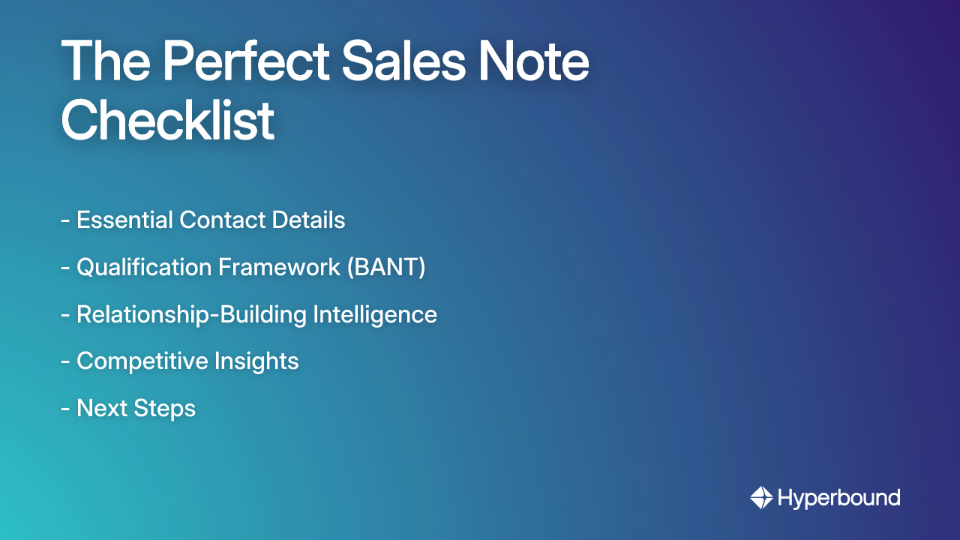
Whether you're making a cold call or conducting a walk-in, knowing exactly what information to record is crucial. Here's your comprehensive checklist:
Structure your note-taking using the proven BANT framework:
Remember, the goal during initial interactions isn't typically to close a sale, but to generate warm leads for future conversion. Your notes should support this longer-term relationship-building approach.
Having great notes is only half the battle—you need a system to organize them for easy retrieval and actionable follow-up.
Don't just dump notes into your CRM—categorize contacts systematically:
The ultimate purpose of your note-taking system is to convert intelligence into revenue. Here's how to make that happen:
In field sales, where building relationships through cold calling and walk-ins remains essential despite technological advances, your note-taking system isn't just an administrative task—it's your strategic advantage.
The best system is one you'll actually use consistently. Start simple, perhaps with just a hybrid approach of jotting notes during meetings and dictating them into your CRM afterward. As you grow more comfortable, layer in additional organization techniques like the BANT framework or more sophisticated tagging systems.
Remember, the goal isn't just data collection—it's building the foundation for meaningful relationships that convert inbound leads to loyal customers. When a prospect feels genuinely understood because you remembered their challenges, preferences, and even personal details from a casual conversation weeks ago, you've moved from salesperson to trusted advisor.
Your notes aren't just recording the past—they're creating your future sales success.
Effective note-taking is crucial because it prevents the loss of vital prospect information, which is essential for building relationships and closing deals. Human memory is unreliable, with studies showing we forget up to 70% of new information within 24 hours. A systematic approach to capturing details about a prospect's needs, budget, and personal rapport-building information ensures accurate follow-ups and turns initial conversations into long-term revenue.
The best method is often a hybrid approach that combines the strengths of both physical and digital note-taking. Using a physical notebook during a meeting can feel more personal and less intrusive, helping to build rapport. Immediately after, using a digital tool like a voice-to-text app to dictate detailed notes into your CRM ensures the information is searchable, shareable, and securely stored for future use.
To take notes without appearing distracted, use a small, professional notebook for jotting down only key phrases and data points. Maintain frequent eye contact and active listening cues, such as nodding. This approach signals engagement, whereas typing on a laptop or phone can create a physical and psychological barrier between you and the prospect.
Every sales note should include five key categories of information: essential contact details (name, title, company), qualification data using a framework like BANT (Budget, Authority, Need, Timeline), relationship-building intelligence (personal details, common connections), competitive insights (current vendors, pain points), and clear next steps (follow-up actions, scheduled dates).
The fastest way to capture notes on the go is by using a voice-to-text or voice-to-CRM application on your smartphone. Dictating notes immediately after leaving a prospect's office is up to three times faster than typing and ensures that crucial details are recorded while they are still fresh in your memory, significantly reducing manual data entry time.
The BANT framework (Budget, Authority, Need, Timeline) improves sales notes by providing a structured system for qualifying leads. It forces you to ask and record the most critical information needed to determine if a prospect is a viable opportunity. Organizing your notes around these four pillars ensures you have a clear picture of the deal's potential and what steps are needed to move it forward.
You turn notes into more sales by establishing a system to review, analyze, and act on the intelligence you've gathered. Regularly review notes to identify patterns in prospect needs and objections. Use this data to refine your sales pitch, personalize your follow-ups, and share insights with your team. By connecting your notes to your CRM and setting automated reminders, you ensure that no opportunity falls through the cracks.











Use Cases
Legal