You've set up a sleek CRM, invested in three different lead generation platforms, subscribed to an AI email sequencer, purchased a conversational chatbot, and signed up for that new data enrichment tool everyone's talking about. Yet somehow, your sales team is spending more time managing tools than actually selling. Sound familiar?
Every week, another "game-changing" sales tool launches with promises of 10x results. The reality? Your sales reps are drowning in logins, juggling between platforms, and spending precious hours on data entry instead of customer conversations.
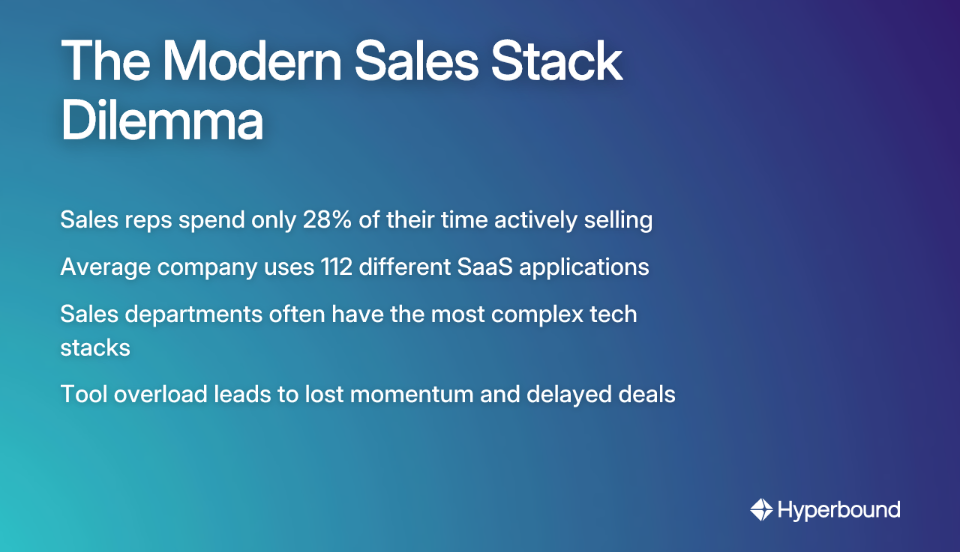
The numbers paint a stark picture: Sales professionals spend only 28% of their time actively selling, according to Clari. The rest is consumed by administrative tasks, much of it navigating a disconnected tech stack. Meanwhile, the average company uses 112 different SaaS applications, with sales departments often being the biggest consumers.
This isn't just about wasted subscription fees. It's about lost momentum, delayed deals, and pulling your best closers away from what they do best: selling.
Before you add another tool to your stack (or decide which ones to cut), apply this framework to move from gut-feeling decisions to data-driven choices:
Why it matters: Many "Lead Gen companies are just data brokers" saturating the market, as one sales leader noted on Reddit. Garbage in, garbage out – high-quality data is the foundation of effective B2B prospecting.
What to look for:
Why it matters: Disconnected tools create data silos and force manual work. As one sales rep complained, "Most sales guys didn't like CRMs as they are complex but managers seem overly obsessed with them."
What to look for:
Why it matters: Beyond subscription costs, you need to measure impact on your bottom line. As one sales professional observed about video outreach: "Vids are great for getting opens and responses but don't close deals."
What to look for:
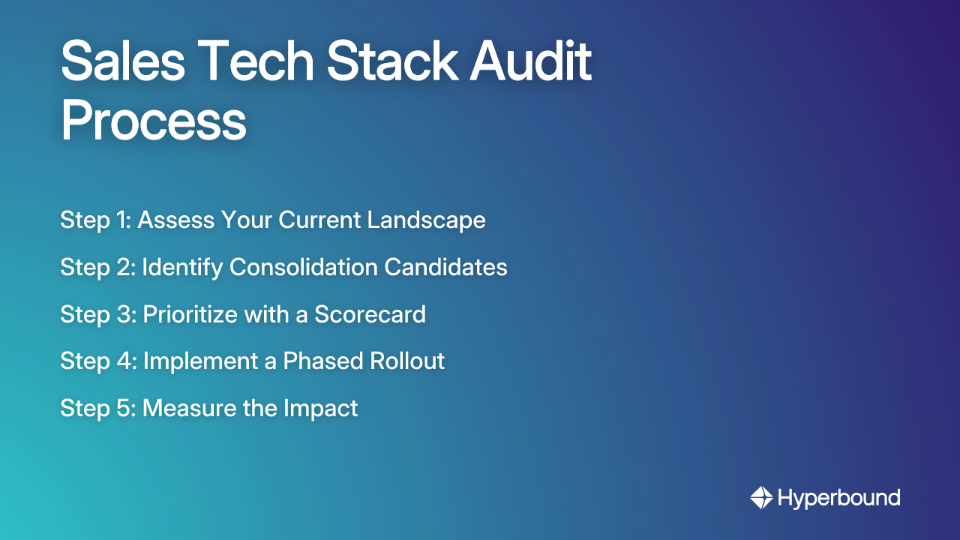
Ready to trim the fat? Follow this process to identify which tools stay and which must go:
Create a comprehensive inventory of your sales tech stack:
This addresses a common pain point that "tech sales feels like it's choking on its own tools" by giving you clarity on what's actually being used.
Look for these red flags:
Create an objective scorecard to evaluate each tool against your specific needs:
CriteriaWeightScore (1-10)Weighted ScoreFunctionality25%??Integration20%??User Experience15%??Data Quality15%??Cost-Effectiveness15%??Security/Compliance10%??
This approach transforms subjective opinions into quantifiable decisions, helping you prioritize which tools to keep, replace, or eliminate.
One SaaS founder struggling with tool overload shared how they "trimmed everything down to three: Uplead for solid data, Instantly for automation, Clay for enrichment/testing ideas." Their philosophy became "fewer but cleaner leads over a flood of unqualified ones."
Another B2B software company reduced their sales stack from 12 tools to just 4 core platforms:
The results were transformative:
The key wasn't finding perfect tools—it was creating a streamlined, integrated ecosystem where data flowed seamlessly between fewer, better solutions.
As one sales professional wisely noted, "success is largely based on what you're selling and who you're selling to." Here's how to customize your approach:
Focus on: All-in-one platforms, ease of use, and affordability.
Essential Stack:
Optional Add-ons:
Focus on: Scalability, integration depth, and specialized features.
Essential Stack:
Focus on: Advanced analytics, security, compliance, and deep customization.
Essential Stack:
The goal isn't zero tools. It's the right tools. A lean, integrated, and high-performing tech stack doesn't just save money—it gives your sales team its most valuable resource back: time to sell.
A sales tech stack is the collection of digital tools and software your sales team uses to manage and execute the sales process. This includes everything from your Customer Relationship Management (CRM) system to lead generation platforms, email automation tools, and sales intelligence software. The goal of a well-designed stack is to make the sales process more efficient, data-driven, and effective.
Auditing your sales tech stack is crucial for reducing costs, eliminating inefficiencies, and increasing your team's selling time. Over time, stacks can become bloated with redundant, underused, or disconnected tools. A regular audit helps you identify and remove this "tool bloat," ensuring every tool provides a clear ROI and actually helps your team close more deals.
It's best practice to conduct a comprehensive audit of your sales tech stack at least once a year. An annual audit is essential for strategic planning and budgeting. Additionally, performing smaller, quarterly check-ins can help you monitor tool adoption rates and address any emerging integration issues before they become major problems.
Key signs of a bloated tech stack include your sales team spending less than 30% of their time selling, complaints about excessive data entry, low adoption rates for certain tools, and multiple tools performing the same function. If you're paying for several tools with overlapping features or if your team is constantly switching between disconnected apps, your stack is likely bloated.
To ensure adoption, involve your sales team in the selection process, provide comprehensive and tailored training, and clearly demonstrate how the new tool will save them time or help them sell more effectively. Securing their buy-in is key. Start by gathering their feedback on existing pain points, celebrate early wins with the new tool, and create an ongoing feedback loop to address issues quickly.
The most important tool in any sales stack is the Customer Relationship Management (CRM) system. The CRM should act as the central hub or "single source of truth" for all customer data and interactions. All other tools—for prospecting, engagement, and analytics—should integrate deeply with the CRM to ensure data flows seamlessly and reps have a complete view of the customer journey.

Remember the words of one successful sales leader who conquered tool overload: "I was drowning in tools that promised the world but fell short. Now I focus on quality over quantity—fewer, better tools that actually deliver results."
Your sales team doesn't need another shiny tool. They need a life raft that lets them focus on what matters: building relationships and closing deals. Start your tech stack decluttering journey today.











Use Cases
Legal