
You've just wrapped up another sales call. It felt good—you explained your solution clearly, addressed all the features, and even threw in some case studies. But then... radio silence. No follow-up meeting scheduled. No returned emails. Another promising deal gone cold.
What went wrong?
If you're like most sales reps, you're probably talking too much and listening too little. While your sales team might be flying blind without concrete data on what's happening during calls, research now reveals there's a specific talk-to-listen ratio that separates winning deals from losing ones. And it might surprise you how dramatically this single metric impacts your conversion rates.
According to groundbreaking research by Gong.io analyzing over 326,000 B2B sales calls, the optimal talk-to-listen ratio for top-performing sellers is 43% talking to 57% listening.
This stands in stark contrast to the current average sales call, which is 60% talking to 40% listening. This 17% gap represents the difference between closing deals and watching them slip away.
The data gets even more revealing:

What's most alarming? Most sales teams don't even track this critical metric. They're developing complex sales methodologies and optimizing every stage of their funnel while ignoring the fundamental communication imbalance that's sabotaging their efforts.
Before we explore solutions, it's important to understand why so many reps fall into the over-talking trap:
Signs You're Over-Talking:
The good news is that improving your talk-to-listen ratio doesn't require a complete personality overhaul. It demands a practical toolkit of techniques you can implement immediately:
After a buyer finishes speaking, pause for two full seconds before responding. This small gap serves multiple purposes:
This technique alone can transform your conversations, especially when handling objections or discussing complex topics.
Real-time coaching experts recommend this simple but effective framework:
This framework creates a universal language for your sales team to discuss and improve listening skills, making data-driven coaching possible.
Taking notes during calls serves dual purposes:
Don't try to capture everything. Instead, jot down:
Silence feels uncomfortable, but it's a powerful tool in sales conversations. When you ask an important question, resist the urge to rescue prospects from silence. Count to five in your head if necessary.
This technique is particularly effective after asking about challenges, budget considerations, or when discussing objections. The most valuable insights often come after a thoughtful pause.
Contrary to popular belief, asking more questions doesn't lead to better results. Gong's research revealed that successful sellers ask about 15-16 questions per call, while reps who lose deals tend to ask about 20 questions.
This surprising finding highlights that the quality and timing of questions matter more than quantity. When sales reps mishandle objections, it's often because they haven't asked the right questions earlier in the process.
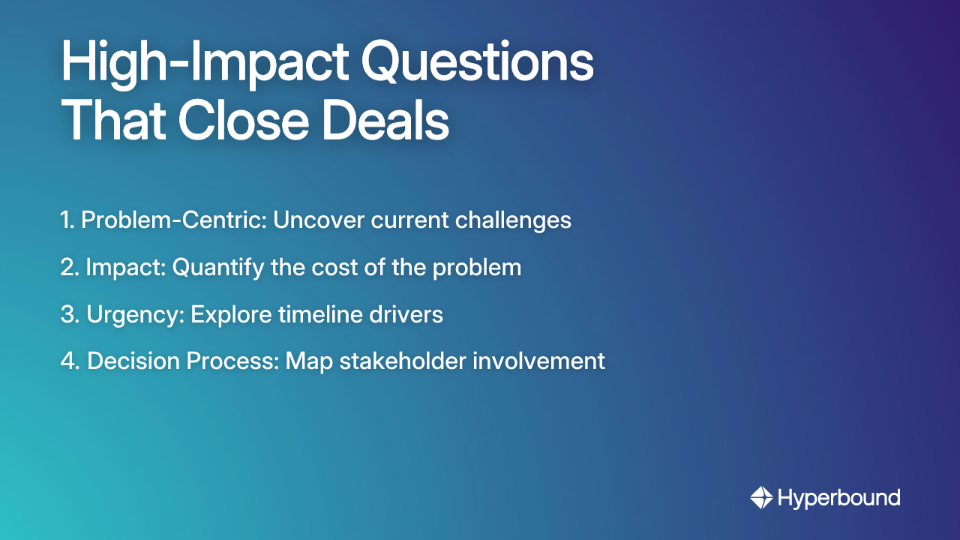
Sales methodologies like SPIN Selling and MEDDIC provide excellent frameworks for structuring these questions. The key is to use them as guides rather than scripts, allowing the conversation to flow naturally while ensuring you cover critical areas.
Understanding the ideal talk-to-listen ratio is one thing; consistently achieving it is another. Here are practical exercises and tools to help you develop this critical skill:
Nothing is more revealing than listening to yourself. When sales teams are flying blind about their performance, recording calls provides essential visibility. After recording:
This exercise alone can improve your awareness dramatically. Many sales reps are shocked to discover they talk far more than they realized.
Practice sales conversations with a colleague, but with a twist: before responding to anything they say, you must wait 3-5 seconds. This exaggerated pause forces you to:
This exercise feels awkward at first but builds the muscle memory needed for better listening.

For one week, challenge yourself to learn three surprising things in every sales call. This simple mindset shift forces you to approach conversations with genuine curiosity rather than focusing solely on making your pitch.
Modern sales coaching platforms like Hyperbound provide objective data on talk-to-listen ratios and other critical communication patterns. With AI-powered tools, you can:
By establishing a scalable process for monitoring and practicing these skills, sales teams can move from subjective coaching to data-driven improvement.

The talk-to-listen ratio isn't just another sales metric—it's the foundation of effective communication with prospects. At 43:57, you create the perfect balance between:
When your sales reps consistently maintain this ratio, they transform from product pushers into trusted advisors who solve real problems.
Take the first step today: record your next sales call and calculate your talk-to-listen ratio. Then implement one technique from this article to move closer to the ideal 43:57 balance. Your conversion rates—and your prospects—will thank you.
Remember, in sales, success often comes not from what you say, but from what you hear when you stop talking.
The ideal talk-to-listen ratio for closing deals is 43% talking to 57% listening. This data-backed ratio is consistently maintained by top-performing sales representatives. It stands in stark contrast to the average sales call, where reps talk 60-65% of the time, which is strongly correlated with lower conversion rates and lost deals.
Sales reps often talk too much due to several common pressures and habits. These include feeling the need to fill uncomfortable silences, panicking when faced with tough questions, wanting to demonstrate expertise (the "expert's curse"), or simply waiting for a pause to deliver their pitch rather than actively listening to the prospect's needs.
You can start improving your listening skills on your very next call by using the "Two-Second Rule." After a prospect finishes speaking, make a conscious effort to pause for two full seconds before you respond. This simple yet powerful technique prevents interruptions, gives the prospect room to elaborate, and helps you formulate a more thoughtful response.
The most effective questions focus on quality over quantity and are designed to uncover a prospect's core challenges and motivations. High-impact questions are problem-centric (exploring challenges), measure impact (quantifying the cost of the problem), create urgency (understanding timelines), and clarify the decision-making process (identifying key stakeholders).
No, asking more questions does not necessarily lead to better outcomes. Research shows that top performers ask fewer questions (around 15-16 per call) than reps who lose deals. Success lies in asking higher-quality, strategic questions at the right time, rather than a large quantity of superficial ones.
Modern technology, like AI-powered sales coaching and conversation intelligence platforms, can automatically track and analyze your team's talk-to-listen ratio across all calls. These tools provide objective data and actionable insights, deliver personalized coaching feedback, and offer realistic AI role-playing scenarios to help reps practice and master active listening skills at scale.









Use Cases
Legal