
You've crafted what you believe is the perfect sales email. You've researched your prospect, personalized the message, and included a compelling call to action. But days pass, and there's no response. Why? Because your prospect never even opened your email.
In today's overcrowded inbox, 47% of recipients decide whether to open an email based solely on the subject line, while a staggering 69% report emails as spam based on the subject line alone. With the average professional receiving 121 emails daily, your subject line isn't just important—it's the critical first impression that determines whether your carefully crafted message ever sees the light of day.
This guide will equip you with the psychological triggers, proven templates, and testing frameworks needed to write subject lines that compel prospects to open your emails, address their pain points, and move conversations forward.
The battle for attention in your prospect's inbox has never been more competitive. Email reading time has dropped from 13.4 seconds in 2018 to just 9 seconds in 2022, giving you a shrinking window to make an impact.
When your subject line fails, nothing else matters. The most persuasive email content, the most irresistible offer, the most compelling call to action—all become irrelevant if your email remains unopened. In email outreach, the subject line is the gatekeeper to opportunity.
Understanding the psychological triggers that compel people to open emails isn't about tricks—it's about human nature. Here are the five most powerful psychological levers you can pull with your subject lines:
.png)
The Zeigarnik Effect describes our tendency to remember uncompleted tasks. A subject line that creates an information gap generates an "itch" that can only be scratched by opening the email.
Examples:
Why it works: Our brains are wired to seek closure. An open loop in your subject line creates cognitive tension that can only be resolved by opening your email.
Creating a sense that time is limited or that the recipient might miss an opportunity can trigger immediate action.
Examples:
Why it works: Humans are loss-averse—the pain of missing out on something valuable is psychologically more powerful than the pleasure of gaining something of equal value.
Making your subject line about the recipient taps into our natural self-interest and desire to be recognized.
Examples:
Why it works: Personalized subject lines are 50% more likely to be opened and can lead to 6x higher transaction rates. When we see our name or company mentioned, it immediately signals relevance.
Directly addressing a problem you know your prospect is experiencing creates immediate relevance.
Examples:
Why it works: Addressing specific pain points shows you understand your prospect's challenges and have potential solutions, making your email worth opening.
Beyond psychology, there are practical guidelines that can dramatically improve your open rates:
With 47% of emails being opened on mobile devices, keep your subject lines under 50 characters to ensure they don't get cut off. The sweet spot is typically 4-7 words.
While curiosity is powerful, misleading subject lines destroy trust. Ensure your subject line accurately represents your email content. Clickbait might get an open, but it will damage your reputation and relationship.
Numbers stand out in text-heavy inboxes and imply specific, tangible value:
Emojis can increase open rates by up to 45% when used appropriately, but should be relevant and used sparingly.
Use strong verbs that create a sense of momentum:

Avoiding these common pitfalls is just as important as implementing best practices:
Words like "free," "guarantee," "no risk," and "act now" can send your carefully crafted email straight to the spam folder. Even seemingly innocent words can trigger spam filters when used in certain combinations, preventing your message from ever reaching its intended reader.
This approach looks unprofessional, spammy, and aggressive. It creates the impression of shouting and immediately reduces credibility.
Generic phrases like "Checking in" or "Quick question" provide no value or context. They fail to give the recipient a compelling reason to open your email among dozens of others competing for attention.
If your subject line promises something your email doesn't deliver, you'll erode trust and increase unsubscribe rates. The subject line must align with the email body to maintain credibility.
These ready-to-use templates can be customized for your specific outreach needs:
The only way to truly know what works for your specific audience is to test systematically. Here's how to implement an effective A/B testing program for your subject lines:
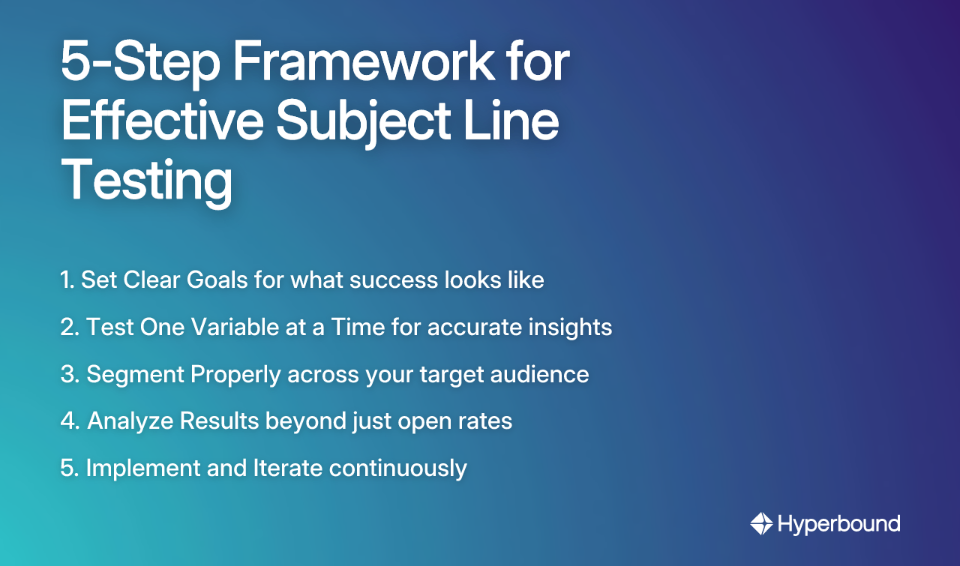
Common elements worth testing include:
A great subject line is the perfect blend of psychology, best practices, and continuous testing. By understanding your prospects' pain points, leveraging personalization, and crafting subject lines that tap into fundamental human psychology, you can dramatically improve your open rates and the overall effectiveness of your email outreach.
Don't let your next campaign be a shot in the dark. Pick a template from this guide, create a variation, and run your first A/B test. Remember, the most beautifully crafted sales email template is worthless if it never gets opened—and it all starts with a subject line that your prospect simply can't ignore.
The path to better lead conversion begins with a single click—the one your prospect makes when your subject line compels them to open your email.
The subject line is the most important element of a sales email. It's the first and often only chance you have to capture your prospect's attention in a crowded inbox, determining whether your email gets opened or ignored.
The ideal email subject line should be under 50 characters, or about 4-7 words. This ensures your full message is visible on mobile devices, where a significant portion of emails are read, preventing it from being cut off.
A compelling subject line effectively combines psychological triggers with clarity and relevance. The best subject lines spark curiosity, create urgency, offer clear value, are personalized to the recipient, and are concise enough to be easily understood at a glance.
Personalization is effective because it immediately signals that the email is relevant to the recipient. Using a prospect's name, company, or referencing a specific pain point cuts through the noise of generic emails, making them feel seen and understood. Statistics show personalized subject lines are 50% more likely to be opened.
You can improve your subject lines through systematic A/B testing. By testing one variable at a time—such as length, personalization, or the use of a question versus a statement—you can gather data on what resonates best with your audience and continually optimize your open rates.
The biggest mistakes to avoid are using spam trigger words (like "free" or "guarantee"), writing in all caps, using excessive punctuation, being overly vague (e.g., "Checking in"), and making false promises that don't align with the email's content. These errors can damage your credibility and deliverability.










Use Cases
Legal