You're in a high-stakes meeting, presenting an idea you're passionate about. But as you speak, you hear your own voice rising at the end of each statement, turning confident declarations into hesitant questions. "We should implement this strategy?" "The data shows positive results?" "I'm leading this project?"
If this sounds familiar, you're dealing with uptalk – and you're not alone. Many professionals struggle with this speech pattern, particularly in "stressful situations such as meetings when having to think on your feet," as one Reddit user described their experience.
Uptalk, also known as upspeak or high-rising intonation (HRI), is a speech pattern where declarative sentences end with a rising pitch, making them sound like questions. Examples include:
The term "upspeak" was coined by journalist James Gorman in a 1993 New York Times article and is often stereotypically associated with "valley girl speak," though it's common across various demographics.
This guide provides a comprehensive toolkit with actionable tips not just to change your intonation, but to build the underlying assertiveness needed to radiate confidence in any conversation.
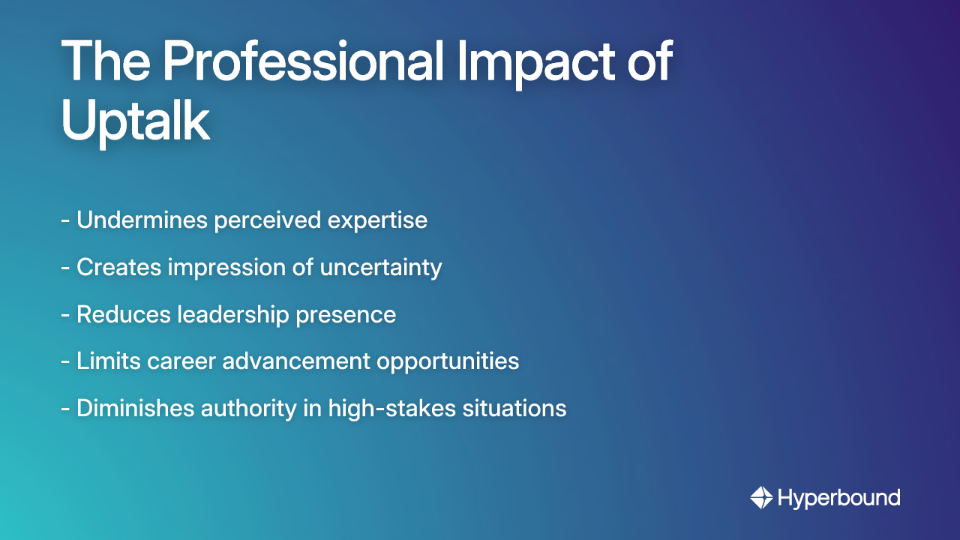
Excessive uptalk confuses listeners, who may not know if you're making a statement or asking for approval. When you say, "I think we should go with Option B?" it sounds like you're seeking permission rather than making a firm recommendation. This ambiguity can be particularly problematic in leadership roles where clear direction is essential.
To provide a balanced perspective, it's worth noting that uptalk isn't always negative. It can be used strategically to:
Research from Berkeley Matrix has shown that even influential speakers use HRI in meetings to signal openness and encourage dialogue. The key is conscious, judicious use rather than habitual dependence.
Record Yourself: The first step is to hear what others hear. Use your phone's voice memo app or a dedicated tool like Hyperbound's AI coaching platform to analyze your speech patterns.
Specific Exercise: Record yourself saying, "It's time for us to get started on this project." First, say it with a rising intonation (uptalk), then with a falling intonation. Listen to the difference in authority.
Identify Triggers: Reflect on when and why you use uptalk. Ask yourself:
Understanding your patterns is the foundation for change. As one Reddit user who overcame uptalk noted, "I had a small uptalk habit as a teenager," highlighting how these patterns often develop early and can persist into professional life.
The "Visualize the Period" Trick: This is a highly effective mental cue recommended by users who have successfully overcome uptalk. As you speak, "envision the period at the end of the sentence... and make a definite end to your statement by bringing the last word down just a pitch," as advised in a Reddit discussion.
The Script Marking Technique: A detailed method for retraining your intonation:
This technique helps create muscle memory for proper intonation.
Practice with Facts: Write down five simple, undeniable statements about yourself (e.g., "My name is [Your Name]," "I live in [Your City]," "I work at [Your Company]"). Practice saying them with absolute conviction, focusing on a downward inflection at the end of each statement.
Breathe from Your Diaphragm: Uptalk can be exacerbated by tension and shallow breathing. Practice abdominal breathing—breathing from your lower ribcage—to open your throat, relax your vocal cords, and produce a richer, more grounded sound.
Stand Up: When on phone calls or in virtual meetings, stand up. This simple physical change can improve posture, breathing, and naturally help you project your voice with more confidence and authority. Many voice coaches recommend this technique as a quick way to instantly sound more assertive.

Changing your intonation is important, but addressing the root causes of uptalk is equally crucial for lasting change.
Uptalk often stems from a lack of confidence or a desire for validation. Start by shifting your mindset.
Embrace a growth mindset—the belief that you can change and improve your speech patterns. According to the American Psychological Association, setting specific goals like "I will cut my use of uptalk in half by next month" can significantly impact your progress.
Additionally, many who have overcome uptalk recommend adopting what one Reddit user bluntly called the "start by not-giving-a-fuck what other people think" approach. In professional terms, this means focusing on the value you are providing rather than seeking constant approval from your audience.
As another user who struggled with confidence shared, "Self-empowerment is GONE. People deserve respect and no one will give it for free." This perspective shift can be transformative in reducing uptalk.
Assertive communication is the ability to express your feelings and needs clearly and directly while respecting others. It is the healthy midpoint between passive and aggressive communication.
Use 'I' Messages: Frame requests and feelings from your perspective.
Use Assertiveness Formulas:
When addressing an issue, describe the behavior factually, without exaggeration or emotional labels. This prevents the other person from becoming defensive and helps you maintain a steady, confident tone without falling into uptalk patterns.
Example:
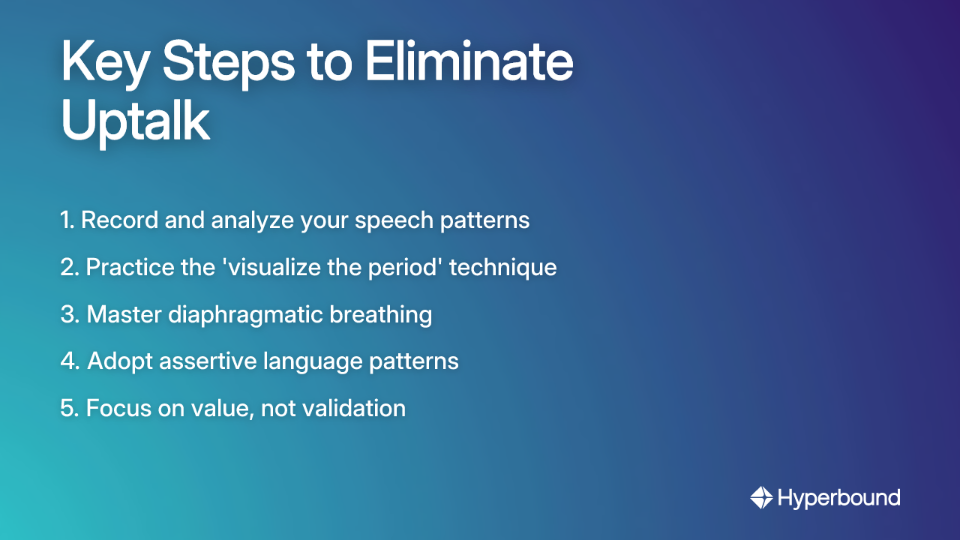
Your voice is one of your most powerful professional tools. By mastering your intonation and learning to communicate with assertiveness, you're not just changing how you speak—you're changing how others perceive you and how you value your own contributions.
Remember these key takeaways:
Don't get overwhelmed. Pick one technique from this guide—like recording yourself on your next call or practicing the "period visualization" trick—and start today. As one successful uptalk-overcomer put it, "You sound more certain, confident (and less annoying!) if you end on a down note."
Consistent practice is the key to lasting change. With time and persistence, you'll find yourself naturally speaking with the authority and confidence you've always had within you.
Uptalk, or high-rising intonation (HRI), is a speech pattern where you end declarative statements with a rising pitch, making them sound like questions. It is considered a problem in professional environments because it can undermine your credibility, make you appear uncertain or less knowledgeable, and dilute the authority of your message.
The most effective way to know if you use uptalk is to record yourself speaking. Use your phone's voice memo app during a call or practice presentation, or use a dedicated platform like Hyperbound to get AI-powered feedback on your speech patterns. Listen for sentences that should be statements but end with a questioning tone. Paying attention to how you sound in high-stress situations is particularly revealing.
The quickest and most effective mental trick is to "visualize the period" at the end of your sentences. As you speak, consciously imagine a period and make your tone fall on the last word. This simple cue helps retrain your brain to use a downward inflection, which signals confidence and finality.
No, uptalk is not always negative and can be used strategically. It can be useful for softening a message, inviting collaboration, politely interrupting, or checking for understanding. The key is to use it consciously and sparingly, rather than as a default speech pattern, to maintain your authority.
Assertiveness directly addresses the root cause of uptalk, which is often a lack of confidence or a desire for validation. By practicing assertive communication—using "I" messages and stating your needs clearly—you build foundational self-assurance. This inner confidence naturally translates to a more declarative and steady vocal tone, reducing the subconscious habit of seeking approval through a rising inflection.
People often develop uptalk for social reasons, such as a desire to seem collaborative, non-threatening, or to seek validation from listeners. It can also become a habitual pattern during teenage years and persist into adulthood. In high-stress professional situations, it can emerge as an unconscious way of hedging or softening statements when feeling nervous or unsure.










Use Cases
Legal