You've been on a sales call, excited about your product, when suddenly you realize your mouth is moving at warp speed. Your thoughts are racing two sentences ahead of what you're saying, your words are tumbling over each other, and you're worried your prospect might be hearing gibberish instead of your carefully crafted pitch.
Sound familiar?
The struggle to control your pace without dampening your enthusiasm is one of the most common challenges for high-energy salespeople. As one sales professional confessed, "I have a habit of talking way too fast and getting overly excited to the point it can sound like gibberish." This problem isn't just about personal comfort—it directly impacts your sales effectiveness.
Fast talking doesn't just make you harder to understand; it fundamentally changes how prospects perceive you and your message:

Think of the most persuasive people you know—hostage negotiators, respected leaders, top closers. They all share one quality: controlled, deliberate speech that conveys confidence and commands attention. They understand that persuasiveness isn't about speed; it's about impact.
As one sales expert noted, "When the prospect speeds up, you should slow down. This helps build trust and keeps the conversation productive." This counterintuitive approach is what separates amateur salespeople from professionals who consistently close deals.
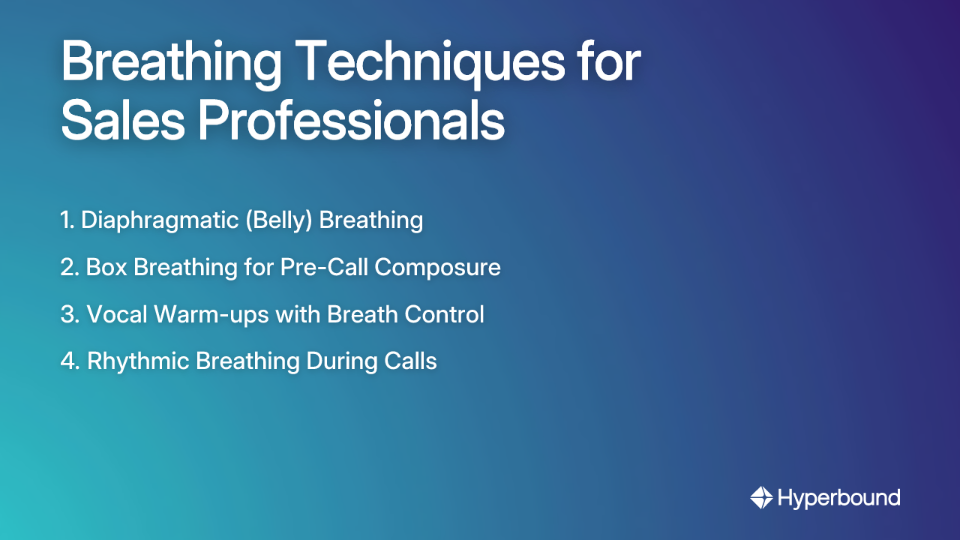
The physiological foundation of speech control is proper breathing. Poor breath support leads directly to rushed speech. When you're excited or nervous, your breathing typically becomes shallow and rapid, which translates to your speaking pace.
This foundational technique is the cornerstone of controlled speech:
Once you're comfortable with basic diaphragmatic breathing, progress to incorporating sound by adding voiceless consonants (sss, shh, fff) on the exhale. This builds control for speaking and helps improve articulation.
This technique is perfect as a 60-second ritual before dialing:
Box breathing activates your parasympathetic nervous system, calming your nerves and preparing you for controlled speech. Research from speech therapists shows that these breathing techniques help "sequence and coordinate breathing, voice, and articulation for effective speech."
While breathing exercises build your foundation, you need tactical techniques to use during active sales calls:
The pause is perhaps the most underutilized tool in a salesperson's communication arsenal. Silence isn't awkward; it's powerful. Strategic pauses allow listeners to process information, increase the weight of your words, and demonstrate confidence.
Pause strategically:
One practical tip shared by a successful salesperson is to "tap out a slow beat with your foot or hand. It helps slow your pace down." This physical metronome creates a rhythm for your speech and gives your nervous energy somewhere productive to go.
Try tapping your foot at approximately 60 beats per minute (one tap per second), and aim to speak in sync with this measured pace. This technique is particularly effective because it gives you a physical sensation to focus on rather than just a mental reminder.
When you make a conscious effort to pronounce each word distinctly, you naturally slow down. Try these articulation exercises before calls:

The biggest fear that keeps salespeople talking fast is the worry that slowing down means sounding boring or disengaged. Nothing could be further from the truth. The key is to channel your energy into tonality, inflection, and word choice rather than speed.
Energy in speech comes from dynamic variation, not rapid delivery. Think about how a great storyteller captivates an audience—they use their voice like an instrument, adjusting pitch, volume, and emotional tone to create engagement.
As one sales professional explains: "I start slightly louder with 'Hey John!' to command attention, then soften the volume with 'This is Michael from SalesWolf.' I'm clear in my intentions, not seeking approval from the prospect."
Practice varying these vocal elements:
Instead of just writing out what to say, build in pacing cues:
"I want to share some exciting opportunities with you today. (PAUSE)
First, let's discuss the benefits that are most relevant to you. (PAUSE & LISTEN)
Now, (DEEP BREATHE) how can we tailor this for your needs?"
A simple visual reminder can also work wonders. Write "PACE" on a post-it note and place it on your monitor as a constant reminder throughout your calls.
When we speak too quickly, we tend to lean on filler words like "um," "uh," "like," and "you know." These words not only make you sound less confident but also create the impression of disorganized thinking.
The strategic pause is your best weapon against filler words. When you feel the urge to use a filler, simply pause instead. This takes practice, but the impact on your perceived confidence and professionalism is dramatic.
Transforming your speaking pace isn't a one-time fix; it's a skill that requires consistent attention:
This step is non-negotiable for improvement. Leveraging a platform like Hyperbound's AI Real Call Scoring to record and review your calls allows you to:
A surprisingly effective technique is to "put a mirror in front of you when you are making phone calls." This simple practice makes you more aware of your facial expressions and body language, which directly influence your vocal delivery. Seeing yourself speak reminds you to slow down and articulate clearly.
Have trusted colleagues listen to your calls and provide specific feedback on your pacing, clarity, and energy. External perspective is invaluable for catching habits you might not notice yourself.
Mastering your pace isn't about becoming a different person; it's about becoming a more effective version of yourself. By channeling your natural energy with intention and control, you'll build deeper rapport, increase your persuasiveness, and communicate with unshakable confidence.
Remember:
You don't have to be less energetic—you just have to be more in control. And when you achieve that balance, you'll find your prospects aren't just hearing you clearly; they're truly listening.
So take a deep breath, tap your foot to a steady beat, and transform your rapid-fire delivery into the measured, confident communication style that closes deals.
Talking too fast is a problem because it undermines trust, signals nervousness, and prevents prospects from comprehending your message. When you speak too quickly, prospects may feel pressured or skeptical, and they don't have enough time to process the value you're offering, which reduces rapport and hurts your chances of closing the deal.
You can slow down without losing enthusiasm by channeling your energy into vocal variety instead of speed. Focus on varying your pitch, volume, and tonality to convey excitement and authority. Using strategic pauses and emphasizing key words will make you sound more engaging and confident, not boring or disengaged.
The best breathing exercises are Diaphragmatic (Belly) Breathing and Box Breathing. Diaphragmatic breathing helps you establish a calm, foundational rhythm, while Box Breathing (inhale for 4s, hold for 4s, exhale for 4s, hold for 4s) is an excellent pre-call ritual to calm your nervous system and prepare you for controlled, deliberate speech.
A simple and effective trick is to use a physical anchor. Gently tap your foot or a finger to a slow, steady beat (about one tap per second) and try to sync your speech to that rhythm. This physical metronome gives your nervous energy a quiet outlet and provides a constant, tangible reminder to maintain a measured pace.
The most effective way to stop using filler words is to replace them with a strategic pause. When you feel the urge to say "um" or "like," intentionally pause for a moment instead. This not only eliminates the filler word but also makes you sound more thoughtful and confident, giving your listener time to process what you've just said.
You can measure your progress by using technology and seeking feedback. Record your calls using a platform like Hyperbound to analyze your speech patterns, identify when you speed up, and track your words-per-minute over time. Additionally, ask trusted colleagues to listen to your calls and provide honest feedback on your pace and clarity.










Use Cases
Legal