You've hit that familiar mid-afternoon slump. Slouched in your chair, shoulders hunched, you dial another prospect. Despite your best permission based opener, your voice sounds flat. The gatekeeper brushes you off, and you leave yet another voicemail that will likely go unanswered. Your conversion rate is dropping, and you can't figure out why your pitch outcomes are suffering.
What if the key to breaking through that slump isn't a new script or cold email template, but something as simple as the way you're physically positioned during calls?
The connection between your posture and sales performance is stronger than you might think. This overlooked factor could be the difference between hitting quota and watching your prospects slip away.
Even when a prospect can't see you during a call, your body language matters tremendously. According to research from 180ops.com, approximately 95% of communication is non-verbal. This translates through your vocal tonality, pacing, and energy—all of which are directly affected by your posture.
Sales coach Josh Hulsebosch introduces the concept of "proud posture" as crucial for both physical health and psychological confidence. As he notes in his SalesGravy interview, it's not about simply pulling your shoulders back (which can cause tension). Instead, it's about relaxing the shoulders down to improve posture naturally.
The physiology behind this is straightforward: standing or adopting a proper sitting posture opens up your diaphragm, allowing for deeper, more controlled breathing. This improved breathing:
Many sales reps on Reddit confirm this connection: "Smile, fix your posture, roll back your shoulders, it helps a lot" and "Slow it wayyy down..." Better posture makes it physically easier to control your breath and pace your speech—essential skills when trying to navigate past gatekeepers or deliver a compelling pitch to successful customers.
But how do you know if your improved posture is actually translating to better vocal delivery? This is where practice and objective feedback become critical. AI-powered coaching tools like Hyperbound can analyze your tone, pacing, and energy in practice roleplays. This allows you to perfect your delivery in a risk-free environment, ensuring you sound as confident and authoritative as you feel.
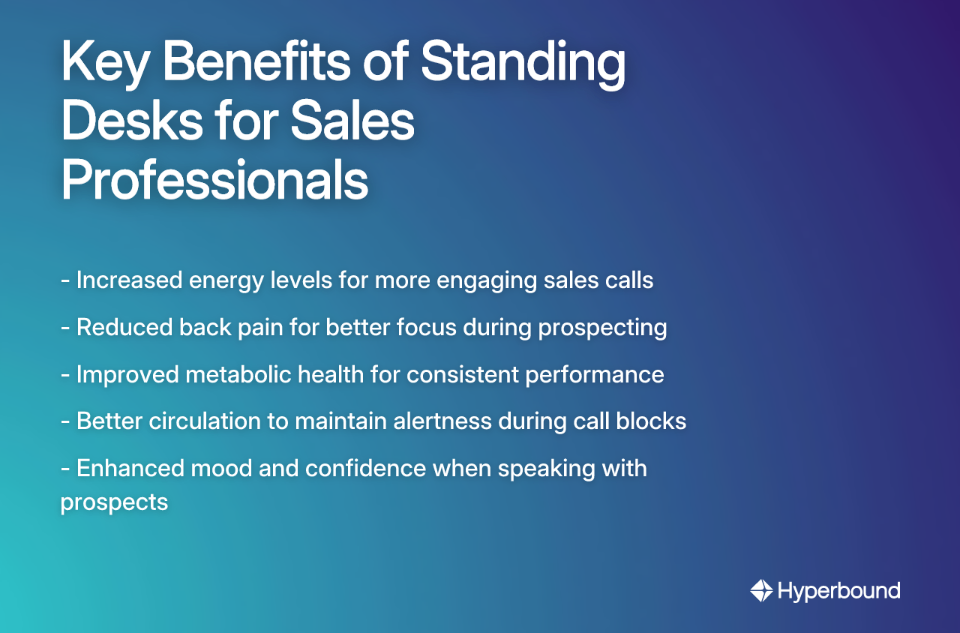
"Sitting Disease" is a term health professionals use to describe the collection of health risks associated with prolonged sitting. According to The New York Times, a standing desk is one of the primary tools to mitigate these risks.
The data-backed benefits extend beyond just health improvements—they directly impact your sales performance:
If you're considering the RICE method (Research, Improvement, Connection, Execution) to boost your sales performance, your physical workspace deserves serious attention. However, it's important to acknowledge the common pitfall shared by many first-time standing desk users: "Standing for long periods is just as harmful to your body as sitting for too long."
The key isn't just to stand, but to create a system of dynamic movement throughout your sales day.
Your desk should be adjustable and stable. The Uplift V2 Standing Desk is a top-rated pick for its versatility and stability, accommodating users from 5'4" to 6'9". For smaller spaces, the Branch Duo Standing Desk is an excellent option. Look for features like memory presets for easy switching between sitting and standing during different parts of your sales process.
Poor monitor placement causes neck pain and eye strain, both of which can negatively impact your energy and focus during important calls. Follow these core principles from Mount-It.com:
A properly positioned screen allows you to maintain good posture while reviewing your CRM, analyzing pitch outcomes, or preparing for calls with successful customers.
Listen to the wisdom from experienced sales reps: "changing from standing to sitting every hour or so helps."
Theory is great, but results matter. Sales professionals across industries are seeing a direct link between posture, standing desks, and performance metrics.
Mark, an enterprise sales representative who specializes in cold calling C-level executives, shares: "After switching to a standing desk, I feel more engaged during calls, and it shows in my results. My energy levels stay consistent throughout the day, and I've seen a 15% increase in meetings booked with prospects."
Emily, an inside sales manager overseeing a team of 12 reps, implemented standing desks as part of a workspace redesign. She reports: "We saw immediate improvements in call quality metrics. When reps stand during calls, especially for their permission based opener and value pitch, they sound more confident and authoritative. Our team's connection rates with gatekeepers improved by 22% in the first month."
A report from Mount-It.com confirms this trend: "Sales representatives reported improved close rates after adopting better posture while working. The physical act of standing puts them in a more assertive mindset, which translates to more confident negotiations."
James, who transitioned from a traditional inside sales job to a remote position, notes: "I was struggling with my numbers after going remote until I invested in a proper standing desk setup. Now I stand for my important calls, especially when I need to deliver a strong value pitch or close. The change in my posture and energy has directly impacted my conversion numbers—I'm closing deals at nearly the same rate as when I was in the office."
Another sales professional puts it bluntly: "If you have a standing desk use it. Otherwise buy one with the fat stacks you'll be making when you get good at cold calling." This confident attitude reflects the ambitious mindset that proper ergonomics can help foster.

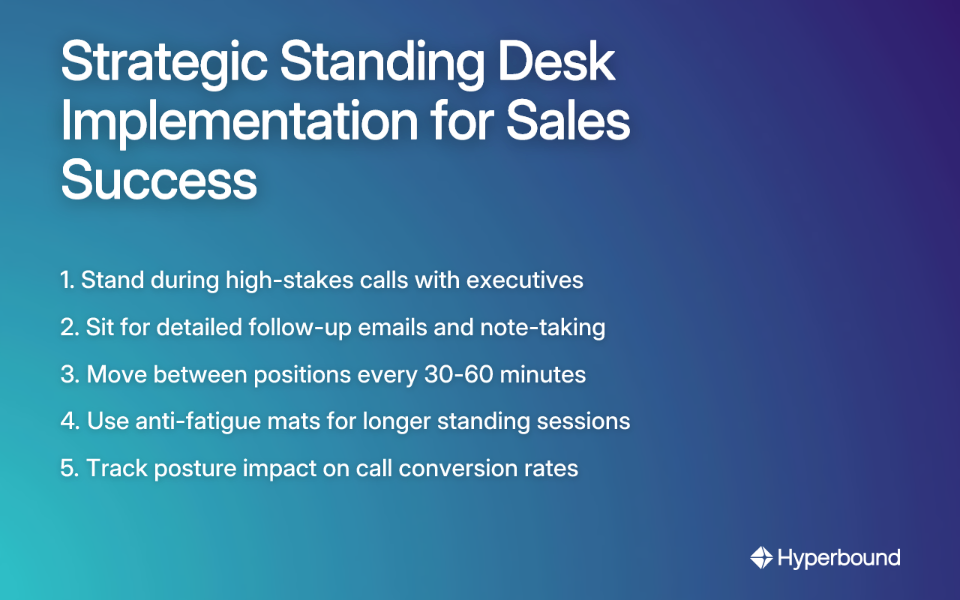
Successful sales professionals don't just stand all day—they strategically incorporate standing into their workflow:
Your physical posture isn't just a comfort issue—it's a powerful and controllable tool in your sales arsenal. Standing up straightens your spine, opens your diaphragm, and projects confidence through your voice, directly impacting how prospects perceive you even when they can't see you.
Don't just own a standing desk—master it. Use the ergonomic principles in this guide to create a high-performance workstation. Alternate between sitting and standing, prioritize dynamic movement, and be mindful of your posture on every call, whether you're navigating past gatekeepers or presenting solutions to successful customers.
Small, consistent changes to your physical environment and habits can lead to monumental improvements in your energy, confidence, and ultimately, your close rate. Stand up, project your power, and watch your sales numbers rise.
Remember the wisdom of top performers: your posture affects not just how you feel, but how you sound, how you're perceived, and ultimately, how effectively you can guide prospects toward becoming successful customers.
Stand tall, speak confidently, close consistently.
Your posture directly impacts your vocal tone, energy, and confidence, which prospects can hear clearly over the phone. Adopting a strong, open posture—whether sitting tall or standing—opens up your diaphragm. This allows for deeper breathing, which enhances your vocal projection and makes you sound more resonant, authoritative, and trustworthy during your pitch.
A standing desk can significantly improve your sales performance, but only when used correctly as part of a dynamic workday. The real benefit comes from alternating between sitting and standing every 30-60 minutes. This practice combats fatigue, keeps energy levels stable, and allows you to strategically stand during high-stakes calls to project maximum confidence.
"Proud posture" is a concept that focuses on achieving a natural, confident stance by relaxing your shoulders down rather than forcefully pulling them back. This method, advocated by sales coaches, reduces tension in your neck and shoulders, promotes better breathing, and helps you maintain a strong physical presence that translates into vocal confidence during calls.
Most ergonomic experts and experienced sales professionals recommend switching between sitting and standing every 30 to 60 minutes. A great strategy is to align your position with your task: stand for high-energy activities like cold calling or delivering a value pitch, and sit for focused tasks like writing follow-up emails or updating your CRM.
The three most critical ergonomic adjustments are setting your desk to elbow height (a 90-degree angle), positioning the top of your monitor at or just below eye level, and using an anti-fatigue mat when you stand. These adjustments prevent neck and back pain, reduce physical strain, and help you maintain focus and energy throughout your calling blocks.
Yes, absolutely. Gatekeepers are trained to screen out low-energy, uncertain callers. When you stand or sit with a confident posture, your voice naturally becomes more assertive and authoritative. This confident tonality commands respect and makes your opening statement more compelling, significantly increasing your chances of being taken seriously and getting connected to the decision-maker.










Use Cases
Legal