
You've collected the data, created the charts, and presented your findings to leadership. But months later, your skill gap analysis sits unused in a shared folder, having made virtually no impact on your team's capabilities or your organization's bottom line.
Sound familiar?
Many managers find themselves drowning in data that's either too granular to act on or too vague to be meaningful. As one IT manager put it: "If you go too granular, you'll drown in data and it won't be actionable, but if you stay too vague, it just turns into a vanity chart." (Reddit Discussion)
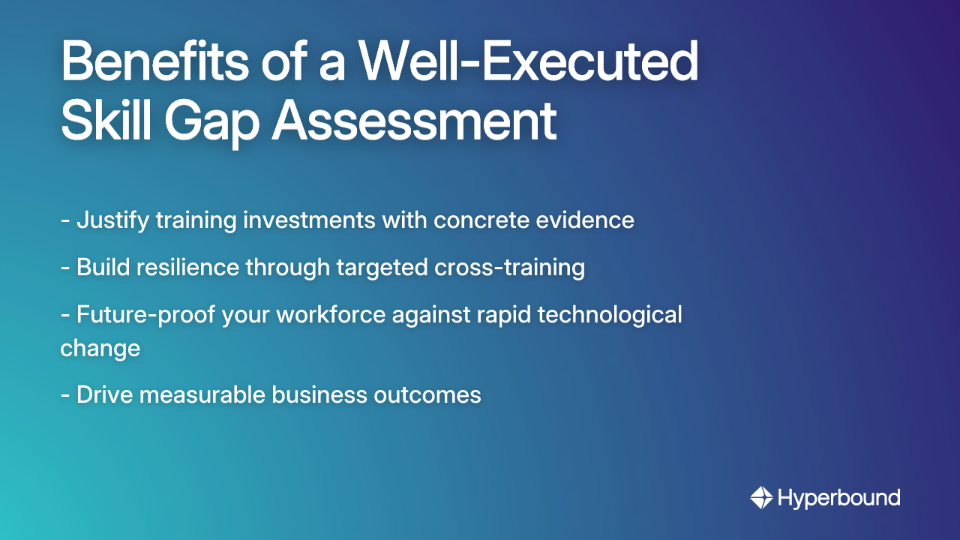
The truth is, a well-executed skill gap assessment isn't just a data-gathering exercise—it's a strategic tool that can:
And the urgency is real: according to LinkedIn, skill sets for jobs have changed by 25% since 2015, and that figure could double by 2027.
This guide will walk you through a practical, step-by-step framework for conducting a skill gap assessment that delivers tangible results—not just another chart that looks good in a presentation.
At its core, a skill gap analysis identifies the disparity between the skills your organization needs to meet its goals and the current skills your employees possess. This includes both hard skills (like coding languages, cybersecurity knowledge) and soft skills (such as critical thinking, communication, and leadership) (whatfix.com).
The World Economic Forum reports that 63% of organizations cite skills gaps as the primary barrier to transformation (Cornerstone OnDemand). Without a clear understanding of your team's capabilities, you're essentially navigating your business strategy blindfolded.
A robust skill gap analysis:
Don't just look at current job descriptions—map the skills needed to achieve future business objectives. For each role:
Here's where many assessments go wrong: relying solely on self-evaluations. As one experienced manager cautioned, "Anyone who ranks themselves a 5 on a skill will most likely be far below that... The people ranking them a 3 or 4 are probably your experts" (Reddit Discussion).
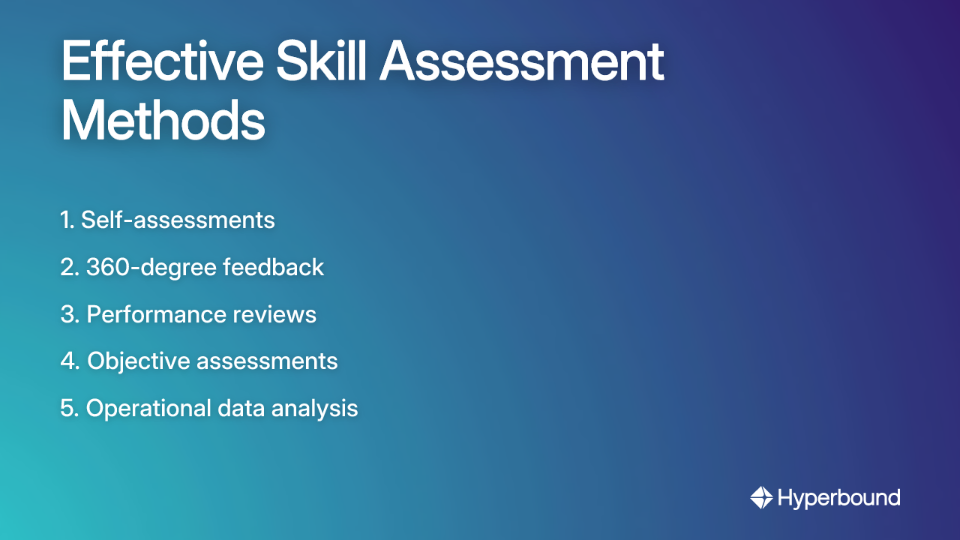
Instead, combine multiple methods:
Now it's time to make sense of your findings:
Here's a simplified example:
.png)
Your plan should include a mix of strategies:
Set KPIs to measure the effectiveness of your initiatives:
Remember that a skill gap analysis is not a one-time project. It should be conducted at least annually (or every six months in rapidly changing industries) to adapt to evolving business needs (cornerstoneondemand.com).
One of the most common challenges is determining how specific your skill categories should be. "Active Directory knowledge" is too vague, but listing every possible AD task would be overwhelming.
Solution: Start with high-level skill categories that directly link to business goals, then break down only the most critical areas into specific competencies. For example:
While technical capabilities often take center stage, don't overlook soft skills. As one manager emphasized, "Do you guys grade ideas? Like assessing soft skills like empathy, assertiveness, leadership etc?" (Reddit Discussion)
Critical soft skills to assess include:
The output of your skill gap analysis should directly help justify training and development investments. As one IT manager reported, "The output was super useful when it came to justifying training spend" (Reddit Discussion).
When presenting to leadership:
Modern skill gap analysis tools can significantly streamline the process and provide deeper insights:
AI-powered platforms can:
For customer-facing roles, platforms like Hyperbound use AI to analyze real conversations and bridge skill gaps with targeted roleplays and coaching. Other tools like iMocha, TestGorilla, and MuchSkills offer broader capabilities, from general skills assessments to visual skill mapping.
A strategic, ongoing skill gap analysis transforms HR from a reactive function to a strategic driver of business growth. By following the 5-step framework outlined in this guide, you can:
In a business environment where, according to the World Economic Forum, the half-life of skills is shrinking rapidly, this process isn't just nice to have—it's essential for survival.
As one IT manager succinctly put it, "The IT field has gotten crazy big" (Reddit Discussion). Organizations that systematically identify and address skill gaps will be the ones that thrive amid constant change.
Start by implementing a simplified version of this framework with one team, learn from the process, and then expand. Your organization's future competitiveness depends on the foundation you build today.
Remember: The goal isn't to create the perfect chart—it's to drive meaningful skill development that delivers tangible business results.
A skill gap analysis is a strategic process used to identify the difference between the skills an organization needs to achieve its goals and the skills its employees currently possess. This evaluation covers both technical (hard) skills, like software proficiency, and interpersonal (soft) skills, like communication and leadership.
A skill gap analysis should be conducted at least annually to remain effective. In fast-paced industries with rapid technological changes, it is best practice to perform an analysis every six months. This regular cadence ensures your workforce strategy stays aligned with evolving business needs and market trends.
The most accurate way to measure employee skills is by using multiple methods, as relying on one source can be misleading. A comprehensive approach combines self-assessments with 360-degree feedback from peers and managers, objective data from performance reviews, practical skills tests or certifications, and analysis of operational data like project completion rates or support ticket resolution times.
Measuring soft skills requires looking beyond simple ratings. Effective methods include using 360-degree feedback to gather perspectives on an employee's collaboration and communication, analyzing performance review notes for specific examples of problem-solving or leadership, and using behavioral interview questions. For skills like sales or customer service, AI-powered tools can also analyze real-world conversations to provide objective feedback.
The essential first step is to align the analysis with your organization's strategic goals. Before assessing any skills, you must clearly define what the business aims to achieve in the next 1-3 years. This ensures the analysis focuses on identifying skill gaps that are directly relevant to future success, rather than just cataloging current abilities.
To ensure your analysis drives action, you must create a targeted action plan based on the findings. This plan should not just live in a folder; it must include a mix of specific, measurable initiatives such as targeted training programs, mentorship opportunities, strategic hiring for critical roles, and cross-training. Finally, assign ownership for these initiatives and set KPIs to track progress and measure the ROI of your development efforts.








Use Cases
Legal