You're ambitious. You want to take your practice to the next level—tackling larger client work, maybe even considering a merger or acquisition to jump-start growth. But you're already feeling "a little short staffed for the workload," staff turnover is "terrible," and you're struggling to distinguish your practice from the "fly-by-night shops."
Sound familiar?
The desire for growth creates a paradox. Scaling should lead to more success, but it frequently results in overwhelming stress, process friction, and manager burnout. This isn't just a feeling; it's a widespread issue.
Burnout has become a global crisis, with Google searches for "pandemic burnout symptoms" skyrocketing by over 500% between September 2020 and January 2022. This particularly affects the new generation of leaders, with over 61% of workers under 35 worrying about finances, job security, and career goals.
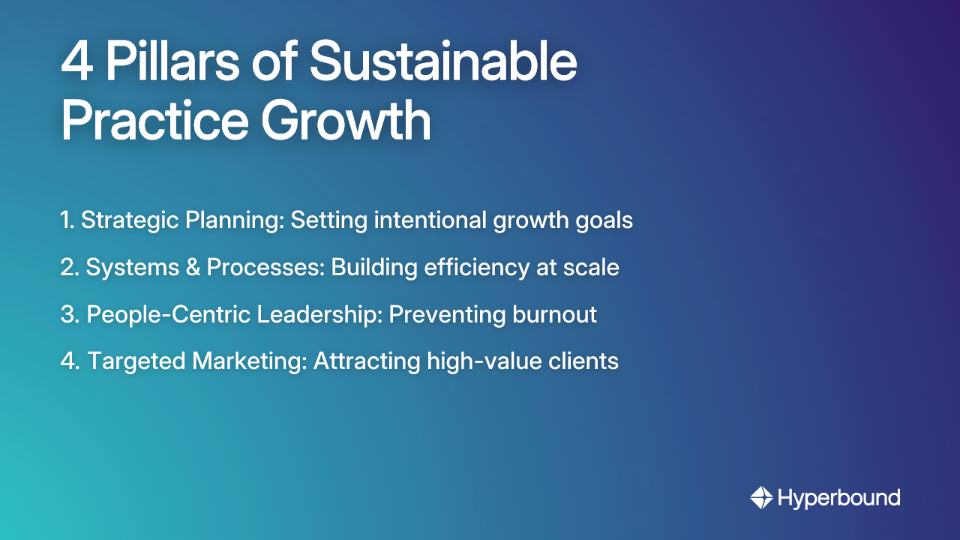
This article provides a blueprint for scaling your practice sustainably. We will explore four pillars: strategic planning, systemization for efficiency, people-centric leadership to prevent burnout, and targeted marketing to attract the right kind of growth.
Growth must be intentional. Before you scale, you need a clear roadmap. Utilize the SMART goal framework (Specific, Measurable, Achievable, Relevant, Time-based) to define what "next level" means for your practice.
This is a common sticking point. As one practice owner pondered, "We've been considering buying out or merging... but I'm not sure if that's a better option than growing organically."
The recommended approach is to conduct a thorough SWOT (Strengths, Weaknesses, Opportunities, Threats) analysis for both paths. A key consideration, highlighted by another practitioner, is ensuring a potential merged firm has "compatible processes/culture" to avoid inheriting new problems.
Actionable Tool: Use a Scaling Strategy Worksheet to formalize your plan. This tool helps you articulate measurable scaling goals and the strategies to achieve them. It's not a one-time document; it should be collaboratively developed and regularly updated based on new data and insights.
Inefficient scaling is incredibly costly. Poorly managed growth can lead to a loss of up to 60% of productive capacity due to communication overhead and process friction.
The "it works on my machine" problem isn't just for developers. In a professional practice, inconsistent processes for client onboarding, file management, or service delivery create chaos and make it difficult to train new staff—a major issue when "staff turn over has been terrible." This is where standardizing your playbook and ensuring team-wide adoption is critical. Platforms like Hyperbound help by allowing your team to practice and master these new processes through AI-powered roleplays, ensuring consistency as you scale.
Real-World Example: Shopify successfully onboarded hundreds of new developers during a period of massive growth by standardizing their development environments. The same principle applies to your practice's tech stack and standard operating procedures.
Implement practice management software to handle scheduling, billing, and client records. Automate routine tasks like appointment reminders or insurance verification to free up staff for high-value work, as recommended by practice management experts.
Not all revenue is good revenue. Address the pain point voiced by professionals that certain services, like full nonprofit audits, can be unprofitable due to the burden of "keeping up with changing standards" and the temptation to "cut corners."
Strategic Limitation: Consider the advice from a seasoned firm: "we cap assurance engagements to reviews." This is a strategic decision to reduce the stress, higher liability insurance premiums, and compliance burden of full audits while still offering a valuable service.
Focus on High-Value Niches: Identify where you can deliver exceptional value. For CPAs, this could mean focusing on clients with S Corps where you can apply "juicy tax strategies," save them significant money, and "bill them $5k+ easily." This is precisely what one successful practice owner discovered.

As a manager, you have significant influence over your team's workload and stress levels. Don't let burnout be an unspoken taboo.
Strategy: Clearly communicate that avoiding burnout is a team-wide priority. This builds psychological safety. Regularly and proactively check in with your team about their capacity. As one product manager puts it, you must "balance achievable goals with ideal expectations."
Provide Recovery Time: High-stress periods are sometimes unavoidable. The key is to provide recovery time afterward. After a major deadline or tax season, intentionally plan for a period of lower-intensity work to help the team regain their well-being.
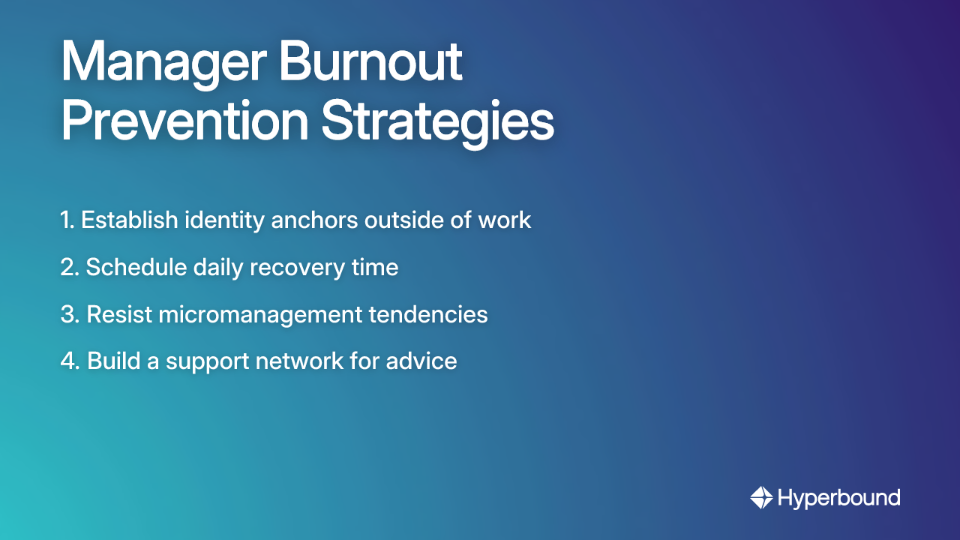
You cannot pour from an empty cup. First-time managers, in particular, must be vigilant. Harvard Business Review found these four strategies are critical:
To escape the "fly-by-night tax shops," you must clearly define your Unique Selling Proposition (USP). Why should a client choose you?
Address the frustration of having to constantly "explain what a CPA is." Your marketing materials and brand identity should do this for you, educating potential clients on the expertise, ethics, and value you bring that lower-cost options cannot match.
One practice owner expressed frustration with constantly having to explain the value of CPA services. Effective marketing materials should preemptively address this education gap, highlighting the specialized knowledge and protection that comes with hiring a certified professional.
Move beyond having just a "handful" of big clients. Refine your marketing to target the specific industries or client profiles that benefit most from your specialized services.
Implement digital marketing strategies, including SEO and social media, to enhance online visibility. Build referral networks with other professionals (e.g., lawyers, financial advisors) as recommended by marketing experts for professional services.
Scaling is a dynamic process of learning and adapting.
Actionable Tool: Use an Adaptation Tracker to systematically document challenges, the adaptations you implement, and the outcomes. This creates a powerful feedback loop for your practice. For example, if you implement a client extension strategy to reduce tax season workload, track its impact on revenue, client satisfaction, and team stress levels.
Actively solicit feedback from both clients and staff to identify friction points and opportunities for improvement. This creates a culture of refinement rather than just survival.
True scaling isn't just about getting bigger; it's about getting better, stronger, and more resilient. Sustainable growth rests on a foundation of clear strategy, efficient systems, people-centric leadership, and targeted growth.
By architecting your growth with intention—automating processes, optimizing service lines, and making well-being a core business metric—you can build a thriving practice that achieves its ambitions without succumbing to burnout. You can scale your impact and your revenue without sacrificing your sanity or the health of your team.

Remember these key principles:
The journey of scaling a professional practice doesn't have to lead to manager burnout. With the right approach, it can instead lead to a more fulfilling, profitable, and sustainable business that serves both your clients and your life goals.
The four pillars of sustainable practice growth are Strategic Planning, Systems & Processes, People-Centric Leadership, and Targeted Marketing. These pillars provide a comprehensive framework for scaling your business intentionally by setting clear goals, building efficiency, prioritizing team well-being to prevent burnout, and attracting high-value clients who appreciate your expertise.
To prevent team burnout during rapid growth, you must make burnout prevention an explicit and measurable goal. This involves openly communicating that well-being is a priority, proactively checking in on your team's capacity, balancing ambitious goals with realistic expectations, and providing dedicated recovery time after high-stress periods like tax season or major project deadlines.
Standardized systems and processes are critical because they create efficiency and consistency, which are essential for managing a larger workload without chaos. Inconsistent workflows lead to errors, make training new staff difficult, and can cause a significant loss of productive capacity. By standardizing and automating tasks, you free up your team for high-value work and ensure a consistent client experience as you grow.
The first step a manager should take to avoid their own burnout is to find an "identity anchor" outside of work. This means cultivating a hobby, passion project, or social group that is completely separate from their professional life. Establishing an identity beyond your job title is crucial for detaching from work stress and maintaining long-term well-being.
The decision to grow organically versus through a merger depends entirely on your specific circumstances, and there is no single right answer. The best approach is to conduct a thorough SWOT (Strengths, Weaknesses, Opportunities, Threats) analysis for both options. Key factors to consider for a merger include the compatibility of company cultures and operational processes to avoid inheriting new problems.
To attract higher-value clients, you must clearly define and communicate your Unique Selling Proposition (USP) and focus on a specific niche. Instead of being a generalist, specialize in areas where you can provide exceptional value, such as complex tax strategies for specific industries. Your marketing should educate potential clients on the expertise and value you bring, positioning your practice as a premium service worth the investment.
Are you scaling a professional practice? What challenges are you facing? Share your experiences in the comments below.










Use Cases
Legal