
In today's distributed work environment, sales leaders face unique challenges when training their teams. According to recent studies, remote work has created a 20% negative impact on communication effectiveness, making traditional sales training approaches increasingly obsolete. Meanwhile, companies that invest in effective sales training see an impressive 353% ROI on average.
Yet remote sales managers report consistent struggles: "Lack of understanding and application of the training provided" and "difficulty with taking immediate action and learning from mistakes" rank among the top pain points when developing distributed sales talent. Many also cite "insufficient hands-on experience and observational learning" as major barriers to success.
The good news? Remote and hybrid sales environments actually present unique opportunities to reimagine training. When structured correctly, these approaches can deliver more consistent, measurable, and effective skill development than traditional in-office methods. Here are ten sales training opportunities specifically designed for remote and hybrid teams.
.png)
One of the biggest gaps in remote training is the lack of safe, repeatable practice. Reps can't just overhear top performers on the sales floor, and managers lack the bandwidth to run endless 1-on-1 roleplays. This leads to reps practicing on live prospects, risking deals and developing bad habits.
Hyperbound's AI Sales Roleplays offers a transformative solution to this challenge. The platform provides unlimited, risk-free practice across the entire sales cycle:
"The ability to practice difficult conversations without risking real deals has been a game-changer for our remote team," says Maria Rodriguez, Sales Director at SaaSCo. "Our new hires are ramping 30% faster because they can fail safely and learn quickly."
Hyperbound's AI Coaching capabilities take this a step further by delivering personalized, real-time feedback aligned with your specific sales methodology. The AI flags missed opportunities and weak responses, allowing reps to self-correct instantly without waiting for a manager's review—directly addressing the pain of "difficulty taking immediate action and learning from mistakes."
.png)
Standard video calls often lead to passive learning and disengagement. Instead, structure interactive workshops that demand participation.
95% of sales leaders believe well-designed webinars significantly improve training retention and application. The key is making these sessions truly interactive:
"We've found that 30-minute targeted workshops with clear action items outperform hour-long lectures every time," notes Chris Johnson, Sales Enablement Director at TechVantage. "The key is designing for interaction, not just information transfer."
Remote reps miss out on the organic learning that happens when sitting alongside experienced colleagues. To recreate this valuable experience:
"Recording yourself doing the thing, then asking them to record themselves doing the thing dramatically accelerates learning," shares one sales manager on Reddit. This asynchronous approach allows for more thoughtful feedback while accommodating different time zones.
Hyperbound's AI Real Call Scoring can automatically identify top-performing calls worth sharing, creating a continuous library of "what good looks like" for the entire team to learn from.
Long training sessions overwhelm reps, especially when they're already juggling multiple remote responsibilities. Breaking down complex topics into bite-sized, digestible modules (microlearning) has been shown to increase retention by 25% to 60%.
Create a library of short (2-5 minute) videos covering specific skills:
These assets allow for self-paced learning and just-in-time reinforcement when reps need specific information before a call. Providing downloadable resources is key for maintaining focus amidst remote work distractions.
"Lack of self-motivation and accountability in remote settings" is a frequently cited challenge from sales leaders. Gamification directly addresses this by introducing competitive elements that drive engagement.
Effective gamification approaches include:
These game mechanics make learning more enjoyable while creating healthy competition that motivates reps to actively participate in training initiatives.
Remote sales effectiveness depends heavily on technology proficiency. Yet many organizations provide only basic training on their sales tools, leaving reps to figure out advanced features on their own.
Go beyond the fundamentals of your CRM (e.g., Salesforce) and sales engagement platforms. Offer specialized training on:
"We noticed a direct correlation between a rep's proficiency with our tech stack and their overall performance," observes Thomas Williams, VP of Sales at CloudSecure. "The best performers leverage automation to spend more time selling and less time on administrative tasks."
Remote work can deepen silos between departments. Organize training sessions where leaders from other departments explain their roles and how they support sales:
This holistic understanding helps reps articulate value more effectively and navigate internal processes more efficiently. Platforms allowing for multi-party roleplays, like Hyperbound, can even simulate these cross-functional conversations for practice.
Coordinating live role-play sessions across different time zones is a logistical nightmare. While manual asynchronous feedback—where managers review recorded responses—offers some flexibility, it doesn't scale and creates significant review bottlenecks.
This is where AI-powered platforms like Hyperbound provide a breakthrough. They fully automate the process, offering a truly scalable asynchronous solution. Reps can practice critical scenarios on their own schedule, receiving instant, objective feedback from an AI coach without waiting for a manager.
This approach eliminates scheduling conflicts and manager bottlenecks, allowing reps to complete far more practice repetitions. It's a powerful way to support continuous learning for global teams, ensuring everyone gets the coaching they need, right when they need it.
Traditional training documents are static and unengaging. Interactive e-learning modules create a more immersive experience through:
These modules accommodate different learning speeds and ensure consistent messaging across the entire organization. According to research, interactive content generates 2x more conversions than passive content, making it ideal for skill retention.
New hires in remote settings lack the informal mentorship they would receive in an office environment. A structured mentorship program fills this gap:
"Our mentorship program created a support system that remote training alone couldn't provide," says Sarah Chen, Sales Director at DataFlow. "Having someone to turn to with questions or challenges has dramatically improved our retention of new talent."
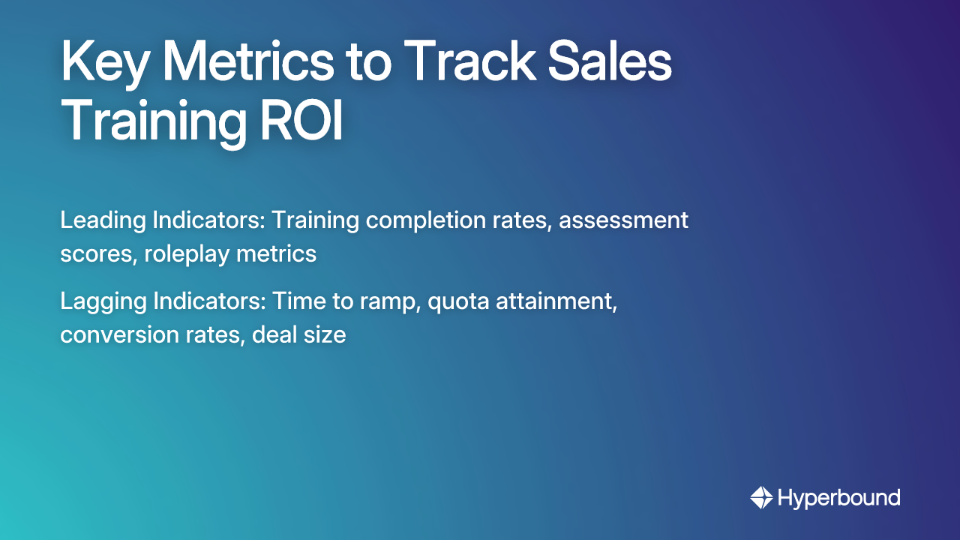
To demonstrate ROI on your remote training initiatives, track both leading and lagging indicators:
Leading Indicators (Activity & Competency):
Lagging Indicators (Business Impact):
The goal is to correlate participation in training activities with tangible improvements in sales outcomes. When done correctly, you can identify which specific training approaches yield the greatest impact on performance.
The transition to remote and hybrid sales isn't a temporary trend—it's the new standard. Thriving in this environment requires moving beyond outdated training methods to embrace approaches that provide consistency, accountability, and measurable results.
By implementing AI-powered roleplay, microlearning, and structured peer coaching, sales leaders can overcome the inherent challenges of distributed teams. These sales training opportunities don't just compensate for the limitations of remote work—they leverage its unique advantages to create more skilled, confident, and successful sales professionals.
Platforms like Hyperbound are purpose-built for this new era, providing the scalable, data-driven tools needed to ensure every rep—regardless of location—is prepared to win.
The biggest challenges in remote sales training include a lack of hands-on practice, difficulty in providing immediate and consistent feedback, and reduced opportunities for observational learning. Remote managers often struggle with reps not applying training effectively and the logistical difficulties of coaching distributed teams.
You can provide consistent practice for a remote team by leveraging AI-powered roleplay platforms. These tools offer unlimited, on-demand practice scenarios for every stage of the sales cycle, from cold calls to objection handling, allowing reps to practice safely without risking live deals. This asynchronous approach overcomes time zone challenges and manager bandwidth limitations.
AI-powered sales roleplay is a training technology where sales reps interact with hyper-realistic AI buyer personas in simulated conversations. The AI dynamically responds to what the rep says, creating a lifelike practice environment. After the session, the AI provides an instant, data-driven scorecard on performance, highlighting areas for improvement.
Microlearning is effective for remote teams because it delivers training in short, focused, and easily digestible modules, which significantly boosts knowledge retention. This format allows reps to access specific information exactly when they need it (just-in-time learning) and fits easily into their busy schedules, combating the distractions common in a remote work environment.
To measure remote sales training effectiveness, you should track both leading and lagging indicators. Leading indicators include activity-based metrics like training completion rates and AI roleplay scores. Lagging indicators are business impact metrics such as time for new hires to ramp, quota attainment, conversion rates, and average deal size.
AI coaching provides instant, objective, and scalable feedback, whereas traditional manager-led coaching is often delayed and subject to bandwidth limitations. AI can analyze every practice call and provide real-time guidance aligned with a specific sales methodology, allowing reps to self-correct immediately. This frees up managers to focus on higher-level strategic coaching rather than repetitive roleplay sessions.









Use Cases
Legal