You've heard it a thousand times: "You need to build relationships with your prospects." This phrase has become so common in sales circles that it's practically a cliché. But here's the problem – despite how frequently this advice is dispensed, very few people can actually explain what it means.
Is it about becoming friends with your prospects? Getting them to like you? Taking them out for coffee or remembering their kids' names?
If you've ever felt confused by this vague directive, you're not alone. As one sales professional put it, "Building relationships seems to be something the sales echo-chamber bangs on about. The issue is not only does no one seem to be able to explain what this means consistently, it gets confused with people liking the sales person."
Let's cut through the noise and get specific about what relationship building in sales actually means – and more importantly, what it doesn't.
The biggest misconception about "building relationships" in sales is that it means becoming friends with your prospects. This misunderstanding leads many salespeople to prioritize being liked over being effective.
"So the sales person enters every interaction wanting to be liked rather than doing a good job," notes one sales veteran. This approach is fundamentally flawed.
Your prospects aren't looking for another friend. They're looking for someone who can solve their problems and deliver value. As harsh as it might sound, they don't want a relationship with someone who's primarily trying to sell them something.
What they do want is someone they can trust.
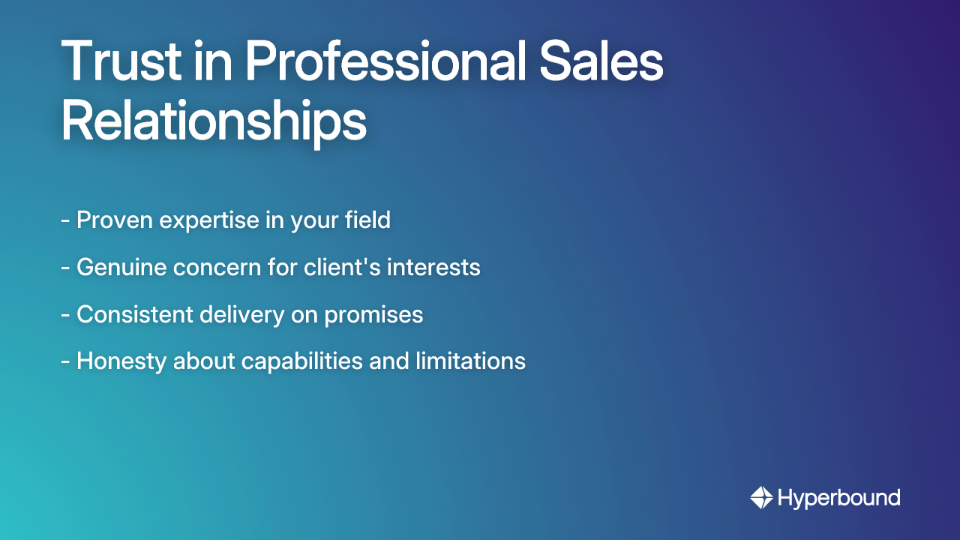
"You don't need to be liked to sell. You need to be trusted," explains an experienced sales professional. This distinction is crucial.
Trust in a professional context means your prospect believes you:
Can you be friendly while building this professional relationship? Absolutely. Should being liked be your primary goal? Absolutely not.
Instead of chasing friendship, focus on building a relationship founded on these three essential pillars:
In B2B sales especially, honesty isn't just an ethical choice—it's a strategic advantage that builds long-term relationships.
How to practice honesty:
The strongest professional relationships are built on consistent value delivery. Your goal should be to become so valuable that your customers can't imagine achieving their goals without you.
How to deliver value:

It's important to acknowledge that not all sales contexts require the same depth of relationship building.
In transactional sales (typically SMB, high-volume scenarios):
As one salesperson puts it, "At the junior level it's less relationships and more transaction and volume. When you're in SMB or a transactional role, you don't care about your customers beyond are they going to buy, buy a lot, and buy quickly."
In relational/consultative sales (typically enterprise, key accounts):
Here, deep relationship building becomes critical. Trust is paramount when deals involve significant risk and investment.
The principles of trust, credibility, and value remain the same across both contexts, but the application and depth change. Disregarding relationships entirely, even in transactional roles, can limit your career advancement. As one sales leader noted, "If you don't see the value of relationships, you'll be stuck in entry-level sales roles the rest of your career."
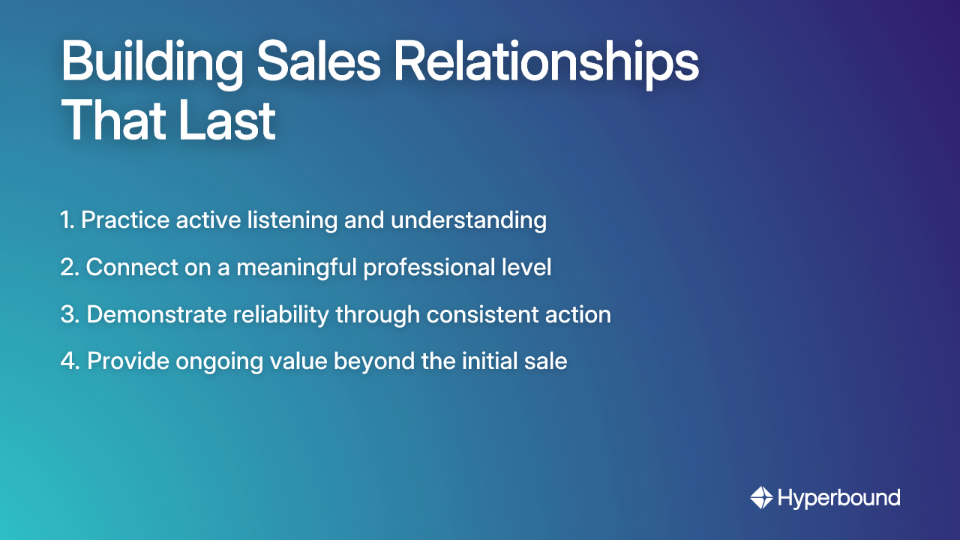
Let's move from theory to practice with four concrete steps:
Active listening goes beyond hearing words—it's about understanding the meaning behind them. This fundamental soft skill is the foundation of relationship management.
This isn't about asking about their weekend. It's about establishing common ground related to their professional life.
In sales, actions speak louder than words. Every interaction is an opportunity to demonstrate trustworthiness.
The relationship doesn't end when the contract is signed. This ongoing engagement separates true trust advisors from mere vendors.
"Building a relationship" in sales isn't a soft, unmeasurable concept. It's a strategic process with tangible business outcomes. It means shedding the goal of being liked and focusing relentlessly on:
When successful, this approach transforms you from a vendor (easily replaceable) to a trusted partner (indispensable).
The benefits are substantial:
The next time you're told to "build a relationship," don't think about making a friend. Think about building a partnership based on trust, value, and mutual success. Ask yourself: "How can I be so trustworthy, credible, and valuable that this client can't imagine achieving their goals without me?"
That is what building relationships in sales really means.
Building relationships in sales means establishing yourself as a trusted, credible, and valuable partner, not just trying to become friends with your prospects. The goal is to move beyond a simple vendor-customer dynamic by earning your prospect's trust through demonstrated expertise, consistent honesty, and delivering value that solves their problems.
Trust is more important than being liked because clients make significant business decisions based on whether they believe you are a reliable expert who has their best interests at heart. While being likable is a bonus, trust convinces a client you will deliver on promises and possess genuine expertise, which is the foundation of a professional partnership.
You can build credibility quickly by demonstrating deep industry knowledge, sharing specific success stories with measurable results, and leveraging social proof like case studies or testimonials. Use concrete data and validated successes to position yourself as a knowledgeable consultant from the outset.
Transactional sales are typically high-volume with short sales cycles where efficiency is key, while relational (or consultative) sales involve long cycles and complex needs where deep trust is essential. While the principles of trust and value apply to both, their depth and application differ based on the complexity of the deal.
You can provide value beyond the sale by acting as a consultant, sharing helpful resources, making relevant professional introductions, and continuing to engage after the contract is signed. Following up to ensure satisfaction and sharing relevant insights solidifies your role as a long-term partner, not a one-time vendor.
The first and most fundamental step to building better sales relationships is practicing active listening. Active listening means truly understanding the prospect's needs, challenges, and goals. Practice this by paraphrasing what they say and asking insightful questions to show you value their input and build a foundation of trust.











Use Cases
Legal