You've set up that critical discovery call with a promising prospect. But as the meeting approaches, a familiar anxiety creeps in. Your mind races: "What if I get brain fog and forget my questions? What if I come across as too heavy-handed with my pitch? Do I even understand what leaders in this industry really care about?"
Sound familiar? Many sales professionals struggle with these exact challenges. According to discussions on r/sales, the frustration of using generic scripts that don't resonate with prospects' actual problems is all too common.
The solution? A strategic arsenal of probing questions designed to uncover your prospect's true business pains while building rapport and positioning you as a trusted advisor rather than just another salesperson trying to close a deal.
Before diving into specific questions, adopt the right mindset. Think of yourself as an emergency room doctor. When a patient arrives complaining of chest pain, the doctor doesn't immediately recommend surgery. Instead, they ask targeted questions to understand symptoms, conduct tests, and diagnose the underlying cause.
Similarly, your job isn't to immediately pitch your solution. It's to diagnose your prospect's business pains with precision and care.
As Jeff Shore notes, your prospect might say they feel "cramped" in their current software (the symptom), but your job is to find out why—is it because reporting is slow at month-end, or because the team can't collaborate effectively?
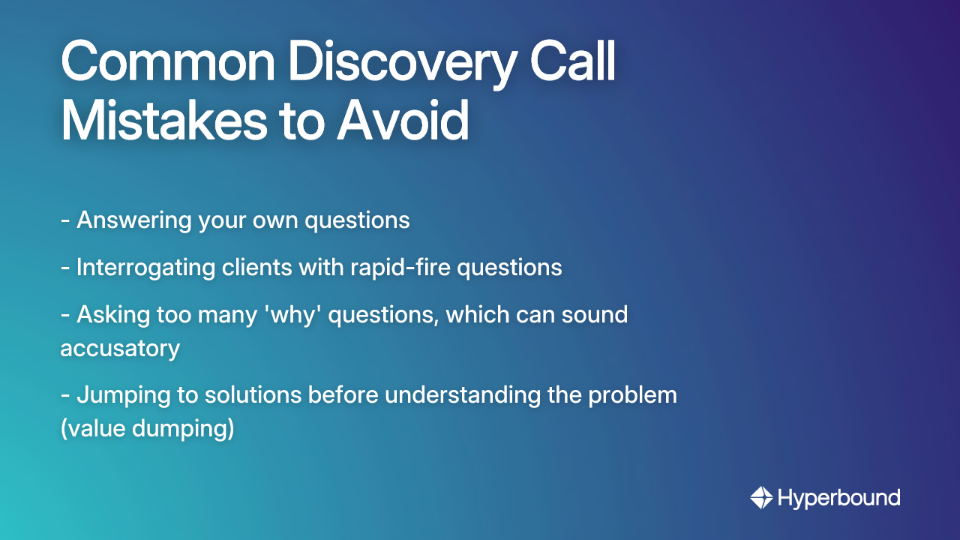
The most common mistakes to avoid:
Now, let's explore 21 powerful probing questions organized by the stages of an effective discovery call.
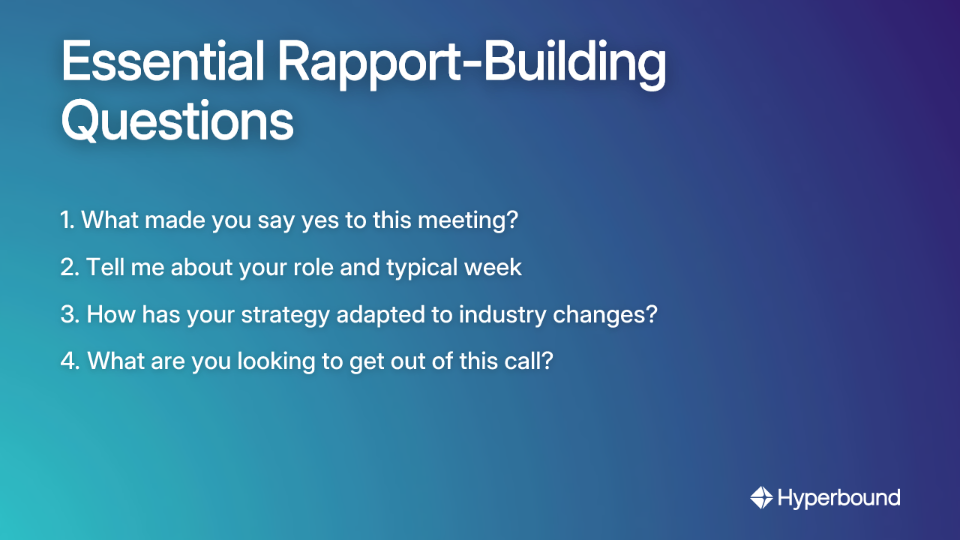
These questions help you establish a human connection and set a collaborative tone for the meeting.
This question cuts right to the chase, identifying the specific pain point or interest that prompted the prospect to engage. It moves beyond "How did you hear about us?" to uncover their immediate motivation.
This shows genuine interest in the individual, not just the company. It helps you understand their personal responsibilities, daily frustrations, and the metrics they are judged by, providing crucial context for their pain points.
This high-level strategic question shows you've done your homework. It opens the door to conversations about broader business challenges. According to McKinsey, 90% of executives expect fundamental business changes due to recent events, but only 21% feel confident about adapting. This question taps into that uncertainty.
This simple question helps set the agenda and manages expectations. It ensures the conversation is aligned with what the prospect considers a valuable use of their time.
This is where you dig deep to understand the "what" and "why" behind their challenges.
This direct, open-ended question invites the prospect to vent. The word "frustrating" elicits an emotional response and gets to the heart of their daily pain points.
This uncovers historical context, internal politics, or past failed attempts. The answer reveals potential roadblocks you'll need to navigate, such as budget constraints, lack of buy-in, or previous bad experiences.
A brilliant question from Jeff Shore. A problem that seems constant may only occur under specific circumstances (e.g., "the server is slow" might only be during month-end reporting). This helps you pinpoint the exact source and scope of the pain.
This question creates urgency. If the pain is escalating, the cost of inaction becomes higher. It helps the prospect realize that delaying a solution will only make things more difficult later.
Pain is rarely isolated. This question expands the conversation beyond the individual to uncover the wider organizational impact. It also helps you identify other stakeholders you may need to speak with, allowing you to implement effective multithreading in your sales approach.
This question acknowledges that business is volatile. It helps surface challenges the prospect may not have anticipated, showing that you understand the complexities of their environment.
This question helps you learn from the past. Understanding what didn't work before allows you to position your solution differently and proactively address potential skepticism.

Connect the pain to tangible business outcomes like time, money, and risk.
This "magic wand" question encourages the prospect to dream big and articulate their ideal outcome. The second part ("what impact") pushes them to connect the solution to a tangible business benefit (e.g., "we'd save 10 hours a week," "our team morale would improve").
This shifts the focus from the negative (the pain) to the positive (the future state). It helps the prospect visualize the ROI and build a business case for change themselves.
This helps you prioritize. Instead of "value dumping" every feature, you can focus your demo and discussion on what matters most to them right now. This addresses the common challenge of performing demos tailored to specific client needs.
This question taps into strategic vulnerabilities around issues like data security, technology scalability, or workforce adaptability. It positions your solution not just as a tool for today, but as a strategic asset for the future.
This question aligns the conversation with their existing KPIs and metrics. If you can show how your solution improves a metric they already track, the value becomes undeniable.
Qualify the opportunity and understand the practical steps needed to move forward.
This is a crucial qualifying question to identify all decision-makers and stakeholders. It prevents you from being blocked by an unknown approver late in the process and addresses the pain of unclear decision-making authority.
Directly addresses the budget question early on. This qualifies the prospect financially and avoids wasting time. Frame it as a way to ensure you propose a solution that is feasible for them.
Establishes a timeline and assesses urgency. Their answer tells you if this is a high-priority issue for this quarter or a "nice-to-have" for next year.
A critical technical qualifying question. It ensures solution alignment and shows you're thinking about how your product fits into their existing tech stack, not just selling in a vacuum.
This is a soft closing question that clearly defines the next step and creates shared ownership of the process. It's proactive and moves the deal forward.
Remember, these questions are a roadmap, not a rigid script. The real skill is in weaving them into a natural conversation that builds rapport while uncovering critical information. The key to effective B2B sales methodology is being curious and listening intently.
But how do you practice turning a list of questions into a natural, effective conversation? This is where modern tools can make a significant difference. Platforms like Hyperbound's AI Sales Roleplays provide a risk-free environment for reps to practice their discovery calls against realistic AI buyer personas. This helps build the muscle memory needed to ask the right questions at the right time, without sounding like you're reading from a script.
According to research from Instapage, personalization can drive up to a 19% increase in sales engagement. Taking just 5 minutes to check a prospect's LinkedIn profile before a call can make all the difference in tailoring your approach to their specific buyer persona.
You now have the tools to move from being a salesperson who presents to a consultant who solves problems. By mastering these probing questions, you'll establish yourself as a trusted advisor who truly understands your prospect's world—and that's the foundation of every successful sales relationship and an impressive success story.
Probing questions in sales are strategic, open-ended questions designed to go beyond surface-level information and uncover a prospect's underlying needs, challenges, and motivations. Unlike simple qualifying questions, they encourage detailed responses, helping you diagnose the root cause of a business problem rather than just its symptoms.
Probing questions are crucial because they transform a sales pitch into a consultative conversation, helping you accurately diagnose a prospect's business pain. This approach builds trust, uncovers the true impact of their problems, and positions you as a strategic advisor, which is far more effective than simply presenting a generic solution.
To avoid sounding like you're running through a checklist, actively listen to the prospect's answers and weave your questions into the natural flow of conversation. Think of it as a dialogue, not an interrogation. Use their responses as a bridge to your next question, show genuine curiosity, and be prepared to go off-script to explore an interesting point they've made.
The most common mistake to avoid is "value dumping"—jumping to pitch your solution before you have fully understood the prospect's problem. This happens when salespeople get excited about a feature and present it prematurely. To avoid this, you must adopt a diagnostician's mindset, focusing entirely on understanding the problem and its impact before ever mentioning your product's features.
If a prospect gives vague answers, use gentle follow-up questions to encourage them to elaborate. You can try rephrasing the question, or use phrases like, "Could you tell me a bit more about that?" or "When you say it's 'inefficient,' what does that look like in practice?" This shows you're listening and genuinely trying to understand their specific situation.
The right time to discuss features and price is only after you have a clear, confirmed understanding of the prospect's pain points and have quantified their impact. Once the prospect agrees on the problem and sees the value in solving it, you can then tailor your presentation to show how specific features address their specific challenges. Discussing budget and buying process typically comes after this, in the logistics phase of the call.
To prepare, spend at least 5-10 minutes researching the prospect and their company. Look at their LinkedIn profile to understand their role, check their company's recent news or blog posts, and understand the key trends in their industry. This allows you to tailor your high-level strategic questions and demonstrate that you've done your homework, immediately building credibility.











Use Cases
Legal