
You're on an island. Every time you pick up that phone and hear "Hello?" everything you've rehearsed seems to vanish into thin air. Sound familiar?
If you're like many sales professionals—especially those at smaller companies with limited resources—you know the isolation of being solely responsible for your sales success. You've thought to yourself, "I really need to spend more time perfecting my pitch and learning," but finding effective practice methods remains challenging.
Enter sales pitch practice tools, especially AI-powered ones, which have emerged as game-changers for sales teams looking to sharpen their skills. But simply purchasing a subscription isn't enough. The difference between good and great sales teams lies in how they strategically leverage this technology to drive results.
This article outlines seven proven strategies to transform your sales pitch practice tool from a simple software subscription into a cornerstone of sales excellence that builds elite sellers and drives revenue.
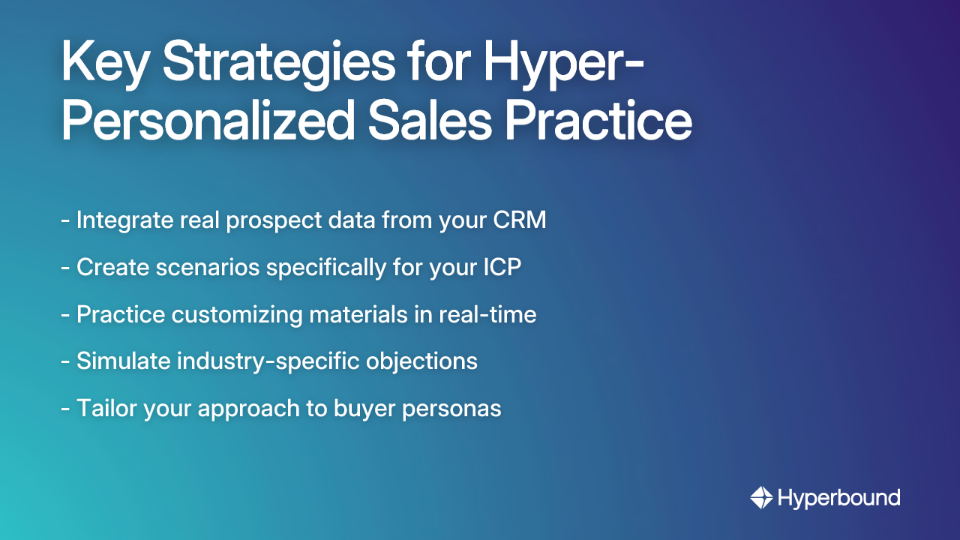
The most effective sales pitches aren't one-size-fits-all—they're tailored specifically to the buyer. Your practice should reflect this reality.
Actionable Steps:
One of the biggest hurdles to effective practice is the fear of judgment. AI provides a safe, repeatable environment for role play that addresses the common wish for "an online forum where you could just do random online presentations just for critique."
Actionable Steps:

A great pitch isn't just about delivery—it's about confidently navigating tough conversations and handling objections with grace. Your practice tool is the perfect environment to master this critical skill.
Actionable Steps:
Modern tools do more than facilitate practice—they provide deep conversational intelligence that identifies patterns across multiple sessions. This addresses the need to "improve rep skill gaps not just on a deal or call" and find "common threads so you can coach more strategically."
Actionable Steps:
.png)
Facts tell, but stories sell. The most effective pitches weave compelling narratives backed by hard data. Use your practice tool to perfect this powerful combination.
Actionable Steps:
What gets measured gets improved. Tracking progress is essential for continuous growth and helps address the need for "methods for staying aware and motivated towards that goal of being at the top."
Actionable Steps:
A pitch practice tool delivers maximum value when it's integrated into a broader commitment to sales enablement and continuous improvement—approaching it as a "learning experience" rather than just a "key to success."
Actionable Steps:
Maximizing your investment in a sales pitch practice tool means moving beyond simple repetition to strategic skill development. Focus on personalization, leveraging AI for realistic role-play, mastering objection handling, incorporating storytelling, tracking progress, and embedding the tool within a culture of continuous learning.
As one sales professional noted, "The more you do this, the more confident you are...and the better you feel about setbacks." In today's competitive market, this confidence and preparation are what separate top performers from the rest.
By strategically leveraging your practice tool, you're not just buying software—you're investing in the skills and resilience your team needs to win more deals and drive sustainable growth.
A sales pitch practice tool is a software platform designed to help sales professionals rehearse and refine their sales presentations in a simulated environment. These tools, especially modern AI-powered versions, offer features like realistic role-playing with AI avatars, real-time feedback on delivery and tone, and analytics to track improvement. They provide a safe, repeatable space to master scripts, handle objections, and build confidence without the pressure of a live call.
AI sales practice tools offer a judgment-free, consistent, and scalable environment for practice that is difficult to replicate with team role-playing. While practicing with peers is valuable, it can be time-consuming to schedule and may suffer from inconsistent feedback. AI tools provide a safe space for unlimited repetitions, deliver objective data-driven feedback on every session, and can simulate a wide variety of buyer personas and scenarios on-demand.
AI tools help you master objection handling by allowing you to practice responses to common and industry-specific objections in a realistic, simulated environment until your answers become second nature. You can build a library of the toughest objections your team faces and create specific AI role-play scenarios for each. The tool provides instant feedback on your approach, helping you refine your framework and build the confidence to navigate these critical conversations effectively on live calls.
The most important features to look for are realistic AI-powered role-plays, CRM integration for personalized scenarios, real-time performance feedback, and analytics for strategic coaching. The best tools allow you to practice with AI avatars that mimic different buyer personas and should integrate with your CRM to make practice more relevant. Look for platforms that offer instant feedback on language and tone, as well as analytics dashboards that track progress and identify skill gaps.
Sales practice tools improve performance by building confidence, increasing message consistency, and developing the critical skills needed to navigate real-world sales conversations effectively. Consistent, deliberate practice leads to greater confidence on live calls. Reps become more adept at handling objections, articulating value propositions, and telling compelling stories. By analyzing performance data, sales leaders can provide targeted coaching to address specific weaknesses, leading to a more successful sales team that wins more deals.
Integrate a practice tool by making it a core part of your sales culture, scheduling dedicated practice time, and using its insights to facilitate peer learning and coaching. Treat practice time with the same importance as other sales activities by blocking it on the calendar. Use the tool's recordings in team meetings to share best practices and use the analytics to inform your one-on-one coaching sessions, creating a culture of continuous improvement.










Use Cases
Legal