You're staring at your quarterly numbers, and they're not pretty. The pipeline is drying up, deals are stalling, and that quota seems further away than ever. That sinking feeling in your stomach grows as you wonder: Is it just me? Am I failing at this? Or is something bigger at play?
As one sales professional put it, "Every role is a gamble. I just wanted to show up, do what's asked and get paid, but that doesn't always correlate to success." When your livelihood depends on closing deals, it's terrifying to feel like factors beyond your control might be tanking your performance.
The reality? About 80% of your sales performance is influenced by external factors. But identifying which factors are holding you back is the first step toward regaining control.
This article provides a systematic framework to diagnose what's really happening with your sales performance. We'll work from the macro to the micro – from broad economic forces to your personal selling skills – helping you determine whether to adapt your approach, push for internal changes, or find a new opportunity altogether.
.png)
Before blaming yourself, assess the macroeconomic climate. Sometimes, the headwinds are simply too strong for anyone to sail against.
"When interest rates are low, money flows like wine. But when rates rise, the economy slows down and consumer spending dries up." This observation from a veteran salesperson captures the dramatic shift we've seen in recent years.
The era of ZIRP (Zero Interest Rate Policy) is over, and businesses across B2B sectors are tightening their belts. Decision-makers who once had budget flexibility now face intense scrutiny on every purchase.
According to the 2025 Selling Challenges Research Study, the dominant issue facing sellers today is Buyer Indecision. This phenomenon causes delays, drains potential revenue, and stalls deals at every stage of the Sales Cycle.
Buyers are increasingly hesitant to commit, extending what used to be a three-month sales cycle into six months or more. They're demanding more ROI data, involving more stakeholders, and showing greater reluctance to disrupt the status quo.
Self-Assessment Questions:
If these economic factors align with your experience, you're likely facing genuine external challenges. However, this is just the first layer of our diagnosis.
Even in a challenging economy, some industries thrive while others struggle. Your specific market might be facing unique pressures beyond general economic conditions.
"The market itself is rough because it's food service, zero margin anywhere, making it hard to win over prospects." This salesperson's frustration reflects the reality that some markets are simply tougher than others.
Consider these market factors:
The McKinsey Global Institute reports that Generative AI has the potential to add $2.6 trillion to $4.4 trillion annually to the global economy, with about 75% of that value coming from areas like customer operations, marketing and sales.
This rapid technological shift means some traditional sales approaches are becoming obsolete. If your organization or sales methodology hasn't adapted to these changes, you might be fighting with outdated weapons on a modern battlefield.
Self-Assessment Questions:

Even excellent salespeople struggle when dealt a bad hand. Your success is heavily influenced by your company's positioning and the territory you've been assigned.
"Companies can be slow to change and as the market moves they are no longer positioned strongly." This observation highlights how organizational inertia can sabotage sales performance.
Consider these company-specific factors:
"Did you get Manhattan or London or did you get Birmingham?" This pointed question captures the massive impact of Territory Assignment on sales results.
The territory lottery is real:
Similarly, Quotas may be distributed inequitably, with some reps facing much steeper targets relative to their territory potential.
Self-Assessment Questions:
After assessing external factors, it's time for radical honesty about your own performance. This is where you have the most control.
As one successful rep advises: "Control what's within your control. You can acknowledge [external factors] exist without becoming a victim to circumstance."
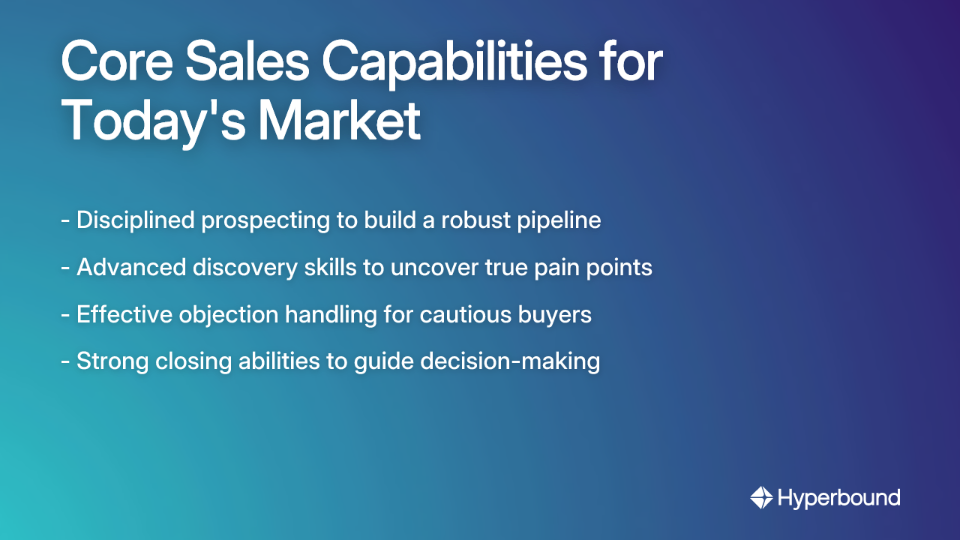
Even in challenging markets, some salespeople consistently outperform. Take an honest look at your core sales capabilities:
The small daily habits often separate top performers:
Self-Assessment Questions:
Based on your diagnosis across all four factors, it's time to make a strategic decision. Doing nothing is not an option.
If your assessment reveals significant gaps in your skills or process, it's time to upgrade your capabilities:
Remember, the best salespeople thrive even in challenging environments because they continuously adapt their approach to the current reality.
If your diagnosis points to company or territory issues, you have two options: accept the limitations or advocate for change:
Sometimes, the wisest choice is to find a better environment:
Sales success is never just about you or just about external factors—it's always a combination. The key is to:
As one seasoned sales professional puts it: "Control what's within your control. You can acknowledge external factors exist without becoming a victim to circumstance."
Your sales numbers might be disappointing right now, but with a clear diagnosis and decisive action, you can change your trajectory—whether that means adapting your approach, pushing for internal changes, or finding a better environment where your talents can truly shine.
Remember: in sales, as in life, we can't always control the cards we're dealt, but we can control how we play the hand.

Your sales performance is primarily influenced by four key factors: broad economic conditions, specific market dynamics, your company and assigned territory, and your personal skills and processes. This article's framework helps you diagnose issues across these four areas, from macro trends like buyer indecision down to your individual prospecting habits.
To distinguish between economic pressures and personal skill gaps, first assess external factors. If your peers and competitors report similarly long sales cycles and hesitant buyers, the economy is a major factor. However, if others are succeeding in the same conditions, it's time to honestly evaluate your own sales process, prospecting discipline, and objection handling skills.
Buyer indecision is widespread due to economic uncertainty, which forces businesses to scrutinize every purchase. To combat this, you must build a stronger business case by uncovering your prospect's true pain points and clearly articulating the Cost of Inaction (COI). Improving your discovery and closing skills is critical to guide hesitant buyers toward a decision.
If you believe your sales territory is unfair, the first step is to gather data to support your claim. Analyze factors like market potential, lead quality, and quota distribution compared to your peers. With this data, you can have a professional, evidence-based conversation with leadership to advocate for adjustments.
AI can significantly improve your sales skills by providing a safe, consistent environment for practice and personalized coaching. AI coaching platforms like Hyperbound allow you to run realistic roleplays for objection handling or discovery calls, get instant feedback on your performance, and identify specific areas for improvement, accelerating your development.
You should consider leaving your sales job when your analysis shows the core problems are external and unlikely to change. This includes a permanently declining market, a product with poor or worsening product-market fit, or a company with a poor culture or that is unwilling to provide the support needed to succeed. In these cases, finding a new role is a strategic career move.










Use Cases
Legal