You've just received the email: "Save the date for our annual Sales Kickoff!" For some, this triggers excitement about reconnecting with colleagues. For others, it prompts dread about enduring what one sales rep described as "death by a million cringes."
Whether you're planning the event or just attending, this guide will help you navigate the world of Sales Kickoffs (SKOs) to ensure they deliver actual value rather than becoming another corporate "boondoggle" where you're forced to "drink the kool-aid."
A Sales Kickoff is the annual gathering of a company's sales organization to celebrate past wins, align on strategy, and prepare for the upcoming year. Think of it as the sales team's "Super Bowl" – a high-energy event designed to set the tone for success.
According to research from the Opus Agency, 85% of companies fail to maximize the impact of their sales kickoff meetings, often due to information overload or a lack of meaningful engagement. This failure rate isn't surprising when you consider the common complaints from salespeople about "cringey" activities and excessive corporate enthusiasm.
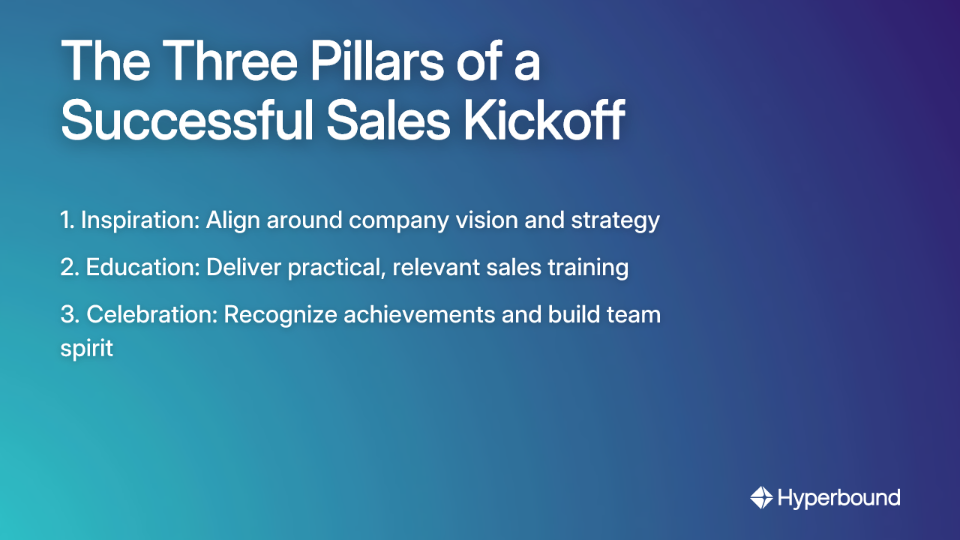
Every successful SKO is built on three core pillars:
The most effective SKOs are designed with human behavior in mind:

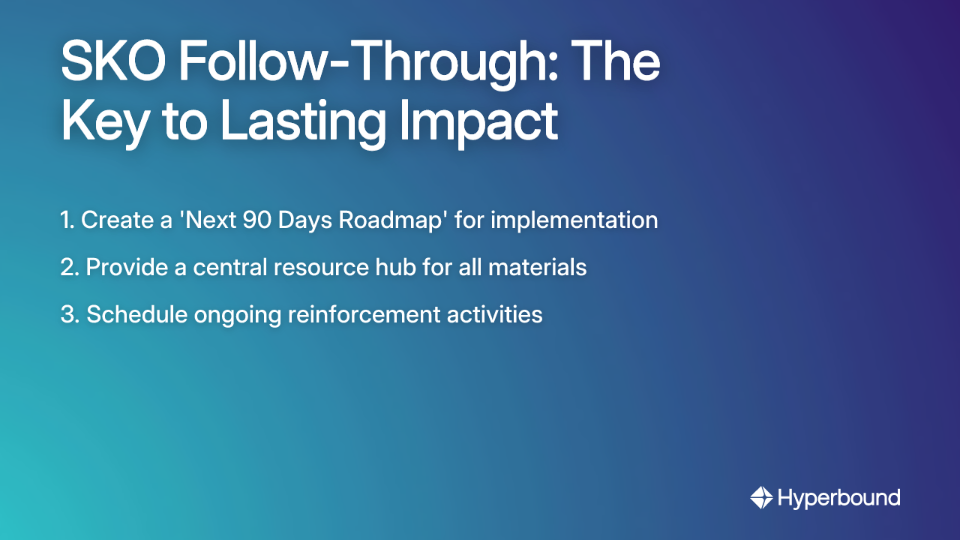
The biggest mistake companies make is missing follow-through. An SKO fails if the learning isn't reinforced:
Day 1: Vision & Strategy
Day 2: Skills & Celebration
Addressing the common sentiment that "team building exercises kind of suck," here are activities that foster connection without the cringe:
Wondering about the dress code? Business casual is generally a safe bet. As one experienced sales professional advises: "Grab a comfortable blazer, wear it over almost anything and you'll probably fit in." When in doubt, it's better to be slightly overdressed than underdressed.
Don't just hang out with people you already know. "Use the opportunity to network. Meet as many people as you can, sales leaders, product managers, senior leadership." If you're unsure where to start, "ask your new boss and a new teammate" for introductions.
Remember that while SKOs often include social activities, they're still professional events. "Pace yourself and remember that no one remembers if you are the first person to leave the bar." Avoid behavior that might damage your reputation – there are numerous stories of careers derailed by poor judgment at company events.
Whether you're planning or attending, use this Sales Kickoff Checklist to ensure you're prepared:
For Planners:
☐ Define clear objectives aligned with company goals
☐ Survey sales team for input on content and format
☐ Create a balanced agenda across the three pillars (Inspiration, Education, Celebration)
☐ Prepare pre-work materials and distribute in advance
☐ Arrange for recording key sessions for later reference
☐ Develop a 90-day follow-up plan for reinforcement
For Attendees:
☐ Complete any assigned pre-work
☐ Bring business cards and prepare a brief personal introduction
☐ Pack appropriate attire (business casual with options to dress up)
☐ Set personal goals for what you want to learn and who you want to meet
☐ Prepare questions for leadership and subject matter experts
☐ Schedule time after the SKO to implement key learnings
A great SKO is a strategic blend of inspiration, education, and celebration. It requires meticulous planning and an approach rooted in psychological principles like the Peak-End Rule.
By focusing on authenticity, peer-to-peer learning, and actionable takeaways, you can transform your SKO from a dreaded obligation into the most valuable event of the year. Whether you're planning the next sales kickoff presentation or attending as a participant, these strategies will help you maximize the experience and drive real results.

Remember, the ultimate measure of an SKO's success isn't the event itself, but the impact it has on sales performance in the months that follow. Make every minute count!
A Sales Kickoff (SKO) is an annual event for a company's sales team designed to celebrate past achievements, align on future strategy, and prepare for the upcoming year. It's more than just a meeting; it's a strategic event built on the three pillars of inspiration (aligning on vision), education (providing practical training), and celebration (recognizing success and building camaraderie).
To make an SKO engaging, focus on interactive and peer-led sessions rather than one-way lectures. Implement formats like peer teaching, "Success Circles," customer panels, and scalable role-plays. Activities should foster genuine connection without feeling forced, such as a high-energy "Rock, Paper, Scissors Extreme" tournament or casual networking events.
The most common mistake is a lack of follow-through after the event ends. Many companies fail to reinforce the learnings from the SKO, causing the initial momentum and knowledge to fade. To avoid this, create a "Next 90 Days Roadmap" for implementation, provide a central hub for all materials, and schedule ongoing reinforcement activities like continuous coaching and practice.
A typical Sales Kickoff lasts between one to three days, with a two-day agenda being a popular and effective format. This allows enough time to cover the core pillars: Day 1 can focus on vision and strategy, while Day 2 can be dedicated to skills training and celebration. The exact length should align with your specific objectives and budget.
The standard dress code for a Sales Kickoff is business casual. This is a safe and appropriate choice for most sessions. A comfortable blazer is a versatile piece you can wear over almost anything. It's always better to be slightly overdressed than underdressed, so consider packing an option for more formal evening events or awards ceremonies.
The success of an SKO is measured by its long-term impact on sales performance, not just by feedback on the event itself. Key metrics to track include improvements in quota attainment, adoption of new sales methodologies (like MEDDIC), higher win rates, and the application of new skills observed in call recordings and coaching sessions in the months following the event.
Good team-building ideas are those that foster genuine connection without feeling forced or awkward. Instead of traditional trust falls, consider high-energy, low-stakes games like a "Rock, Paper, Scissors" tournament, a "Shark Tank Fail" pitch session for bad ideas, or an optional community volunteer opportunity. Often, a simple, well-organized happy hour provides the best environment for connection.









Use Cases
Legal