Do you ever feel like your spoken English sounds flat, monotone, and boring? Perhaps you've been told your speech lacks voice modulation, making it sound "dull and robotic," or that you can't convey any emotion in your voice. Maybe your pronunciation is inconsistent, your fluency shaky, and sometimes your speech is just unclear.
You're not alone. Many people struggle with these exact issues, but here's the good news: vocal delivery isn't an innate talent—it's a trainable skill.
The key to transforming your speech from monotone to magnetic lies in mastering what communication experts call the "4Ps of Speech": Power, Pitch, Pace, and Pause. This framework provides actionable tips to develop a dynamic vocal delivery that will captivate your audience whether you're giving a presentation, participating in a meeting, or simply having a conversation.
As one experienced public speaker noted, "People tend not to remember exactly what you said but they will remember HOW you said it." Let's dive into how you can make your voice an instrument of influence.
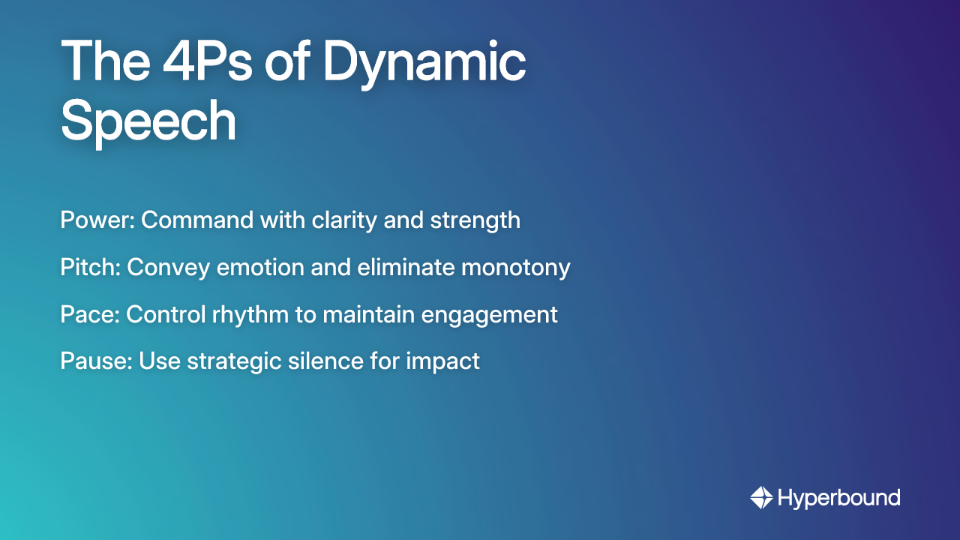
Power isn't about shouting—it's about speaking with clarity, strength, and control. It ensures your message isn't just heard but understood.
The engine for vocal power comes from proper breath support. Diaphragmatic breathing provides deeper breath control for natural amplification without strain:
Posture is Power: Stand or sit up straight. Good posture allows for full lung expansion and better breath support, which directly impacts your vocal projection.
Articulation & Enunciation Drills: To combat inconsistent pronunciation and unclear speech:
One Reddit user who struggled with flat delivery found that "focusing on articulation exercises daily for just five minutes made a noticeable difference after two weeks."
Pitch is the highness or lowness of your voice's frequency—it's the musicality of your speech and your primary tool for conveying emotion. A varied pitch is the direct antidote to a monotone delivery that so many struggle with.
Higher pitches naturally convey excitement or urgency, while lower pitches signal seriousness or authority. Mastering pitch variation adds emotional texture to your words.
Pitch Glides (Sirens): In one smooth breath, glide your voice from your lowest comfortable note to your highest, and back down again, like a siren. This expands your expressive range and builds awareness of your full vocal capacity.
Emotional Reading: As recommended by users, "Practice reading prose at home as if you were acting." Take a single sentence and read it multiple times, each time with a different emotion: joyful, angry, curious, compassionate. Notice how your pitch changes naturally with each emotion.
Question Intonation: Practice asking questions, focusing on raising your pitch at the end to convey inquiry. This simple exercise builds awareness of pitch control and helps break monotonous patterns.
Shadowing Exercise: Find a speaker or actor whose delivery you admire. Record yourself mimicking their exact intonation patterns, then compare. This technique helps you internalize natural pitch variations.
Pace is the speed at which you speak, and it profoundly influences audience engagement and comprehension. A constant, unchanging pace leads to a dull, monologue-like delivery that can lose your audience quickly.
Slow Down: To emphasize key points, build drama, or explain complex ideas. As one communication coach notes, "When you have something important to say, reduce your pace by about 30%."
Speed Up: To create excitement, convey passion, or cover simpler, foundational information. Quick bursts of faster speech create energy and forward momentum.
Create Contrast: The magic happens in the variation. Your message gains pizzazz when you deliberately alternate between faster and slower segments.
Strategic Reading: Record yourself reading a text. First at your normal speed. Then read it again, intentionally slowing down for important phrases and speeding up on transitional ones. Analyze the difference in impact when you listen back.
Syllable Emphasis: To improve clarity at any speed, practice reading a text while consciously emphasizing each syllable. This forces you to slow down and be more deliberate with your rhythm and flow.
1-2-3 Drill: Read a paragraph three times—first at your normal pace, then extremely slowly, then somewhat quickly. This builds conscious control over your speaking rate.
A pause is not an awkward gap but a strategic tool for emphasis and clarity. It's the key to adding natural pauses and breaking up a robotic flow. As one Reddit user struggling with flat delivery noted, learning to use intentional pauses was transformative for their speech.
For Emphasis: Pause immediately before or after a critical point. This silence acts like a spotlight, telling the audience, "This is important."
For Comprehension: After presenting a complex idea or a surprising statistic, pause to give your audience a moment to absorb it.
For Transition: Use a brief pause to signal a shift from one topic to the next, helping to structure your speech.
Strategic Pause Marking: Take a speech or a paragraph you've written. Go through and mark where you will intentionally pause with a / symbol. Practice delivering it with these pauses for emphasis. Record yourself to see if the pauses feel natural and have the desired effect.
The Dramatic Pause Challenge: Choose a simple statement and practice delivering it with a 3-second pause at different points. Notice how the meaning shifts depending on where you place the pause.
Interactive Practice: During conversations, consciously incorporate pauses after asking questions or making important points. Observe how this changes the dynamic of the interaction.
The goal isn't to become someone else, but to enhance your own authentic voice. As one speaker advised, "Your goal should be to find your own natural style—don't try to be someone else." Focus on gradual changes to avoid sounding forced or artificial.
Confidence comes from preparation and a dynamic approach to improvement:
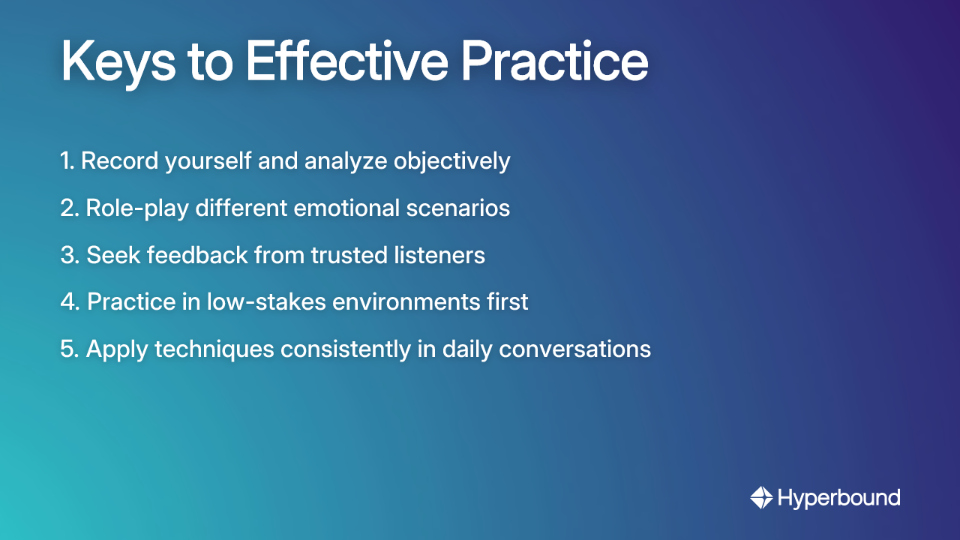
Apply these techniques in low-stakes settings first. Practice the 4Ps during phone calls with friends, in casual meetings, or while reading aloud to yourself. Then gradually incorporate them into more important communications.

Mastering the 4Ps—Power, Pitch, Pace, and Pause—is the key to unlocking a dynamic, engaging, and influential speaking voice. This isn't an overnight transformation, but a journey of consistent practice.
Start small. Pick one drill from this guide—like the diaphragmatic breathing exercise or emotional reading—and practice it for five minutes today. Remember, vocal delivery is a trainable skill, not an innate talent. With deliberate practice focusing on these four elements, you'll transform your flat, monotone delivery into a magnetic, dynamic voice that captivates any audience.
Your voice is your instrument. Learn to play it well.










Use Cases
Legal