
You've spent weeks nurturing this prospect. Multiple calls, a polished demo, addressing every concern. Now you're sitting in uncomfortable silence after asking for the sale, that dreaded "commission breath" making the air heavy between you. Your instinct screams to fill this pregnant pause with more features, another discount, anything to avoid rejection.
But what if the most powerful move isn't pushing harder—but pulling away entirely?
Let's acknowledge what many sales professionals won't admit: we're often terrified of asking for the sale. As one sales professional confessed on Reddit, "so many people [are] scared to ask the question like the customer doesn't realize you're trying to sell him something." This hesitation comes from a well-intentioned place—nobody wants to appear pushy or desperate.
Yet this fear creates a self-fulfilling prophecy. According to sales forums, "Most salespeople even if they ask for the sale, wait too long making it awkward and potentially losing the sale from their lack of certainty, transferring that lack to the prospect."
The truth? Prospects can sense desperation like sharks detect blood in water. As another sales veteran bluntly put it: "Prospects are like women, they sense if you are desperate and run a mile." This desperation manifests as what seasoned professionals call "commission breath"—that palpable anxiety that communicates you need this deal more than the prospect needs your solution.
This article will explore a counterintuitive yet powerful closing technique: the strategic withdrawal. By mastering the art of walking away, you'll discover how to leverage psychological principles like scarcity to close more high-ticket sales while maintaining your integrity and the prospect's respect.
The "take away" or "walking away tactics" tap into a fundamental principle of human psychology: the Scarcity Principle. When something appears limited or potentially unavailable, we instinctively value it more highly.
The fear of missing out (FOMO) is a powerful motivator that operates beneath conscious awareness. When prospects sense they might lose access to your solution, product, or expertise, their perceived value often increases dramatically.
This isn't manipulation—it's hardwired human behavior. Studies in social psychology have consistently shown that people place higher value on opportunities when they believe those opportunities might disappear. This explains everything from the effectiveness of "limited time offers" to the frenzy of Black Friday sales.
When implemented ethically, the scarcity principle isn't about creating false urgency. It's about honestly communicating the real limitations of your time, resources, or availability. As consultative selling experts emphasize, this technique works because you're being authentic about your boundaries and the value you provide.
The most successful practitioners of walking away tactics understand that this approach only works when:
Recognizing the right moment to disengage requires emotional intelligence and careful observation. One sales professional on Reddit described it perfectly: "Knowing the right time to walk away from them and let them convince themselves."
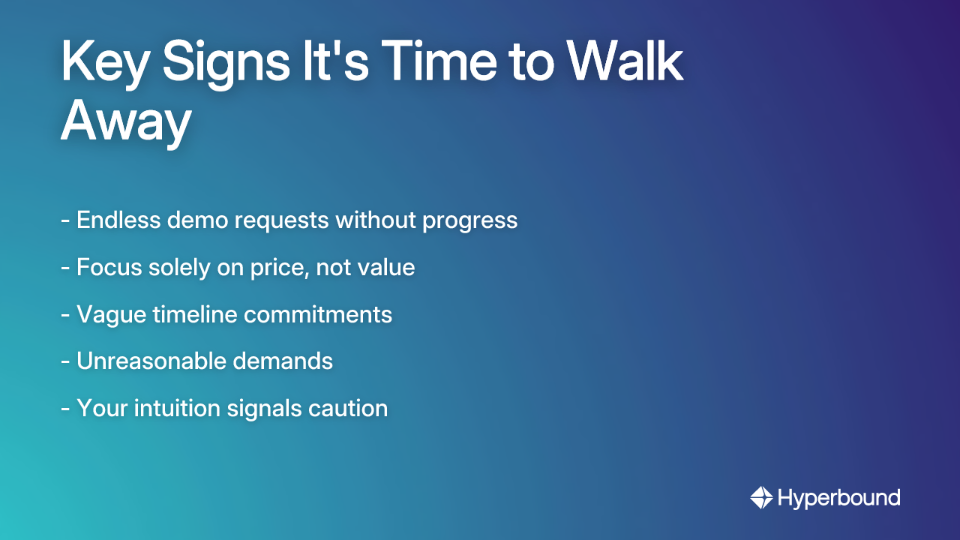
Here are clear signals that a strategic withdrawal might be your best move:
A strategic withdrawal is particularly effective when handling objections that mask deeper hesitations. When prospects repeatedly raise new concerns after each one is addressed, they're often signaling they need more time or space to make their decision.

Walking away doesn't mean burning bridges. Done correctly, it can strengthen relationships and position you as a respected advisor rather than a desperate vendor.
Before discussing tactics, let's establish what makes a withdrawal ethical:
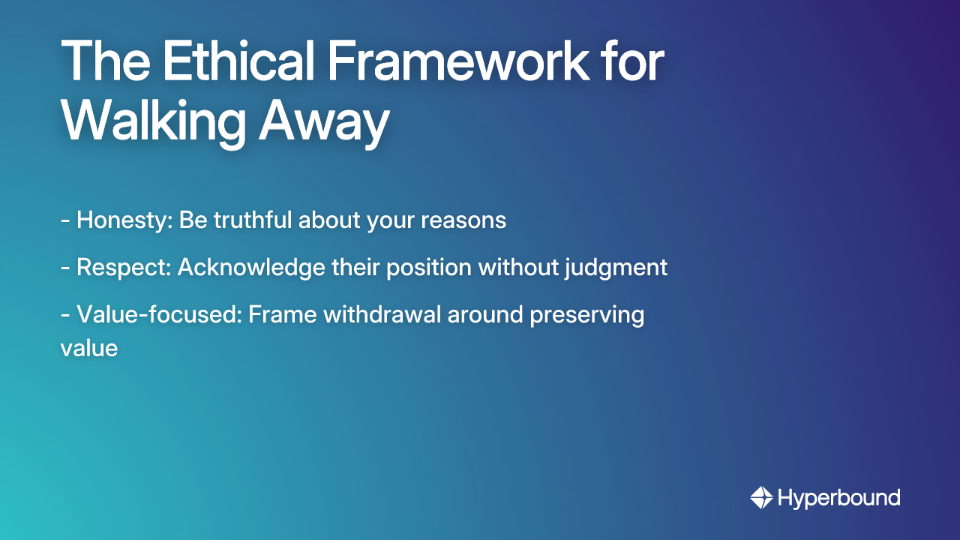
This approach uses the mirror technique subtly—reflecting the prospect's needs while maintaining your professional standards.
The following scripts demonstrate how to implement walking away tactics in various situations. These aren't just theoretical—they're battle-tested approaches shared by successful sales professionals.
"I appreciate your interest in negotiating the best possible deal. However, our pricing reflects the value and results we consistently deliver to our clients. At this point, I don't think we can provide the quality you deserve at the price point you're seeking. I suggest exploring other options that might better fit your budget constraints. If circumstances change, or if you decide our original proposal makes sense, my door remains open."
This script works because it:
"Based on our conversations, I sense you're still weighing several factors in your decision. Rather than continue in this holding pattern, let me step back and give you space to consider your options without any pressure. Would it be helpful if I reached out in [specific timeframe], or would you prefer to contact me when you're ready to move forward?"
The absent-minded beggar approach works here because it:
"I understand you're looking for [specific customizations/services]. After carefully considering your requests, I've realized our solution may not be the best fit for these specific needs. We excel at [your core offering], but what you're describing falls outside our area of expertise. I'd rather be honest about this than promise something we can't deliver exceptionally well."
This permission-based close works because it:
Mastering these scripts requires more than just reading them—it demands practice. Reps need a safe environment to rehearse their tone, timing, and delivery until these high-stakes conversations feel natural. This is where platforms like Hyperbound become invaluable. With AI Sales Roleplays, teams can practice these delicate withdrawal scenarios against realistic AI buyer personas, building the confidence needed to deploy them effectively in live deals.
The power of walking away extends far beyond potentially saving a single deal. Its true value lies in how it transforms your entire sales approach and business relationships.
When you can confidently walk away from deals, you signal to prospects (and yourself) that you bring genuine value. This mindset shift eliminates the desperation that poisons so many sales interactions. As you implement these techniques, you'll find yourself asking better prequalifier questions and focusing on truly qualified prospects.
Companies known for walking away from poor-fit clients often develop strong reputations that attract better prospects. Your willingness to say "no" becomes a powerful differentiator in markets where most competitors say "yes" to everything.
Each time you walk away from a deal for specific reasons, you gain valuable insight into how prospects perceive your offering. This information helps you refine your value statement and address common objections more effectively.
The most successful sales professionals have mastered closing techniques that include knowing when to walk away. They understand that a strategic withdrawal isn't giving up—it's taking control of the sales process.
By applying the psychology of scarcity ethically, reading the signs that a prospect needs space, and using professional withdrawal scripts, you transform "no" from a feared word into a powerful tool that often brings prospects back with renewed interest and respect.
Remember that many deals are lost not because salespeople push too hard, but because they don't recognize when stepping back would actually move the prospect forward. The pregnant pause after asking for the sale shouldn't be filled with desperate concessions—sometimes, it should be followed by a confident withdrawal that gives your prospect the space to realize what they might be missing.
The true power of "no" lies in showing that you value your solution enough to walk away when the conditions aren't right. And paradoxically, that's often exactly what makes prospects decide they can't let you go.
The strategic withdrawal is a sales technique where you intentionally disengage from a prospect who seems indecisive or is a poor fit, rather than continuing to push for a sale. This counterintuitive approach shifts the power dynamic. By showing you're willing to walk away, you communicate confidence in your solution's value and eliminate the "commission breath" or desperation that can drive prospects away.
Walking away from a sale is effective because it leverages the psychological principle of scarcity. When a prospect senses that an opportunity might become unavailable, their fear of missing out (FOMO) often kicks in, causing them to perceive the product or service as more valuable. It's not about manipulation; it's about authentically communicating that your time and resources are limited, which prompts genuinely interested prospects to act.
The right time to walk away is when a prospect shows clear signs of being a bad fit or is stuck in a cycle of indecision. Key signals include endless demo requests without progress, a singular focus on price over value, vague timeline commitments, or making unreasonable demands. Trusting your intuition is also crucial; if a deal feels wrong, a strategic withdrawal may be your best move.
You can walk away professionally by being honest, respectful, and keeping the focus on value and fit. The goal is not to be abrupt or dismissive. A professional withdrawal involves reaffirming your understanding of their needs, clearly stating why you believe it's not a good fit at the moment (e.g., misalignment on price, features, or timeline), and leaving the door open for future collaboration should their circumstances change.
"Commission breath" is the palpable anxiety or desperation a salesperson exudes when they are overly focused on closing a deal for their own benefit. Prospects can sense this desperation, and it erodes trust. The ability to strategically walk away is the perfect antidote. It demonstrates that you are confident in the value you provide and are more focused on finding the right fit for the client than on simply making a sale, which replaces desperation with professional authority.
If a prospect doesn't come back after you walk away, it often means they were never a truly qualified buyer in the first place. Consider this a successful outcome. The walking away technique acts as a powerful qualification tool, filtering out prospects who aren't serious, don't see the value in your offer, or don't have the budget. This saves you valuable time and resources, allowing you to focus your energy on high-potential deals that are a much better fit for your business.










Use Cases
Legal