
You've set up your cold outreach campaign, carefully crafting what you believe is a personalized message. But days go by with zero responses. Your open rates are dismal, and worse, you notice an uptick in unsubscribes and spam reports. What went wrong?
"I don't know where you live, but mass outreach is dead," a frustrated sales professional recently complained on Reddit. It's a sentiment echoed across forums and LinkedIn posts: inboxes are more crowded than ever, and traditional cold email tactics simply don't work anymore.
But is cold outreach truly dead? The data suggests otherwise. According to industry research, when done right, cold email can deliver an ROI of up to 4400% and average open rates of 24%. The problem isn't cold outreach itself—it's the "spray-and-pray" methodology that treats prospects like numbers rather than people.
Let's start with an uncomfortable truth: that "personalization" you're so proud of? It's not fooling anyone.
"I am not saying this type of dumb personalization which says 'I saw that {{firstName}} work as {{position}} at {{companyName}}' but something meaningful for each lead," one sales expert points out. Another agrees: "That kind of personalization doesn't work anymore. It screams 'automated.'"
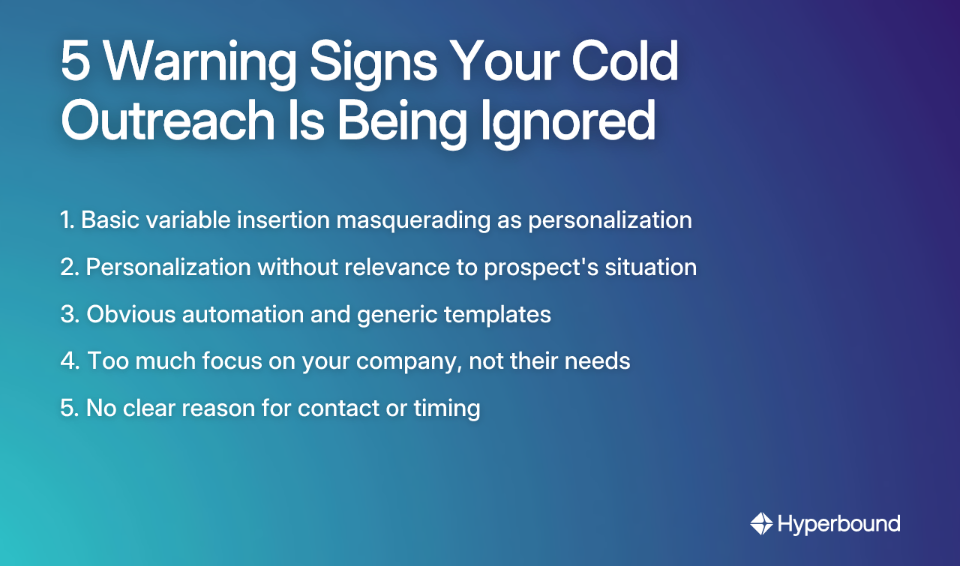
Here's why most cold outreach feels like spam:
The result? Your carefully crafted message joins the pile of ignored emails or, worse, gets flagged as spam—further damaging your sender reputation.
The foundation of effective outreach isn't better templates—it's better research. Before writing a single word, you need to gather meaningful insights about your prospects.
Start by clearly defining who you're targeting. Your ICP should include:
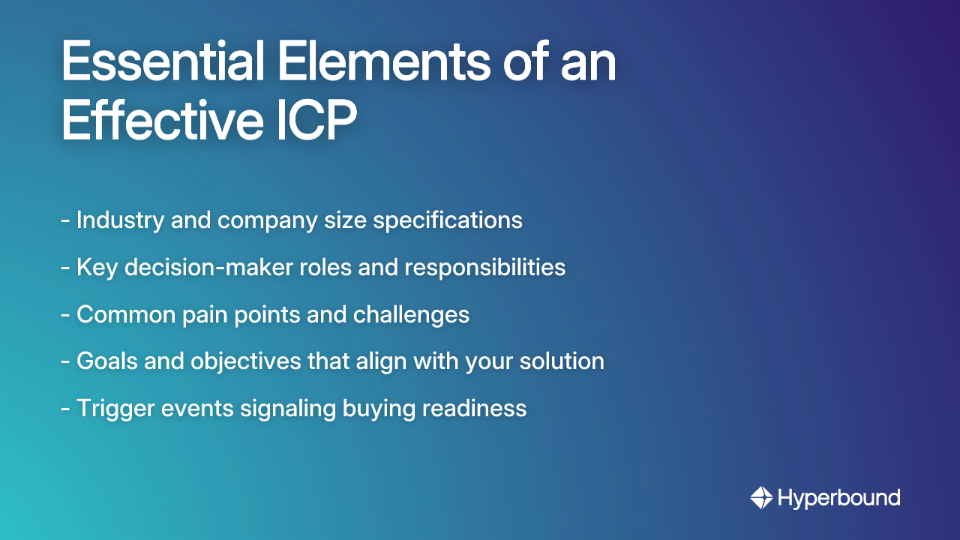
This foundation guides all your prospecting efforts and prevents wasted time on poor-fit leads.
Research shows LinkedIn prospecting can yield a 48% reply rate compared to just 6% for standard cold emails. Here's how to do it effectively:
AI-Powered scraping tools like Apify and Serper can help you extract valuable information from company websites:
The goal is to find a specific "reason for outreach" that makes your message timely and relevant. Maybe they just expanded to a new market, published a thought leadership piece that aligns with your solution, or hired for a role that signals a problem you can solve.

With your research in hand, it's time to create messages that feel individually crafted while maintaining efficiency through Dynamic Email Generator tools.
Dynamic email templates allow you to "build once, personalize infinitely" by populating emails with unique data for each recipient. Many email marketing platforms offer drag-and-drop builders for creating these templates without coding knowledge.
The key is creating a structure that allows for meaningful personalization beyond basic variables:
Subject: {Specific observation about prospect's recent activity}

Hi {First Name},

{Personalized opening based on research finding}

{Question related to their specific situation}

{Brief value proposition with relevant case study}

{Clear, low-friction call to action}

Regards,
{Your Name}
Your subject line is the first hurdle. Industry data shows that personalizing subject lines can improve open rates by 26-50%.
Effective examples include:
Keep subject lines under 50 characters and focused on them, not you.
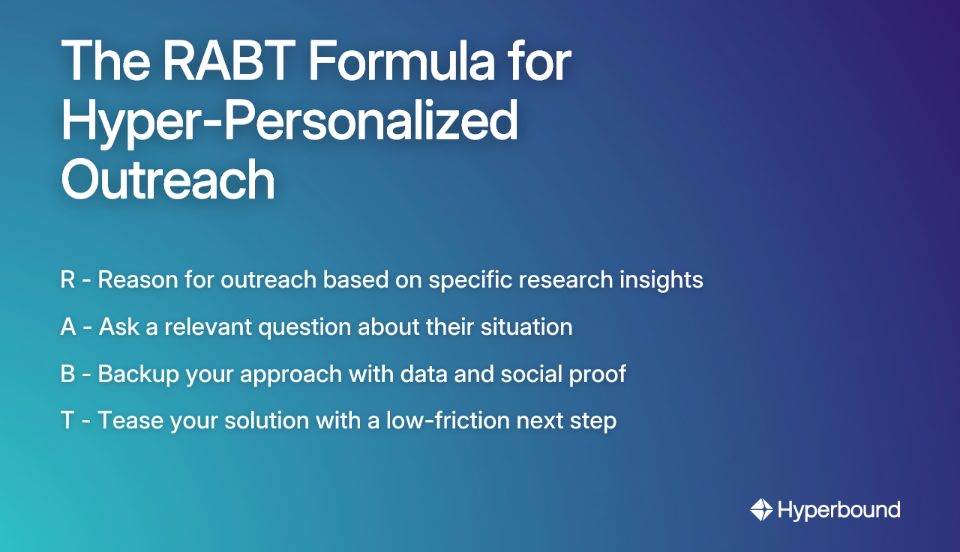
For the email body, consider the RABT Formula to create hyper-personalized outreach:
Even with robust AI-Powered systems and Auto-Disqualification Rules, nothing replaces human judgment. The Human-in-the-Loop approach ensures every message passes a quality check before sending.
This step prevents embarrassing errors like:
Most modern outreach platforms include collaborative features for team members to review and approve emails before they're sent. This small investment of time dramatically improves response rates and prevents reputation damage.
Beyond just reviewing the text, leading sales teams use platforms like Hyperbound to practice delivering these personalized messages in realistic AI roleplays, ensuring the tone and delivery are as compelling as the written word.
Let's see the difference between spray-and-pray and hyper-personalized outreach in action:
Subject: Our Services
Body:
Hi {{firstName}},
I saw you work as {{position}} at {{companyName}}. We offer great B2B lead generation solutions that can help your business grow and save money. Our platform is the best in the industry.
Are you free for a demo sometime next week?
Best,A Salesperson
Subject: Your recent expansion into enterprise market
Body:
Hi Michael,
I noticed in your Q2 earnings call that Acme Corp is prioritizing enterprise customer acquisition this year—congrats on the 27% growth already! The new case study with Tesla is impressive.
As you move upmarket, how are you adapting your lead qualification process to handle the longer enterprise sales cycles?
We recently helped Salesforce reduce their enterprise lead evaluation time by 40% using our AI-Powered qualification system with custom B2B scoring models.
I have a specific idea for how Acme could implement something similar while maintaining your current Hubspot CRM setup. Worth a 15-minute chat next week?
Best,Sarah
The difference is striking. The second email demonstrates genuine research, addresses a timely business challenge, and offers relevant value backed by social proof.
Cold outreach isn't dead—but lazy, irrelevant, spray-and-pray tactics certainly are. Today's effective outreach requires:
By combining these elements, you transform cold outreach from spam to a valuable connection that prospects actually welcome. Your Google Sheets Sync may show fewer total emails sent, but your results will speak for themselves as Decision Agent engagement and response rates climb.
Remember: In today's crowded inboxes, one hyper-personalized message that demonstrates real understanding will outperform hundreds of "Hello {{firstName}}" emails every time.
Yes, cold email is still a highly effective strategy when executed correctly. The key is to shift from outdated "spray-and-pray" methods to a modern approach focused on hyper-personalization and relevance. When your message provides genuine value and addresses a prospect's specific needs, it can achieve high open rates and deliver a significant return on investment.
Hyper-personalization is the practice of crafting a message that is so specific to the recipient it feels like a one-to-one conversation. It goes far beyond inserting a name or company (e.g., {{firstName}}). It involves referencing a prospect’s recent article, a company announcement, a shared connection, or a specific business challenge you've identified through research, making your outreach timely and uniquely relevant.
You can find powerful, relevant information by conducting deep research on platforms like LinkedIn Sales Navigator and the prospect's company website. Look for "trigger events" like recent funding rounds, new hires in key roles, product launches, or thought leadership content they've published. Analyzing their blog, case studies, and even job postings can reveal strategic priorities and pain points you can address.
Relevance is more important because it connects your solution directly to a prospect's active needs or goals, while basic personalization is easily ignored. An email that is highly relevant to a challenge a company is facing will capture their attention, even with minimal personalization. In contrast, an email that uses the prospect's name but offers an irrelevant solution will likely be deleted.
The RABT formula provides a structure for writing effective, hyper-personalized emails. It stands for:
You can achieve personalization at scale by using dynamic email templates powered by detailed research. Instead of just populating names and companies, your templates should have fields for unique insights, trigger events, and personalized questions. Critically, always include a "human-in-the-loop" review step to quality-check every message before it's sent, ensuring it sounds natural and is error-free.











Use Cases
Legal