From Onboarding Tracking to Sales Certification: A Seamless Path to Elite Sales Performance
7
min read

7
min read
You've just hired a promising new sales rep. The paperwork is signed, their laptop is set up, and they're eager to start closing deals. But three months later, they're still struggling to articulate your value proposition, fumbling through objection handling, and showing no signs of hitting quota anytime soon. Sound familiar?
This scenario isn't just frustrating—it's silently draining your revenue potential every day. According to research, the average sales rep takes 7+ months to reach full productivity, and 33% of new hires start looking for a new job within their first six months. Meanwhile, your competition with structured onboarding is enjoying 50% greater productivity from their new hires.
The problem? Most companies mistake basic orientation for strategic onboarding. They focus on administrative tasks rather than creating a seamless path from day one to revenue-generating excellence. This disjointed approach leaves new reps overwhelmed, uncertain, and unprepared to represent your brand effectively.
The statistical impact of poor onboarding is staggering. Beyond the productivity hit, strong onboarding processes increase retention by up to 50%. When you consider the average cost to replace a sales rep exceeds $115,000, the business case for fixing your onboarding becomes clear.
But what exactly needs fixing? Let's distinguish between what you're probably doing now versus what high-performing sales organizations do:
Orientation is a one-time event focused on administrative tasks like paperwork, tool access, and basic company information. It's necessary but woefully insufficient.
Strategic onboarding is an ongoing process that includes cultural assimilation, skill development, milestone certification, and long-term engagement strategies that transform new hires into revenue-generating assets.
As one customer success professional noted on Reddit, "Onboarding typically focuses inwards on what the business needs rather than fronting it to the end user in a straightforward fashion." This same principle applies to your sales talent—they need clarity on expectations, milestones, and a visible path to success.
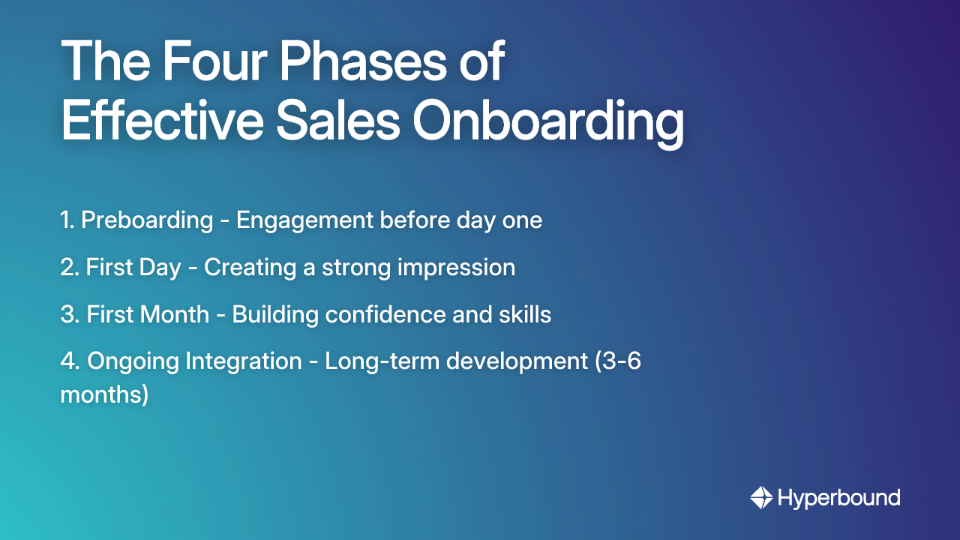
Based on research and best practices from HR Cloud, a comprehensive sales onboarding program follows four distinct phases:
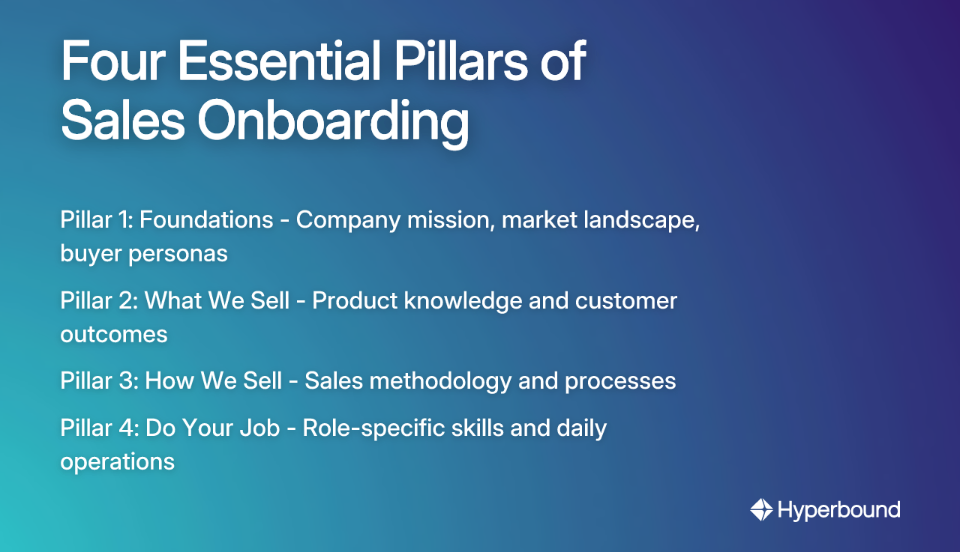
According to sales onboarding expert Nelson Frech, an effective curriculum follows four essential pillars:
A critical component missing in most onboarding programs is a 30-60-90 day roadmap that sets clear milestones and expectations. This addresses a common pain point expressed in user research: the "absence of a clear and accessible onboarding roadmap" for new team members.
The most overlooked aspect of sales onboarding is certification—the formal validation that a rep is ready to engage with customers and represent your brand effectively. Too often, sales leaders throw new reps into customer conversations before they've demonstrated mastery of key competencies.
This approach shifts certification from a "nice-to-have" to a core part of your enablement process. The goal is simple: ensure your reps aren't practicing on your prospects. Certification before customer interaction guarantees a baseline of quality and confidence for every new hire.
Instead of relying on time-consuming live roleplays and manual video reviews, modern sales coaching platforms like Hyperbound use AI to scale practice and certification. With AI-powered roleplays, new hires can practice handling objections, articulating value propositions, and telling customer stories against a realistic AI buyer—anytime, anywhere.
This asynchronous approach is especially crucial for hybrid and remote teams, addressing the common pain point of disjointed, manual processes. An AI coaching platform creates a single view of each rep's progress, providing objective, data-driven scores on every practice session. This allows managers to easily identify who needs additional support and who is truly certified and ready for customer interactions.
To truly understand if your onboarding process is effective, you need to move beyond feelings to data-driven insights. These key metrics should form the foundation of your onboarding scorecard:
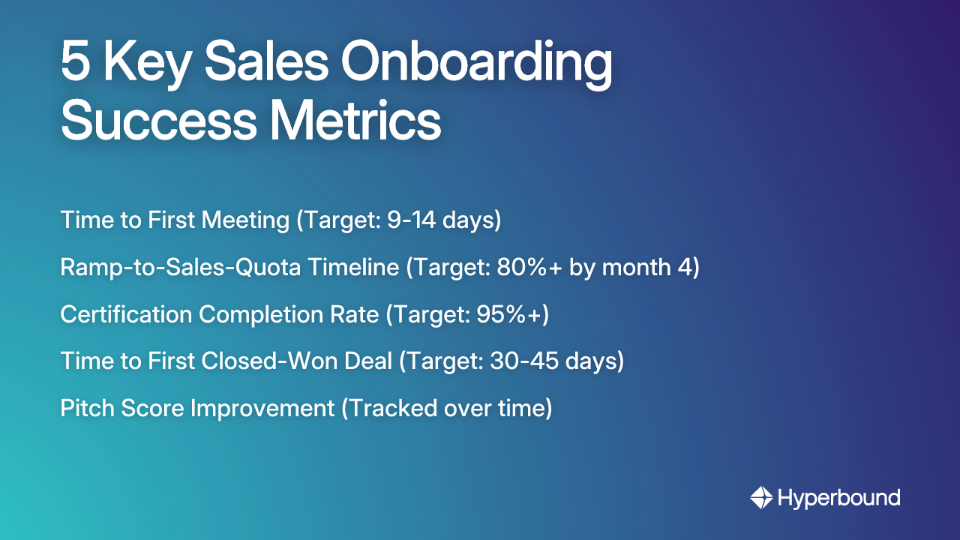
These metrics help correlate training with real-world performance, addressing the challenge of "tracking customer engagement metrics accurately" that many sales leaders struggle with.
Once a rep is successfully onboarded and internally certified, external certifications can validate their expertise and accelerate their career. According to Pipedrive, these credentials demonstrate a commitment to professional growth and can distinguish your sales team in competitive markets.
Top sales certifications to consider include:
The path from a new hire's first day to becoming a top performer is a continuous journey. It starts with meticulously planned onboarding, is validated through internal certifications, and can be enhanced by professional credentials.
This isn't just about employee development—it's a strategic imperative for creating consistency, driving predictable revenue, and building a resilient, high-performing sales culture.
Ask yourself: Is your onboarding just a checklist, or is it a strategic engine for growth? The revenue difference between these approaches is substantial, and in today's competitive landscape, you can't afford to leave it to chance.
Remember, the most successful sales organizations don't just hire great talent—they build it through intentional, structured onboarding that creates a seamless path to excellence.
Sales orientation is a one-time administrative event, while strategic sales onboarding is an ongoing process. Orientation typically covers paperwork, tool setup, and basic company information. In contrast, a comprehensive onboarding program is a long-term journey that includes skill development, cultural integration, milestone-based certification, and continuous performance tracking to transform a new hire into a fully productive, revenue-generating team member.
A comprehensive sales onboarding program should last between three to six months. While the most intensive training occurs in the first month, the full process of ongoing integration, performance reviews, and continuous development extends for several months. The goal is to guide a new representative to full productivity, which for the average sales rep can take seven months or more without a structured program.
A successful sales onboarding curriculum should be built on four essential pillars. These include: 1) Foundations (company mission, market, buyer personas), 2) What We Sell (product knowledge and customer outcomes), 3) How We Sell (sales methodology and processes), and 4) Do Your Job (role-specific skills and daily operations). This curriculum should be structured within a clear 30-60-90 day roadmap with defined milestones.
Certification is crucial because it formally validates that a new representative has mastered the core competencies needed to represent your brand effectively. By requiring certification in areas like presenting the solution, articulating customer stories, and handling objections, you ensure a baseline of quality and confidence. This prevents reps from "practicing" on live prospects, which can damage brand reputation and lose potential deals.
You can measure the effectiveness of sales onboarding by tracking key performance metrics. Critical metrics include: time to first meeting, the ramp-to-quota timeline (e.g., percentage of reps at 100% quota by month four), certification completion rates, time to the first closed-won deal, and pitch score improvements over time. These data-driven insights help you correlate training activities with real-world sales performance.
AI plays a significant role in making sales onboarding more scalable, consistent, and effective, especially for remote or hybrid teams. AI-powered coaching platforms, like Hyperbound, allow new hires to practice skills like objection handling and value proposition delivery through realistic roleplays anytime. This provides a safe space for reps to build confidence and receive objective, data-driven feedback without consuming extensive manager time for manual reviews and live roleplays.









Use Cases
Legal