You've just wrapped up a sales call and realize with sinking disappointment that you dominated the conversation. Your prospect barely got a word in as you enthusiastically pitched your solution. Even worse, you recognize that your speech was peppered with "umms," "likes," and "you knows" – filler words that made you sound uncertain and interrupted your prospect's train of thought.
Sound familiar?
If you're nodding along, you're not alone. Many sales professionals struggle with talking too much and listening too little. As one salesperson confessed on Reddit, "I'm talking a lot on the calls sometimes even when the prospect wants to talk," while another lamented how "my 'uhms' would make them stop talking."
But what if there was a simple, immediately actionable solution right at your fingertips?
Enter the mute button – your new best friend in sales calls.
Silence in sales conversations isn't a failure or an awkward void to be filled – it's a strategic tool that can dramatically improve your effectiveness.
When you embrace strategic silence, something remarkable happens: prospects feel compelled to fill that space with valuable information. According to research from SalesGravy, a pause of about four seconds can evoke emotions crucial for forming deeper connections in sales interactions.
This brief moment of discomfort resets the typical sales meeting cadence, capturing your prospect's attention and encouraging them to engage more actively.
The numbers don't lie: top-performing sales professionals speak less than 50% of the time during calls. They understand that prospects buy from people who listen to them, not from those who talk at them. This is increasingly important in today's selling environment, where 61% of salespeople report finding it more challenging to close deals than five years ago due to changing customer expectations.
Your ability to listen actively has become a critical differentiator in a noisy marketplace.
The mute button strategy is deceptively simple but remarkably effective:
This physical barrier prevents you from interrupting, even unintentionally. As one sales professional shared in a Reddit discussion, "The mute button is your friend. Count to 3 before responding too. Make sure they've completed their thought."
The 3-second rule is particularly powerful. By waiting three full seconds before responding, you:
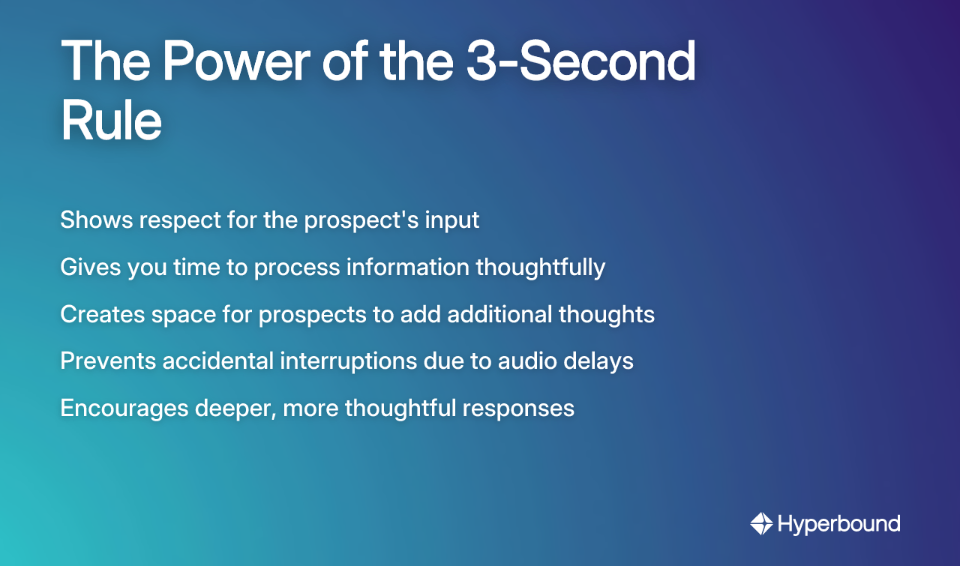
For even deeper insights during discovery calls, try extending your pause to 5-10 seconds after asking key questions. This extended silence often pushes prospects beyond their initial scripted answers, helping you uncover deeper value drivers and pain points, as recommended by Force Management.
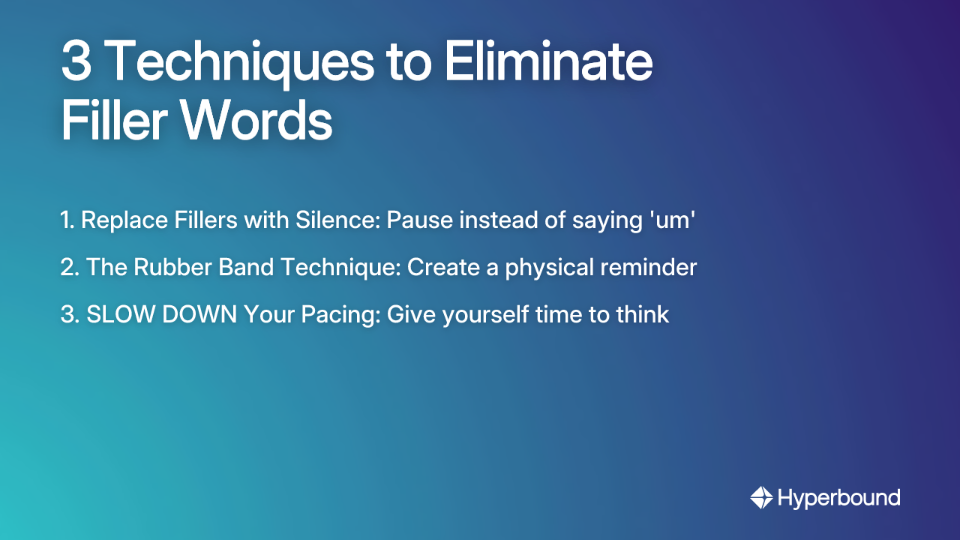
Filler words like "um," "uh," "like," and "you know" creep into our speech when our brains are processing what to say next. They're verbal crutches that can make you sound uncertain and less authoritative. More importantly, they can disrupt your prospect's train of thought.
Here are three proven techniques to eliminate them:
The mute button is your entry point to better listening, but true active listening goes beyond simply not talking. Active listening builds trust and value by creating mutual understanding.
Here are four powerful techniques to elevate your active listening skills:
The strategic use of silence throughout your sales call can dramatically improve your results. Here are the three critical moments when silence is your most powerful tool:
This is the most crucial time to embrace silence. After you ask a well-crafted discovery question, stop talking. Resist the urge to clarify or rephrase.
Pro Tip: Take a sip of water right after asking a significant question. This physical action buys your prospect time to think and prevents you from filling the silence. According to SalesGravy, this simple trick helps sales professionals maintain discipline during critical questioning moments.
This is where the 3-second rule shines brightest. By pausing after a prospect finishes speaking, you give them the opportunity to elaborate. Often, the most critical information is shared in this extra moment you provide.
The silence creates a subtle pressure to continue talking, and prospects frequently reveal their deeper concerns, objections, or needs during these extended responses.
Your instinct might be to jump in and defend when hearing an objection. Instead, pause. A moment of silence shows you are taking their concern seriously rather than rushing to counter it.
This is especially important when dealing with common objections related to:
If the silence ever feels truly awkward, don't panic and fill it with nervous chatter. Instead, reframe your question rather than answering it for them. Always be prepared with a question tree of primary and secondary questions to keep the conversation flowing productively.

As one sales professional honestly admitted, improving your listening skills is "a work in progress." Lasting improvement requires consistent practice and self-reflection on calls. Here's how to build a continuous improvement loop:
This is the single most effective way to self-diagnose your communication patterns. Listen to your own calls and track:
As recommended in a Reddit discussion, "Definitely record yourself!" While manual review is a great start, AI-powered tools can automate this process, providing objective feedback on your performance without bias.
Don't script your calls, but create a structured outline. A question tree helps you stay on track, ensuring you ask the right questions and can focus your mental energy on listening instead of worrying about what to say next.
Map out your primary questions and potential follow-ups based on different response scenarios. This preparation enhances your confidence in speaking and allows you to be fully present during the conversation.
Ask a manager or trusted colleague to listen in on live calls and provide specific feedback. Some sales teams even implement an "'ah' counter," similar to Toastmasters, to create awareness around verbal tics.
External feedback provides perspectives on your communication patterns that you might miss through self-assessment alone.
Beyond analyzing past calls, technology can help you prepare for future ones. AI platforms like Hyperbound offer a suite of tools to accelerate skill development. You can use AI Sales Roleplays to practice strategic silence and active listening in a safe, repeatable environment. This deliberate practice, combined with automated call analysis, creates a powerful loop for continuous improvement.
The mute button strategy is more than a tactic; it's a mindset shift. It's about choosing restraint over rambling, curiosity over commanding, and listening over lecturing.
By mastering strategic silence and active listening, you don't just gather better information. You build trust, make prospects feel genuinely heard, and foster stronger relationships that lead to better sales outcomes.
Like any skill, this takes practice. Start with the mute button, embrace the 3-second pause, and commit to continuous improvement. You'll be amazed at what you hear when you truly stop to listen.
Remember: In sales, your next big insight isn't hiding in your next word – it's waiting in your prospect's next sentence.

Silence is crucial in sales calls because it encourages prospects to share more valuable information, helps build deeper connections, and positions you as a better listener. Top-performing sales professionals understand that listening, not talking, builds trust. Strategic pauses can reset the conversation's dynamic, capture a prospect's full attention, and make them feel heard, leading to the discovery of deeper pain points and needs.
You should pause for at least three seconds after a prospect finishes speaking before you respond. This "3-second rule" is powerful because it ensures you don't cut the prospect off, shows you are carefully considering their words, and often encourages them to elaborate further. For key discovery questions, you can even extend this pause to 5-10 seconds to prompt more detailed, less-scripted answers.
You can stop using filler words by consciously replacing them with silent pauses, slowing down your speaking pace, and using physical reminders like the rubber band technique. Filler words often appear when you're thinking about what to say next. Instead of saying "um," simply pause. Speaking more slowly gives your brain time to process, and a tactile cue like snapping a rubber band on your wrist can help break the habit.
If a pause feels awkward, resist the urge to fill it with nervous chatter. Instead, reframe your previous question or ask a prepared follow-up question to guide the conversation forward. Feeling awkward is natural at first, but it's better to ask another thoughtful, open-ended question than to answer your own or start talking aimlessly.
The ideal talk-to-listen ratio for a sales call is speaking less than 50% of the time. Data shows that top-performing salespeople listen more than they talk. By aiming to speak for less than half the call, you ensure the conversation is centered on the prospect's needs. Recording and analyzing your calls is a great way to measure your current ratio and track your improvement.










Use Cases
Legal