You've been tasked with cold calling a prospect about a luxury product or service. Your palms are sweaty, your mouth is dry, and your mind is racing: "Where do I even start with something like this?"
If this sounds familiar, you're not alone. The high-stakes world of luxury cold calling can be intimidating, especially when you're dealing with products that cost thousands—or even hundreds of thousands—of dollars.
Traditional cold calling tactics that might work for everyday products often fall flat when selling luxury. Why? Because the psychology of luxury buyers is fundamentally different.
The luxury goods market is substantial, valued at $266.6 billion in 2024 and projected to grow to $369.8 billion by 2030. But here's what makes selling to this market unique: luxury purchases are often emotionally driven rather than logically justified.
Consider these key psychological drivers:
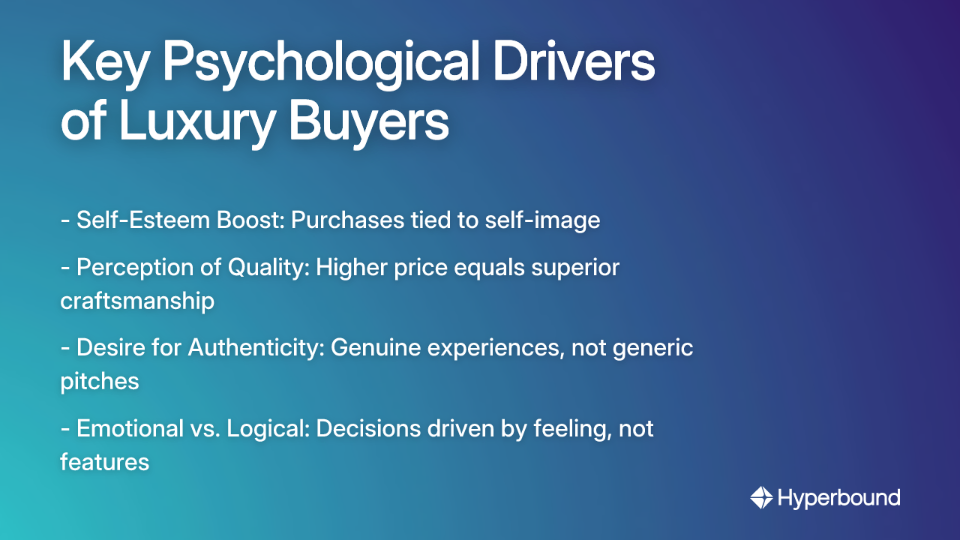
When you're cold calling about a high-ticket item, you're not just selling a product—you're selling a feeling, a status, an experience. This is why traditional feature-dumping or price-led discussions often fail with executive decision makers.
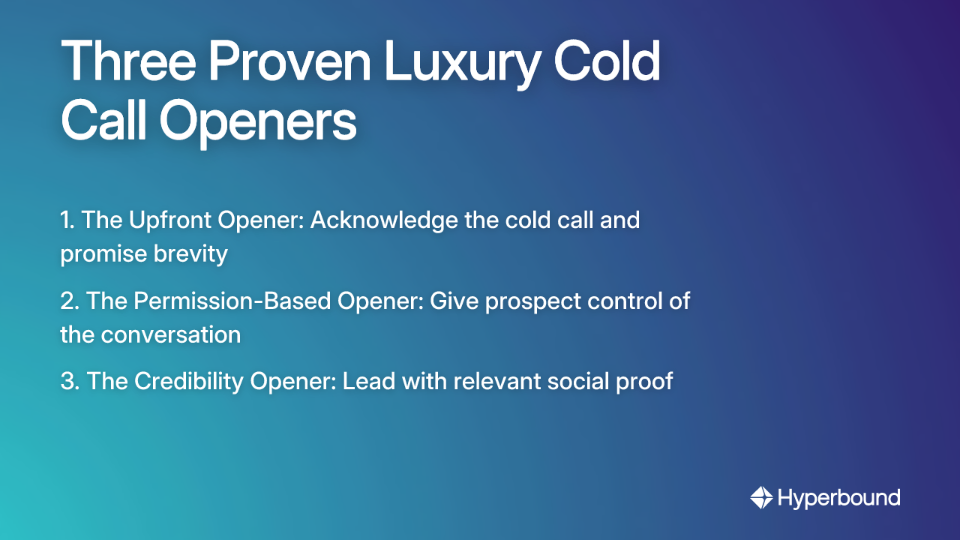
The first 10 seconds of your call will determine whether you get the next 10 minutes. Your goal is to immediately lower the prospect's guard and establish that this is not a typical, aggressive sales call.
Here are three proven disarming openers:
Pro-Tip: Change your phrasing from "My name is..." to the more assertive "This is..." As one experienced sales professional notes: "I stopped saying 'My name is Michael...' and started announcing 'This is Michael...' I found this yields more positive responses."
Once you've earned the right to continue the conversation, it's time to shift from pitching to probing. Remember: you are not a salesperson; you are a consultant. Your goal on this first call is not to sell, but to diagnose.
The SPIN model provides an excellent framework for structuring your questions, especially when preparing for sales roleplay or actual calls with executive decision makers:
When selling luxury items, these probing questions help uncover the pain points that might justify a premium purchase. For example, one effective question suggested by a sales professional is: "Curious what is going on that makes you think you should explore getting an X? Why now?" This brilliant question uncovers urgency and motivation in one go.
Remember to use your voice feature effectively during this questioning phase. Your tone should convey genuine curiosity and interest, not interrogation. Active listening is crucial—let their answers guide the conversation rather than rushing to your next prepared question.

The cardinal rule of high-ticket sales: Position value before price. This step is where you build an overwhelming case for your luxury product or service that makes the price seem reasonable—or even irrelevant—by comparison.
Here's how to build that value proposition:
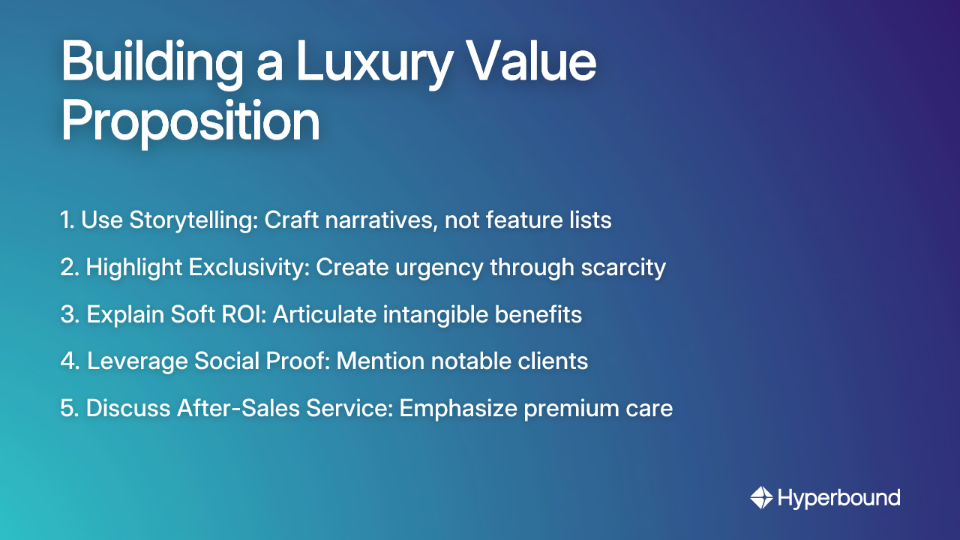
During simulated cold calls or training exercises, practice building this value proposition methodically. Using tools like Hyperbound's AI Sales Roleplays to run tailored scenarios with specific luxury products is an effective way to master this crucial skill.
When you're selling luxury items, price objections are inevitable. Remember, you're not trying to convince prospects that your offering is inexpensive—you're helping them understand why it's worth the premium.
Here's a 6-step strategy for handling objections effectively:
Mastering this process requires practice. Rehearsing responses to tough objections with an AI coaching platform provides a safe space to build confidence and fluency.
When it comes to "closing" on a high-ticket cold call, understand that your goal isn't usually to get a "yes" on the spot. The close is a commitment to the next step. Be direct and clear about what that next step should be:
"Based on our conversation, the logical next step seems to be a 15-minute virtual demonstration with our specialist. Would you be open to that next Tuesday or Thursday?"
The money is in the follow-up. This is especially true for luxury sales, where the decision cycle is often longer and more deliberate. Following up can increase conversion rates by up to 70%.
Here are practical follow-up strategies:
Selling luxury isn't about having the slickest pitch. It's about mastering a consultative process: disarming the prospect, diagnosing their deep needs through incisive questioning, building an undeniable value proposition, and guiding them through their decision-making process.
By adopting this empathetic, value-first approach, you transform yourself from a "cold caller" into a trusted advisor. This mindset shift is crucial because luxury buyers don't just want a product—they want an experience and a relationship with someone who understands their unique needs and aspirations.
The best luxury salespeople know that a cold call is just the beginning of what could be a long-term, mutually beneficial relationship. Each call is an opportunity to demonstrate your expertise, your understanding of their world, and your commitment to their satisfaction. That's the true art of selling luxury.
The fundamental difference lies in the buyer's motivation. Regular purchases are often driven by logic and need, while luxury purchases are primarily driven by emotion, self-esteem, and the desire for a unique experience. This means your sales approach must shift from discussing features and price to building a narrative around status, craftsmanship, and exclusivity.
Make a strong first impression by using a "disarming opener" that immediately lowers their guard and shows respect for their time. Instead of a hard pitch, acknowledge that it's a cold call and ask for permission to briefly explain your purpose. This shifts the dynamic from a sales pitch to a respectful conversation, earning you the right to continue.
The SPIN (Situation, Problem, Implication, Need-Payoff) model is highly effective because it positions you as a consultant rather than a salesperson. By asking structured questions, you guide the prospect to uncover their own challenges, understand the consequences of those challenges, and articulate the value of a solution themselves. This is crucial for luxury sales where the value must be deeply felt, not just told.
Build value by focusing on the story and intangible benefits, not just the product features. Use storytelling to describe the craftsmanship, highlight the exclusivity or scarcity of the item, and explain the "soft ROI" such as increased confidence or status. Leveraging social proof by mentioning notable clients also builds immense value by reducing perceived risk.
The best way to respond is to reframe the conversation around value, not to offer a discount, which can devalue the brand. Acknowledge their concern, then pivot back to the long-term ROI, superior quality, and exclusive after-sales service you've already discussed. For example: "I understand it's a significant investment. That's why our clients choose us—the durability and exclusive service ensure greater value over the long term compared to other options."
Your primary goal should not be to make a sale on the spot. Instead, aim to secure a commitment for the next logical step in the sales process. This could be a brief product demonstration, a meeting with a specialist, or a visit to a showroom. The first call is about diagnosing needs and building enough value and trust to earn a follow-up conversation.
You should follow up with persistence but also with respect for the prospect's time. The key is to add new value with each interaction. Instead of just "checking in," provide a relevant case study, an industry insight, or an update on product availability. This maintains engagement and reinforces your position as a helpful advisor, nurturing the relationship through a potentially long decision-making cycle.











Use Cases
Legal