
You've just listened to the recording of your last sales call. Manually reviewing calls is a time-consuming process, and it's often hard to pinpoint exactly what went wrong. You thought you built rapport, asked all the recommended discovery questions, handled objections, and delivered a flawless closing sequence. Yet somehow, the prospect still said they "need to think about it." Meanwhile, your colleague closed three deals this week with seemingly minimal effort—no fancy talk tracks, hardly any probing questions, and what could only be described as "feature dumping."
What gives?
After analyzing more than 100 B2B SaaS sales calls, a surprising pattern emerged that defies conventional sales wisdom. While manual call analysis is insightful, it's difficult to scale. AI-powered tools like Hyperbound automate this process, analyzing thousands of conversations to identify the precise behaviors that separate top reps from the rest. In this case, the top performers weren't the ones with the smoothest talk tracks or most intricate questioning techniques. In fact, they often did the opposite of what sales training typically recommends.
The data revealed one undeniable conclusion: the quality of the lead is way more important than anything else. As one sales leader who conducted the analysis noted on Reddit: "These customers were perfect fits and were in market. The quality of the lead is way more important than anything else."
This finding challenges everything we've been taught about sales excellence. Consider these shocking observations from the analysis:
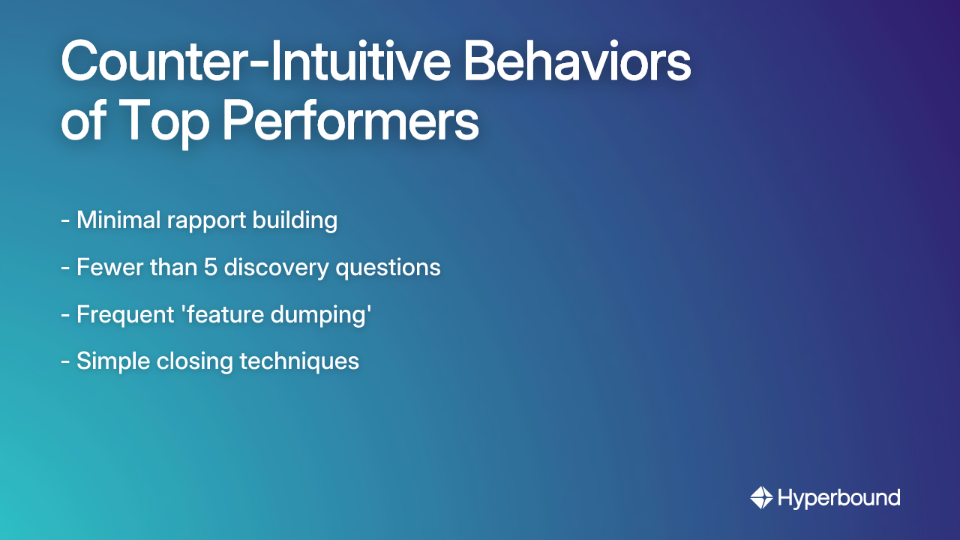
If this sounds like the opposite of what you've learned in sales training, you're right. Yet these were the behaviors exhibited by the most successful salespeople in the study.
Why? Because when you're talking to the right person at the right time with the right solution, the traditional sales techniques become almost irrelevant.
The stakes are high: according to MarketingSherpa, a staggering 79% of marketing leads never convert into sales. This isn't primarily a skills gap—it's a targeting problem.

Before diving deeper, let's clarify an important distinction:
The prospects who convert most readily exhibit specific characteristics that align with what we call the "Perfect Fit Prospect":
To systematically identify these perfect fits, many successful sales organizations use a Prospect Fit Matrix—a framework that categorizes leads based on their alignment with your ideal customer profile:
.png)
Building your own Prospect Fit Matrix is straightforward:
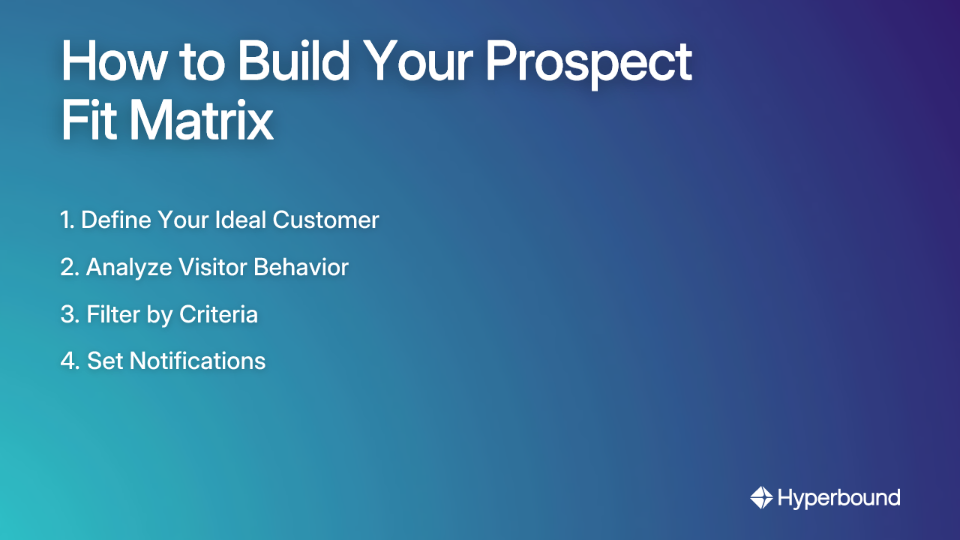
The numbers don't lie: focusing on lead quality delivers superior results. Consider these revealing statistics:
Interestingly, the Reddit analysis complicates this picture by noting that "the people relying on marketing were the bottom performers." This isn't necessarily a contradiction—it suggests that marketing leads must still be rigorously qualified. In fact, only about 27% of leads are typically qualified enough to be sent directly to sales.
Before investing time in lengthy sales processes, you need a reliable method to qualify leads. Start with this simple four-question framework:
For more complex sales environments, you might adopt one of these established qualification frameworks:
The framework you choose should align with your sales cycle complexity and transaction value. But remember—as the call analysis showed, you don't need to overwhelm prospects with dozens of discovery questions. Top performers kept qualification focused on the essential criteria.
Knowing what makes a good lead is only half the battle. You also need to recognize when a prospect is actively looking for solutions. Look for these buying signals:
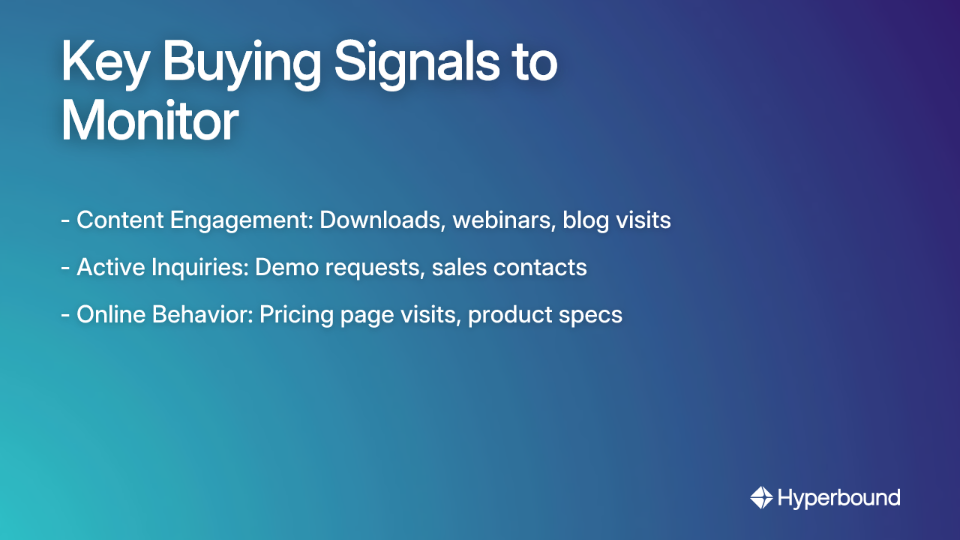
When you spot these signals, speed is critical. Responding to an inbound lead within 5 minutes makes them 9 times more likely to convert compared to waiting even 30 minutes.
This explains why in the call analysis, "feature dumping" sometimes worked for top performers. When a prospect is already in-market and a perfect fit, they're primarily looking for confirmation that your solution meets their needs. They don't need to be sold—they need to be informed.
The evidence from analyzing 100+ B2B SaaS sales calls delivers a clear message: top sales performance is an outcome of superior targeting, not just superior technique.
The deals that closed smoothly didn't have significant objections because the fit was already there. The sales process wasn't about overcoming resistance; it was about guiding an interested, qualified buyer to a solution they already needed.
This doesn't mean sales skills are irrelevant—but it does suggest that many organizations are focusing on the wrong end of the process. Instead of obsessing over closing techniques and discovery questions, redirect that energy toward:
Remember what the analysis revealed: "The quality of the lead is way more important than anything else." When you're talking to the right person at the right time with the right solution, you don't need to be a sales superstar—you just need to not get in the way.
So before you invest solely in another training on objection handling or closing techniques, ask yourself: are you talking to enough of the right people? Because in B2B SaaS sales, superior lead quality is the foundation. But once you have that perfect-fit prospect on the line, execution is everything. Ensuring your team can consistently deliver the right message and navigate those critical conversations is where the deal is won. Platforms like Hyperbound provide AI-powered roleplays, allowing reps to practice and master their talk tracks in a safe environment, ensuring they're ready to capitalize on every high-quality lead.
The single most important factor for success in B2B sales is the quality of the lead. Analysis of over 100 sales calls shows that when a salesperson connects with a "perfect fit" prospect who is already in the market for a solution, traditional sales techniques become less critical. These high-quality leads convert more easily because the product naturally aligns with their specific, urgent needs.
Top sales reps sometimes ignore traditional techniques like extensive rapport building or discovery because they are dealing with high-quality, in-market leads who are already problem-aware and solution-seeking. For these "perfect fit" prospects, the priority is to quickly confirm that the product meets their requirements. As a result, behaviors like "feature dumping" can be effective because they directly provide the information the buyer needs to make a decision, making a lengthy, traditional sales process unnecessary.
You can identify a 'perfect fit' prospect by creating and using a Prospect Fit Matrix based on your Ideal Customer Profile (ICP). First, define your ICP by listing key characteristics like industry, company size, specific needs, and budget. Then, use a Prospect Fit Matrix to categorize incoming leads as high, medium, or low fit. This allows you to prioritize high-fit prospects who are most likely to convert.
A lead is an unqualified contact, while a prospect is a lead who has been vetted and confirmed to match your Ideal Customer Profile (ICP). A lead might have shown interest by downloading content, but they haven't been qualified. A prospect, on the other hand, has been qualified through two-way communication and aligns with your target criteria, indicating they are a more serious potential customer.
The right sales qualification framework depends on the complexity of your sales cycle. For high-volume, transactional sales, BANT (Budget, Authority, Need, Timeline) is simple and effective. For mid-market, consultative sales, CHAMP (Challenges, Authority, Money, Prioritization) helps focus on customer pain points. For complex, high-value enterprise deals, the detailed MEDDIC framework is best for reducing risk and improving forecasting.
No, sales skills are still critically important, but their application changes. While superior lead quality is the foundation, strong sales skills are required to execute the final stages of the deal. Once you have a perfect-fit prospect, your team's ability to navigate the conversation, deliver the right message, and guide the buyer to a decision is what wins the deal. Skills training, especially for handling these high-stakes conversations, remains essential.











Use Cases
Legal