Every rep has deals in their pipeline that nobody has looked at but them.
A manager with eight reps has time to work maybe three deals a week. The rest of the pipeline runs on instinct. And the three that get reviewed are the ones already flagged as important, which means the deal quietly going sideways in week three is exactly the deal nobody talks through.
That isn't a management failure. Nobody has ever had the hours to support every rep on every deal. But it means the most valuable thing a manager knows, the pattern recognition they built closing deals themselves, only reaches a rep when there's an opening on the calendar.
Today we're launching the Deal Debrief Agent. Every rep gets a manager-grade debrief on every deal, and it executes the follow-up work before the conversation is over.
The debrief lives on the deal. Hit Deal Debrief from a call recording or from the deal view, pick where you want to talk, and it starts in seconds. Browser if you're at your desk. Phone if you're walking to your car after an in-person meeting. Slack huddle if that's where your team already lives.
It comes in with the full deal already loaded. Prior calls, email threads, CRM state, who's involved and who has gone quiet. There's no catching it up. The debrief starts where a conversation with a colleague who knows the account would start.
Here's a real exchange, on a deal we'll call Acme:
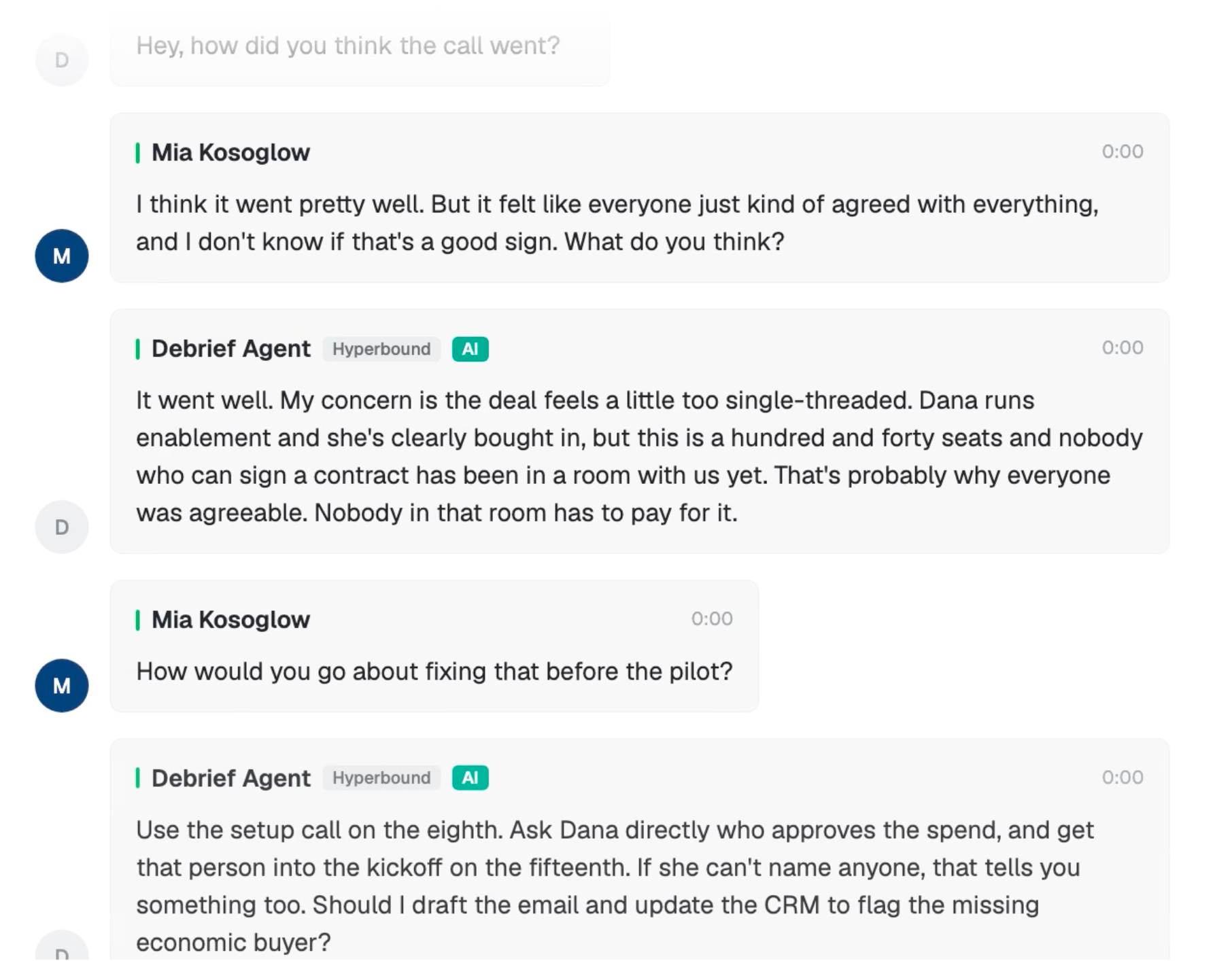
Kota: Hey, how did you think the call went?
Rep: I think it went pretty well. But it felt like everyone just kind of agreed with everything, and I don't know if that's a good sign. What do you think?
Kota: It went well. My concern is the deal feels a little too single-threaded. Dana runs enablement and she's clearly bought in, but this is a hundred and forty seats and nobody who can sign a contract has been in a room with us yet. That's probably why everyone was agreeable. Nobody in that room has to pay for it.
The rep brought a vague feeling. The debrief turned it into a diagnosis, using something the rep hadn't connected: the room was agreeable because nobody in it had budget authority.
Then it works the plan with you, and it doesn't just agree. Push on a recommendation and it tells you why, because the position comes from the deals your company has actually run rather than from a personality setting.
A debrief that ends in a list of things you should do is still a list of things you have to do.
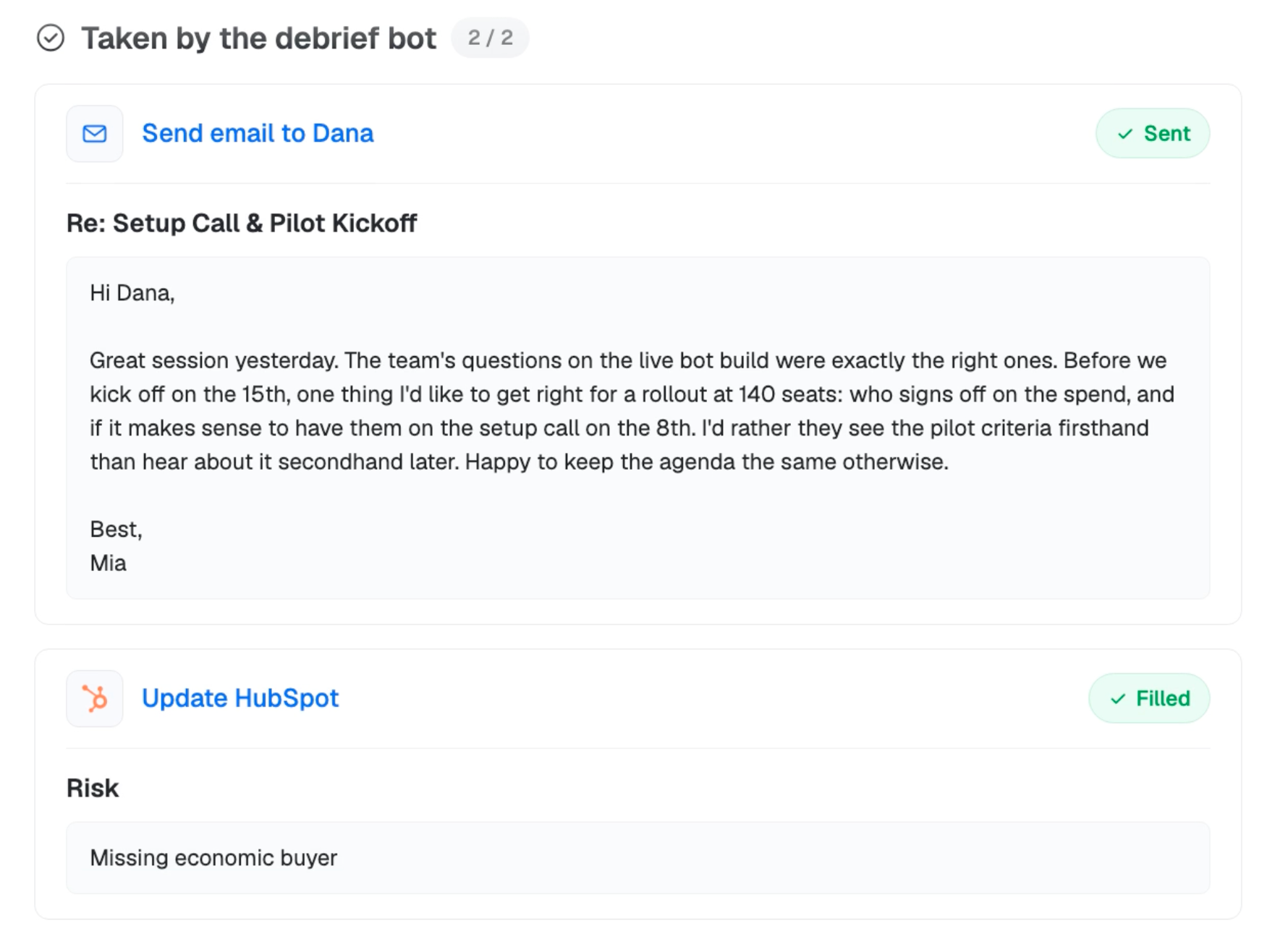
At the end of the conversation, the agent proposes the work and executes it. In the exchange above, that meant drafting the follow-up to Dana asking directly who approves the spend, and flagging the missing economic buyer on the deal record. The email arrives with the specific ask from the conversation already in it, not a generic recap of the call.
An email that's eighty percent right beats a perfect summary and a blank page. Reps write follow-ups from scratch after every single call. Now they edit them.
People hop into a huddle instead of writing a long thread for a reason. Talking is faster than typing, it doesn't require organizing the thought first, and it surfaces things you wouldn't have bothered to write down.
A rep who would never fill in six CRM fields will spend two minutes talking through a deal, because it doesn't feel like admin. It feels like the conversation they would have had with a colleague anyway. That's what makes the capture work. We aren't asking reps to report. We're giving them a conversation they want, and the record is what falls out of it.
Conversation intelligence tells you what happened on a call. Notetakers hand you a summary and leave you with a blank page. Both produce a record and stop there.
The Deal Debrief Agent has an opinion about your deal. It asks what you're going to do next, argues with you when the answer is thin, and then does the work that comes out of it.
The Deal Debrief Agent is in private preview! You can request access now!
Managers can't be in every deal, and they shouldn't be. But reps deserve someone to think the deal through with, every time they need it.










Use Cases
Legal