Klaviyo is a B2C CRM platform that brings marketing, service, data and agents together in one platform so brands can build stronger customer experiences at scale.
As the company matured into new markets and expanded into a multi-product platform, its go-to-market organization scaled to more than 1,000 reps across sales, CS, and partnerships.
That level of growth introduced a familiar challenge: How do you develop skills consistently and keep reps hitting quota across a thousand reps when the team responsible for enablement is small?
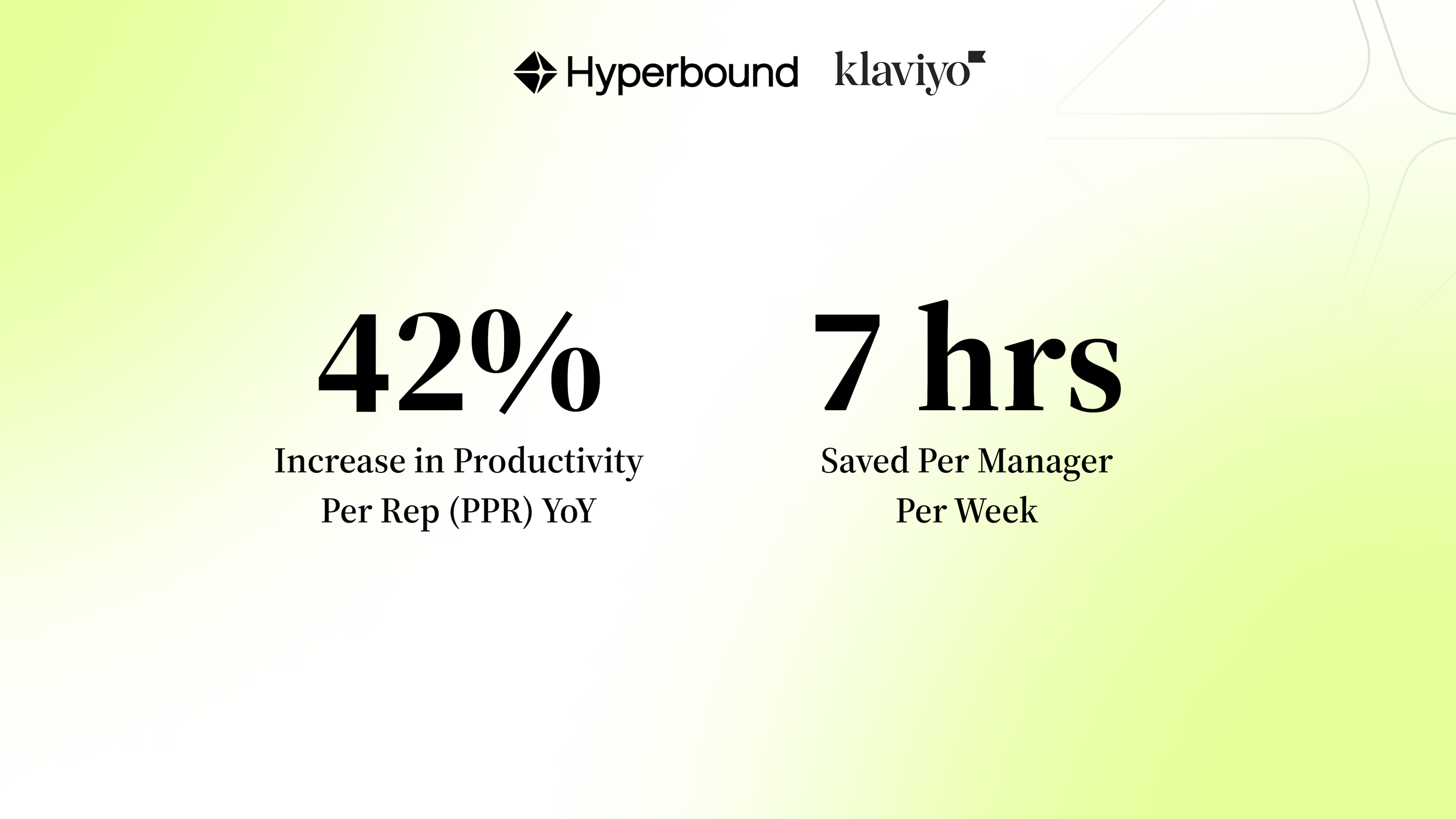
The answer reshaped how Klaviyo trains its entire GTM org. And it showed up where it matters most: a 42% year-over-year increase in new-hire productivity per rep (PPR), the average revenue each ramping rep brings into the business.
Klaviyo’s GTM motion went through a period of rapid change. The product expanded, the company pushed into new markets, and the playbook that had carried reps in the past stopped working in the present.
When Cody Normand, Head of Enablement, arrived, he noticed reps were moving too quickly from discovery to demo. The discovery phase was thin, which made it harder to show how Klaviyo could meet a buyer's needs. On the data side, Alec Harrises, Program Manager of Operations on the GTM Enablement team, saw the same gap. The GTM team needed to get more aligned.
But the bigger issue was scale. Klaviyo had two distinct populations to serve:
And one small enablement team was expected to serve all 1,000 of them.
Their existing model couldn't keep up. Enablement leaned on live sessions. These sessions were complemented by e-learnings and traditional, manager-led roleplays that were great when they happened, but often didn't. Whether a roleplay worked came down to which manager a rep had, which created messaging inconsistency and forced the enablement team into a role they never wanted: chasing managers and reps to confirm practice had happened.
Practicing and pitching a new narrative had always been a blocker because it was so hard to scale. Rolling out an updated Klaviyo narrative the old way would have taken weeks, and Cody wouldn't even have visibility into whether the roleplays were happening. At a thousand reps, the old model wasn't just slow. It was a bottleneck to the number.
Plenty of AI roleplay tools can run a scenario, and Cody did his due diligence exploring all the options. But his choice came down to one thing reps notice in the first ten seconds: whether the voice sounds real.
That mattered more than any feature checklist. The moment a voice doesn't sound real, reps turn it off, and it stops feeling like an actual roleplay. In Hyperbound testing, moments felt like a real person was on the other end. That was what made it something reps would actually spend time on.
So at GTM kickoff, the team launched a fully updated Klaviyo narrative and built a custom Hyperbound scenario reps could run on their own, from discovery flowing to the updated pitch. Instead of giving managers a month to schedule a roleplay, reps did it right there, at kickoff. Then something unusual happened. Reps started asking for more.
A culture formed around it. When a roleplay launches now, reps check the leaderboard and click into top reps' calls to learn from them. It gave new hires the chance to see exactly what a top performer did well, see what Hyperbound flagged to improve, and close the gap fast. Most importantly, it created consistency: every rep practiced the same scenario, the same messaging, the same standard. And the system no longer depended on which manager ran the session.
The impact showed up across the enablement workflow, but the place it mattered most was quota attainment.
Consistent, repeatable practice on the right conversations translated directly into ramping reps bringing in more revenue, sooner. They have been able to increase their new hire PPR (measured as total revenue divided by number of reps) by 42% year over year.
New hires are ramping faster, with more confidence, and getting on the phones sooner. Faster ramp means reps start contributing to the number earlier, which compounds across a team of 1,000.
Kota, Hyperbound’s AI agent, builds roleplays quickly. The team feeds it a few resources they already have on hand, and it returns a near-perfect roleplay that needs only minor tweaks to be production-ready.
By prompting Kota, Alec turns around reports with actionable insights. These reports aren’t just where the team stands on performance, but coaching, feedback, and what to do next. Roleplays now take minutes to build, and reports take about 30 seconds.
The team is saving managers five to seven hours per week on roleplays and coaching, freeing them for higher-impact work instead of administering practice.
For all the impact of the product itself, the team points to the partnership as the standout.
At Klaviyo, the goal was never just better training. It was a GTM team that could scale with the business and keep hitting its number. With Hyperbound, that's exactly what the data shows.










Use Cases
Legal