ALKU is a specialty staffing firm that helps companies find hard-to-place talent across life sciences, IT, and government, built on hiring entry-level account managers and recruiters, then training them into high-performing sellers from scratch.
Under the leadership of Andrew Bull (CEO), alongside Michael O’Brien (Senior Director of Sales Strategy) and James Cassin-Reed (VP of Revenue Strategy), the team faced a new challenge:
How do you scale skill development when reps need repetition to get better… but real conversations are limited?
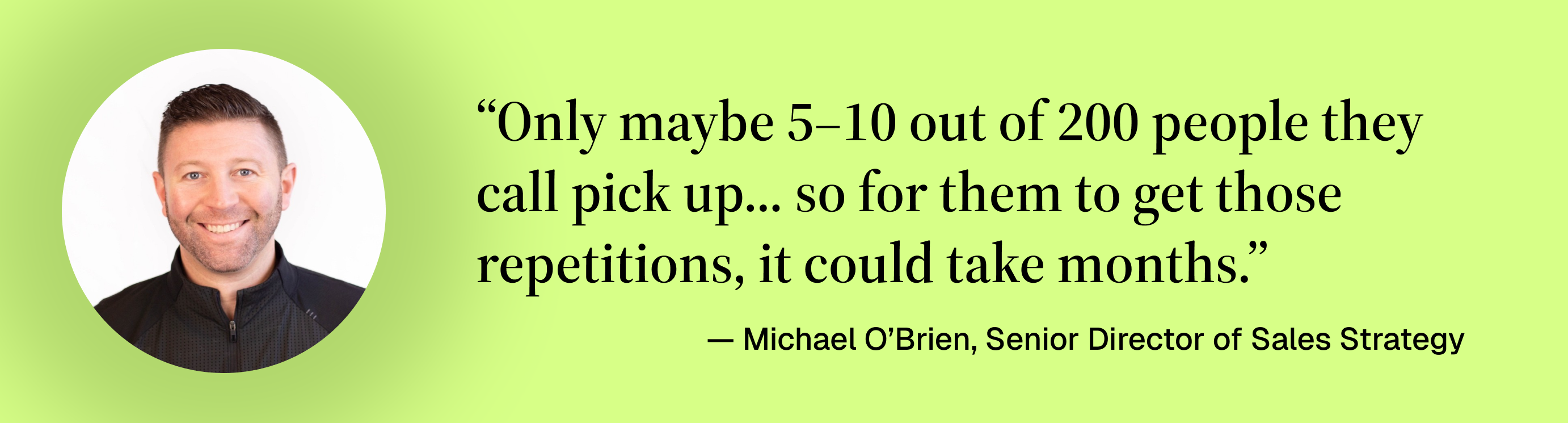
ALKU’s model depends on repetition.
But in reality, reps weren’t getting enough at-bats.
They could make hundreds of calls and only speak to a handful of people. Most conversations never happened, which meant most learning never happened either.
Reps weren’t struggling because they weren’t working hard.
They were struggling because they didn’t have enough chances to practice.
And while roleplay was already known to be one of the most effective parts of training, it couldn’t keep up.
As the internship program scaled to hundreds of reps, training hit a wall. There simply weren’t enough managers or teammates to run the volume of practice needed to actually build skill.
Hyperbound changed one thing:
It gave reps unlimited repetition.
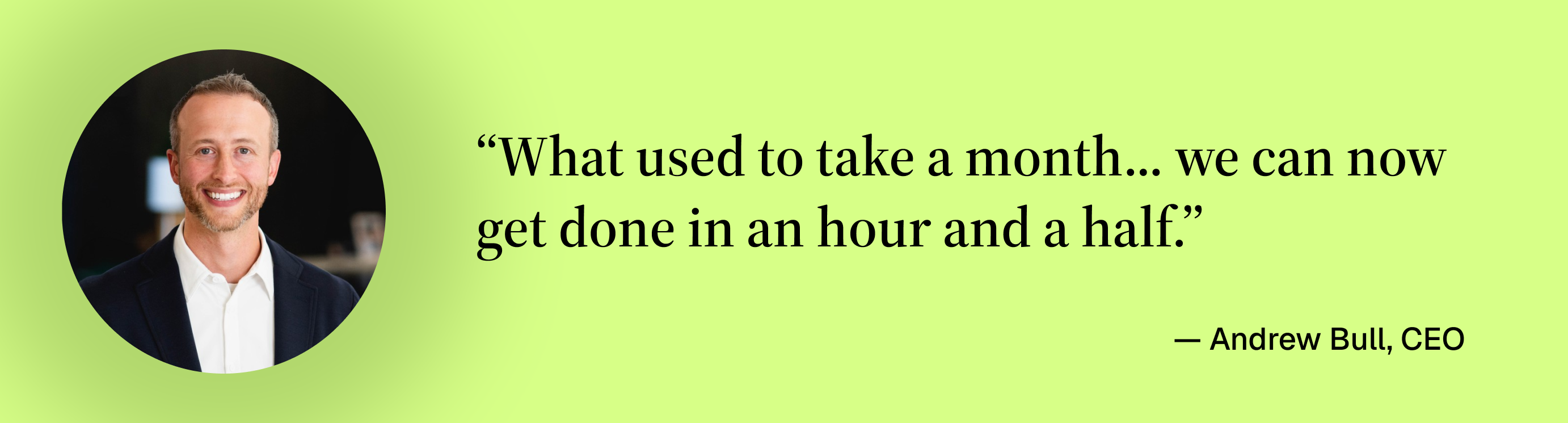
Instead of waiting weeks to accumulate real conversations, reps could now simulate them on demand, running through full calls, over and over again.
What used to take a month of dialing could now be done in a single session.
Practice was no longer dependent on pickup rates, timing, or manager availability.
It became consistent, repeatable, and always available, whether reps were onboarding, preparing for a call, or just trying to get better.
The impact showed up quickly and across the entire organization.
What used to take around 6 months now takes closer to 3 months.
Reps are closing their first opportunities in half the time, accelerating the path from hiring to revenue contribution.
Before Hyperbound, it could take weeks or months to accumulate enough real conversations to improve.
Now, reps can simulate that same volume of experience in a single session, practicing more frequently and building confidence before stepping into live calls. And they’re doing so in an environment that won’t cost them real relationships with clients.
That compression fundamentally changed how quickly reps develop skill.
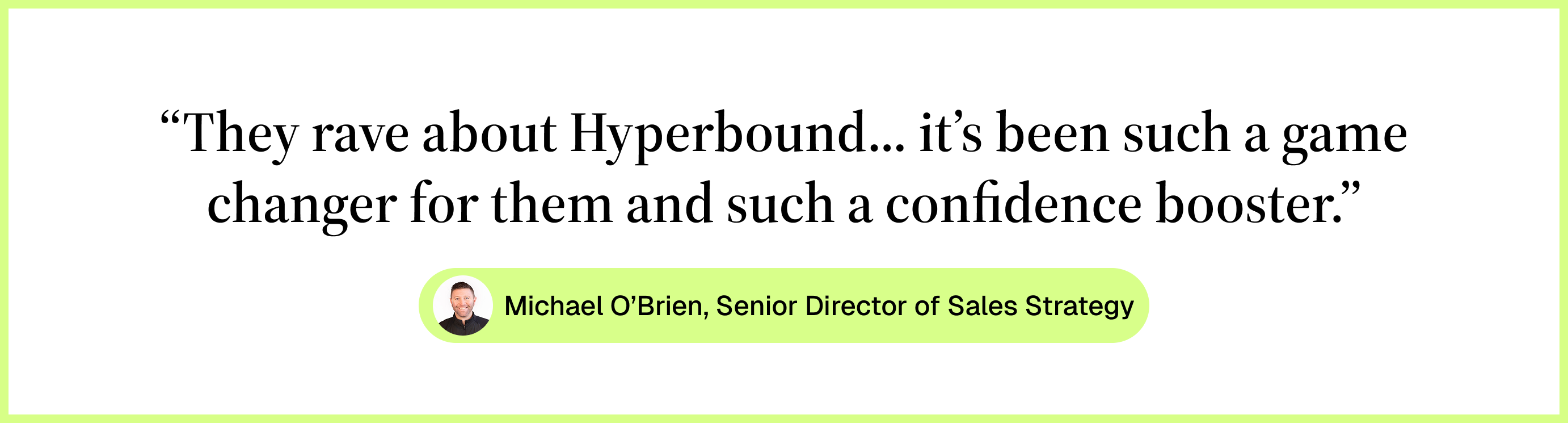
ALKU expanded its internship program to 300+ participants without increasing coaching capacity.
What once required constant manager involvement could now happen independently across hundreds of reps at once.
As reps ramped faster, a new challenge emerged:
How do you ensure that practice translates into real performance?
Before Hyperbound, ALKU had limited visibility into what was actually happening on calls. They weren’t recording any calls with their prospects or clients.
Coaching depended on managers being present in the moment. If they missed the call, they missed the opportunity to coach or had to depend on a rep’s biased self-reflection.
With Hyperbound Perform, that changed.
Managers could now review real conversations, understand where reps were struggling, and connect that directly back to targeted practice.
Instead of generic feedback, coaching became specific, consistent, and actionable.
Hyperbound Perform allowed reps to improve on the exact moments that mattered in live deals on top of the practice they were getting with the AI roleplays.
At ALKU, the goal wasn’t to improve training. The goal was to remove the constraints that slowed down performance.
For years, skill development was tied to one thing:
How many real conversations a rep could get.
That made improvement slow, inconsistent, and hard to scale.
By removing call volume as the bottleneck, ALKU changed that dynamic entirely. Reps no longer have to wait weeks to build experience; they can build it before it ever matters.
And when that happens, everything speeds up:
The result is a faster path from hiring to performance across the entire organization.










Use Cases
Legal