You're staring at your screen, cursor blinking in the same spot for the last 20 minutes. Is "Looking forward to connecting" too desperate? Maybe "I'd love to chat" sounds more approachable? Wait—should you mention their recent LinkedIn post in the first paragraph or the second?
Meanwhile, your outreach quota looms overhead, your calendar remains empty, and that pipeline you promised your manager? It's as dry as week-old bread.
This cycle of overthinking, practicing in your head, and still feeling unprepared is exactly why reps are turning to AI role-play: to build real confidence before they ever hit "send" or "dial."
Sound familiar?
Here's the uncomfortable truth: That perfect cold email you're crafting doesn't exist. The immaculate talk track you're fine-tuning is a mirage. And every minute you spend agonizing over syntax is another minute you could have spent actually connecting with prospects.
Let's be brutally honest. Your cold outreach probably does suck right now. But not for the reasons you think.
It sucks because you're paralyzed by perfectionism. As one sales rep confessed, "I wasted a lot of time tweaking one word in my talk track or A/B testing emails... Making 20 extra dials is more effective than agonizing over syntax." (Reddit)
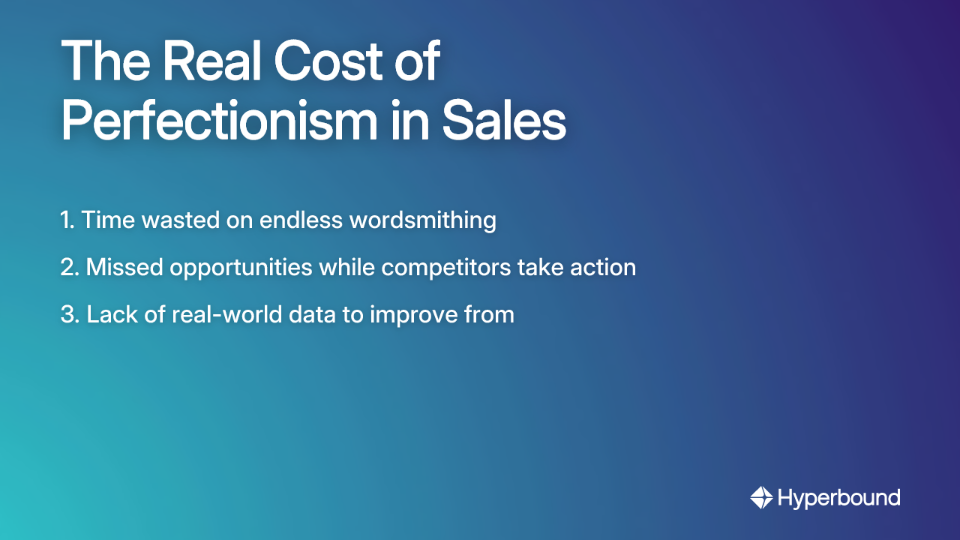
This obsession with crafting the "perfect" message is costing you:
Think of it this way: Han Solo is beloved not because he's flawless, but because he's authentic, flaws and all. The same principle applies to your outreach. Studies show that 89% of people believe a business can regain trust if it's transparent about mistakes. (Caldwell Chamber)
Remember Domino's Pizza's turnaround? They didn't perfect their pizza in secret—they publicly admitted it was terrible and showed how they fixed it. Sales skyrocketed because authenticity beats perfection every time.
Let's shift from problem to solution. Here's a practical framework that prioritizes impact over polish—because finished is better than perfect.
Generic "spray and pray" approaches yield dismal results—typically less than 1% success rates. (Reddit)
Instead:
The "Hi {first_name}!" approach isn't personalization—it's the bare minimum. Studies show that truly personalized emails can increase response rates by 100%. (Skylead)
Do this instead:
Your prospects are busy. They're not settling in with a cup of coffee to savor your email like a good book. They're scanning it for 5-7 seconds to decide if it's worth their time.
Make those seconds count:
Now that you understand the core principles, let's build a system that lets you focus on execution rather than endless tweaking.
Get these foundational elements right from the start to avoid deliverability headaches:
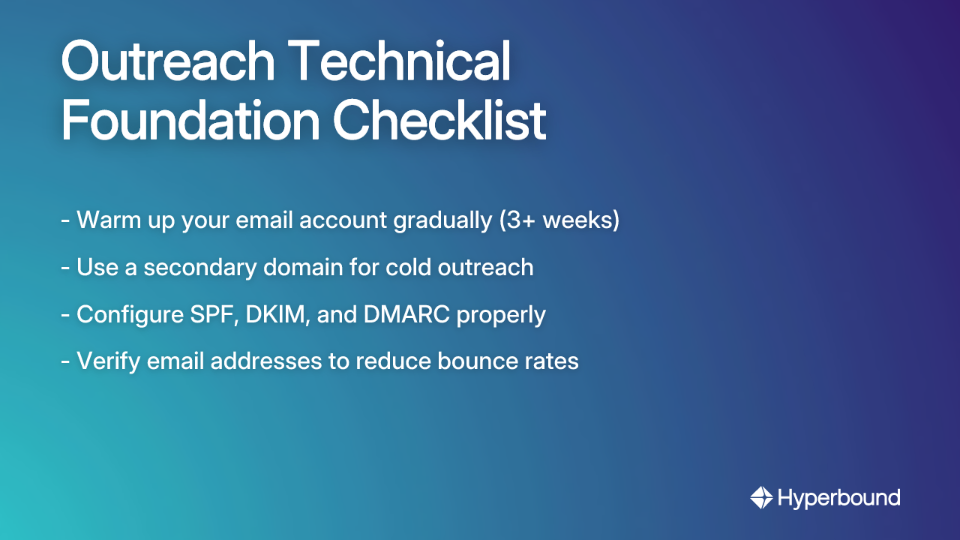
getcompany.com instead of company.com).Here's a statistic that should change how you think about outreach: A single follow-up can increase reply rates by over 44%. (CopilotAI)
Yet most salespeople give up after one attempt. Don't be most salespeople.
A simple follow-up plan:
A/B testing is essential—but not if it prevents you from taking action. Here's how to test effectively without falling into the perfectionism trap:
Your cold outreach might suck right now. Good. That means you've started. Now use this framework to make it better each day:
Remember: Perfect outreach never sent converts exactly zero prospects. Imperfect outreach actually delivered has a chance.
As you navigate the sales funnel, you'll find that warm leads generated through consistent, authentic outreach are far more valuable than theoretical perfect pitches that never see the light of day.
Go find one prospect right now. Spend 10 minutes researching them on LinkedIn. Write a "good enough" 3-sentence email based on what you find and hit send. That's your first step toward better outreach.
Then do it again. And again. Each time, you'll get better at identifying pain points, crafting value propositions, and closing the deal.
Your future pipeline will thank you for the imperfect action you take today.
Because in sales, as in life, finished is better than perfect.

Perfectionism is a problem because it leads to inaction, which is the biggest enemy of a healthy sales pipeline. It causes reps to waste valuable time agonizing over minor wording choices instead of connecting with prospects. This "perfectionism trap" prevents you from gathering real-world feedback and allows competitors to engage with your potential customers while you're still stuck in draft mode.
The "good enough" outreach framework is a practical, three-pillar approach focused on Research, Purposeful Personalization, and Skimmable Structure. It prioritizes taking effective action over achieving theoretical perfection. This involves a quick (10-15 minute) research dive into your prospect, personalizing your message with specific insights, and keeping your email concise (under 100 words) and easy to read.
You should aim to spend around 10-15 minutes researching a prospect before your initial outreach. The goal isn't to write a detailed biography but to find one or two specific, relevant details that you can use as a hook. Look at their recent LinkedIn posts, company news, or professional background to find an angle that aligns your message with their current challenges or goals.
The best way to follow up is by adding new value with each message and using multiple channels. Instead of just "bumping" your last email, offer a different insight, share a relevant case study, or reference a new piece of company news. Combining email with a LinkedIn connection request or a call makes your outreach more visible. This approach shows persistence while respecting their time by making each touchpoint valuable.
AI can significantly improve your sales outreach by providing a safe, repeatable environment for practice. Tools like AI role-play simulators allow you to practice handling objections, refining your value proposition, and testing different talk tracks without risking real opportunities. This builds the confidence and muscle memory needed to move past the fear of imperfection and engage authentically with prospects.
A simple and effective structure is the PAS (Problem - Agitate - Solve) or BAB (Before - After - Bridge) framework. The PAS framework states a known problem, explains its negative impact (agitates), and then presents your solution. The BAB framework shows the prospect's current state (Before), paints a picture of a better future (After), and positions your product as the Bridge. Both are designed to be easily skimmable and convey value quickly.









Use Cases
Legal