You've been there before. Your prospect asks about pricing, and suddenly your mouth is running a marathon. You're explaining value propositions, throwing in discounts, and peppering your speech with "umm," "you know," and "like" while talking faster than an auctioneer. By the time you pause for breath, your prospect looks overwhelmed, and you've negotiated against yourself without them saying a word.
What if I told you that one of the most powerful tools in your sales arsenal isn't what you say, but what you don't say?
Most salespeople fear silence like nature abhors a vacuum. We rush to fill conversational voids, believing that constant talking demonstrates value and expertise. This instinct, while natural, often sabotages our sales efforts.
According to research highlighted by HubSpot, it takes just four seconds of silence to trigger an emotional response in humans. Four seconds—barely longer than reading this sentence—yet on sales calls, it can feel like an eternity.
This discomfort leads to what many sales professionals struggle with: excessive filler words, rapid-fire pacing, and a tendency to talk over prospects rather than truly listen to them.
The 5-Second Silence Rule is deceptively simple: after asking an important question or stating your price, deliberately pause for at least five seconds. Don't rephrase, don't elaborate, don't fill the space with nervous chatter. Just wait.
This strategic silence creates a momentary tension that compels your prospect to respond, often with information far more valuable than what you might have extracted through additional questions.
As one experienced salesperson noted on Reddit: "When I realized no amount of words would make my point any more palatable than I'd already attempted... silence became my ally."
Why does this seemingly simple technique work so effectively? The psychology is fascinating:
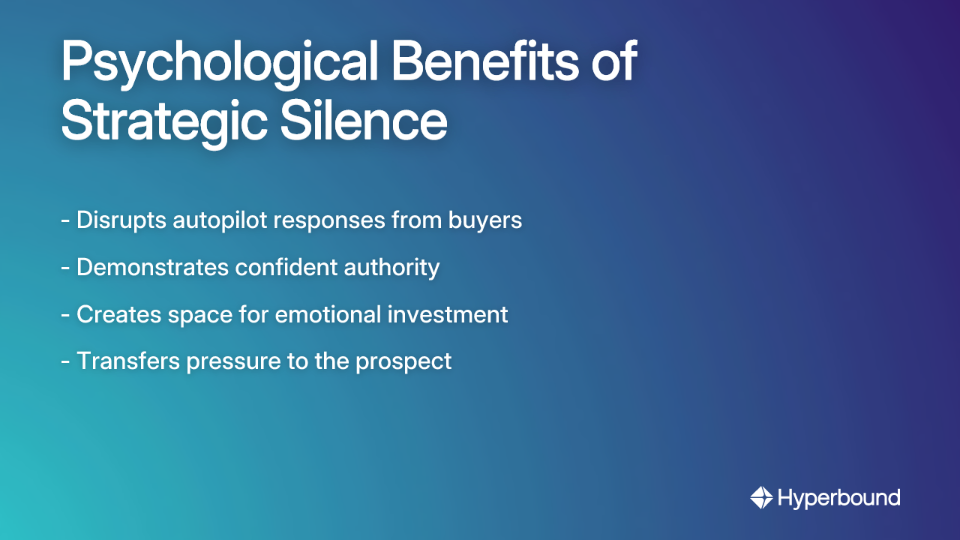
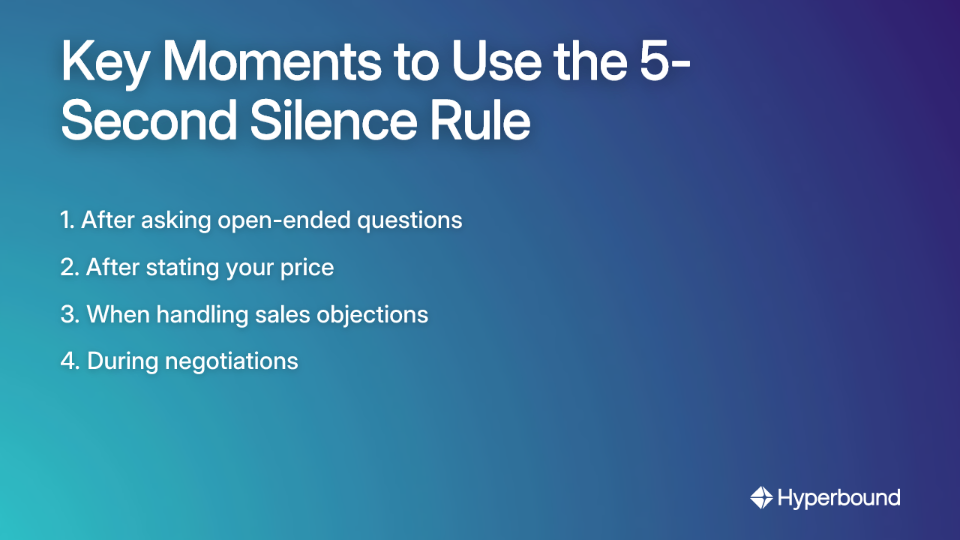
While strategic silence is powerful throughout the sales process, certain moments provide exceptional leverage:
The effectiveness of open-ended questions multiplies when followed by silence. Consider questions like:
Ask the question clearly, then embrace the pause. This gives prospects time to formulate thoughtful responses rather than quick, surface-level answers.
This is perhaps the most crucial moment for the 5-Second Rule. State your price clearly and confidently, then stop talking completely.
As a sales professional noted on Reddit: "If I mention price and they go silent, I politely wait. First one to speak in that instance usually loses."
When you rush to justify your price or offer discounts into the silence, you signal insecurity about your value proposition. Let the prospect absorb the information and respond first.
When a prospect raises an objection, acknowledge it briefly and then pause. This technique is particularly effective with price sensitivity issues.
For example:
This pause often prompts the prospect to elaborate on the real concern behind the objection, giving you valuable information for your response.

One of the most impressive examples of silence's power comes from a TechCrunch article where strategic silence saved a startup $225,000 in negotiations. The principle is simple: the more comfortable you are with silence during negotiations, the stronger your position appears.
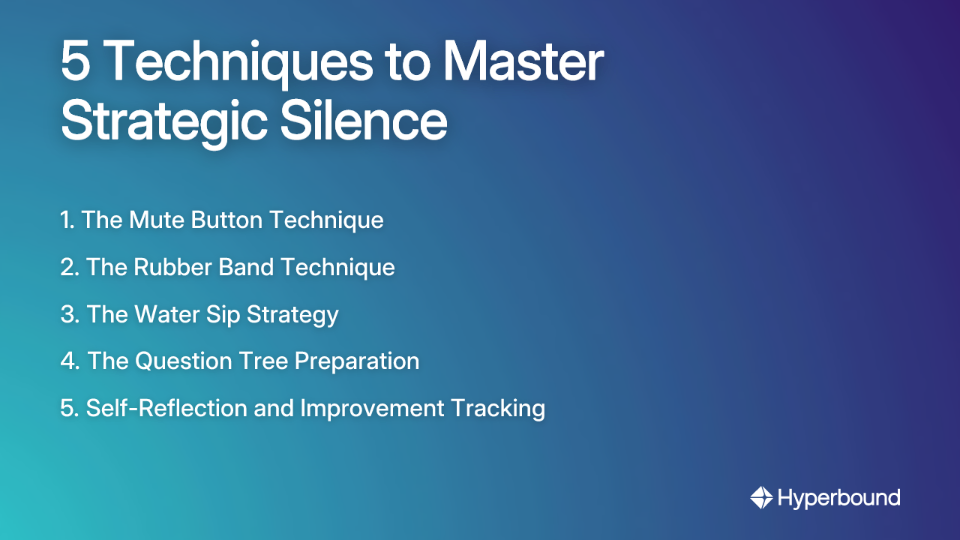
Learning to embrace silence requires practice and intentionality. Here are practical techniques to help you get comfortable with the 5-Second Rule:
Place a rubber band around your wrist during sales calls. When you catch yourself about to fill silence unnecessarily, gently snap it as a physical reminder to pause and think. This tactile cue helps break the habit of rushing to fill conversational voids.
Keep a glass of water handy during calls. After asking an important question or stating your price, take a deliberate sip. This creates a natural pause in the conversation and gives you something to do during the silence, reducing your anxiety.
This technique is particularly effective during video calls where complete silence might feel awkward.
Before important calls, prepare a question tree—a flowchart of potential questions based on different prospect responses. This preparation gives you confidence in your next question, making it easier to listen actively instead of planning your next statement while the prospect is speaking.
Record your sales calls (with permission) and analyze your communication flow. To scale this process, platforms like Hyperbound's AI Real Call Scoring can automatically analyze calls for these metrics and more, providing concrete data for improvement tracking over time.
Set specific goals, such as "I will wait 5 seconds after asking each discovery question" or "I will reduce my use of 'um' by 50%." Measure your progress weekly and celebrate improvements.
Despite understanding its power, many salespeople still struggle with implementing strategic silence. The discomfort is real, but so are the solutions:
Silence isn't empty space—it's an active component of your sales lexicon. When you're silent, you're not doing nothing; you're actively listening, processing information, and demonstrating respect for your prospect's thought process.
One of the most valuable pieces of advice from experienced salespeople is simply to "SLOW DOWN." Conscious deceleration of your speech pattern naturally creates more pauses and makes silence feel more comfortable.
Start incorporating strategic silence in low-stakes conversations with friends or colleagues. As your comfort grows, you can move to more structured, sales-specific practice. AI platforms like Hyperbound's AI Sales Roleplays allow reps to master these techniques in a safe, repeatable environment against realistic AI buyers, building muscle memory for high-stakes conversations.
On your next sales call, try this experiment: When you ask an important question, count to five silently before responding—even if the prospect has already answered. You might be surprised by what happens in those extra seconds. Often, prospects will elaborate on their initial response, providing deeper insights and valuable information they wouldn't have shared otherwise.
Remember that mastering the 5-Second Silence Rule isn't about manipulating your prospects—it's about creating space for authentic communication. By resisting the urge to fill every moment with words, you demonstrate confidence, encourage thoughtful responses, and ultimately create a more productive sales conversation.
As you integrate this powerful technique into your sales approach, you'll likely find yourself saying less while learning more—and closing more deals as a result.
The 5-Second Silence Rule is a sales technique where you intentionally pause for at least five seconds after asking a critical question or stating your price. This strategic pause discourages you from filling the silence with nervous chatter, which can undermine your position. It creates a space that compels the prospect to respond, often revealing more valuable information than you would get by talking continuously.
Strategic silence is effective because it disrupts a buyer's automatic responses, demonstrates your confidence, and transfers psychological pressure to the prospect, encouraging them to speak. By pausing, you project authority and control. This short period of silence allows the prospect to move beyond scripted answers, engage emotionally, and reveal underlying concerns or objections they might have otherwise kept hidden.
The most impactful moments to use the 5-Second Silence Rule are immediately after stating your price, after asking important open-ended questions, when handling objections, and during negotiations. Using silence in these key situations prevents you from negotiating against yourself, gives prospects time to give thoughtful answers, prompts them to elaborate on their objections, and strengthens your negotiating position by conveying confidence.
You can master strategic silence by using practical techniques like hitting the mute button on calls, taking a sip of water to create a natural pause, or practicing in low-stakes conversations. Physical cues, like snapping a rubber band on your wrist, can help break the habit of talking too much. Additionally, preparing your questions in advance and using AI roleplay tools can build the muscle memory needed to stay quiet confidently during high-stakes moments.
If a prospect remains silent for more than five seconds, it's often a sign they are genuinely thinking, which is a positive outcome. The goal isn't to create an uncomfortable standoff. Give them a few more seconds to process. If the silence becomes truly prolonged (e.g., over 10 seconds), you can gently re-engage with a soft, open-ended follow-up like, "What are your thoughts on that?"
No, strategic silence is not about manipulation; it's about facilitating more authentic and productive communication. Rather than being a trick, it's a form of active listening. By creating space, you show respect for the prospect's thought process and encourage them to share their genuine thoughts and concerns. The goal is to understand the prospect better, not to pressure them unfairly.

So the next time you feel that urge to fill the silence, remember: sometimes the most persuasive thing you can say is nothing at all.










Use Cases
Legal