You've decided it's time to improve your public speaking skills. But as you start researching options, you quickly become overwhelmed. There are countless coaches online, each promising to transform you into a powerful orator. Toastmasters groups might seem too general for your specific needs. YouTube videos offer tips but no personalized feedback.
"It's hard to tell who is legit," you think to yourself, scrolling through website after website of smiling coaches with impressive-sounding credentials. You need "something more focused and personalized" than generic advice—someone who can address your unique challenges and help you reach your specific goals.
You're not alone in this frustration. Many professionals recognize that "if I didn't improve my public speaking skills, I'd never be able to reach my full potential in my career." Yet finding the right guide for this journey can be just as challenging as public speaking itself.
This practical guide will help you navigate the complex landscape of speaking coaches, understand the different types of professionals available to help you, and provide concrete steps to find someone who can truly elevate your communication skills.
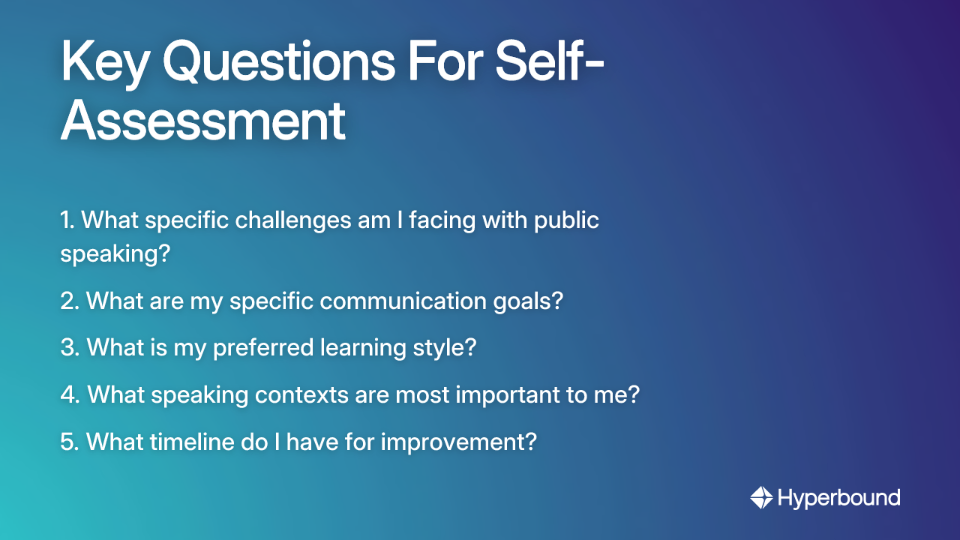
Before you begin your search for a coach, take time to identify exactly what you want to improve. This self-assessment is crucial for finding the right match for your needs.
Ask yourself:
Your answers will help determine which type of professional will serve you best.
Not all speaking coaches offer the same expertise. Understanding the distinctions will help you narrow your search to professionals who specialize in addressing your specific needs.
Focus: Clinical diagnosis and treatment of communication disorders and voice issues.
Best for: People with specific speech impediments, voice disorders, or clinical concerns like stuttering or articulation problems.
Credentials to look for: Certification from the American Speech-Language-Hearing Association (ASHA).
What they offer: Structured therapy programs, specific diction exercises, and evidence-based techniques to address clinical voice and speech concerns.
Focus: Improving the quality and performance aspects of your voice.
Best for: Those looking to enhance vocal qualities like projection, tone, resonance, and elocution.
What they offer: Techniques to improve volume and fullness of voice, exercises for better articulation, and methods to develop a more commanding vocal presence.
Many voice coaches use specific techniques like the Mirror Recitation Tool (practicing in front of a mirror to observe facial movements during speech) or the "Out-Shout the Highway" exercise (practicing projection while speaking over background noise).
Focus: A holistic approach to communication effectiveness.
Best for: Professionals seeking to improve their overall presentation skills, body language, audience engagement, and message delivery.
What they offer: Strategies for structuring content, techniques for engaging audiences, methods to manage speech anxiety, and feedback on your delivery techniques.
Many public speaking coaches incorporate specialized exercises like Pebbles in Mouth (an ancient exercise used by Demosthenes to improve articulation) or Incline and Running Recitation (speaking while physically active to build breath control).
Focus: Broader communication effectiveness across various contexts.
Best for: Those looking to improve interpersonal communication, not just formal presentations.
What they offer: Techniques for effective listening, conversational skills, impromptu speaking, and adapting communication style to different audiences.
Once you've identified which type of professional best matches your needs, it's time to vet potential coaches. Here's how to separate the truly qualified professionals from those who may not deliver the results you seek.
While there's no single certification that guarantees quality, these credentials add credibility:
Beyond formal credentials, look for evidence of real-world experience, client testimonials, and a track record of results with clients similar to you.
When interviewing potential coaches, these questions will help you assess their fit:
Also ask about:
Be cautious of coaches who:

Once you've found a qualified coach who matches your needs, these strategies will help you get the most value from the relationship:
The most successful clients:
While one-on-one coaching provides personalized guidance, you can accelerate your progress by:
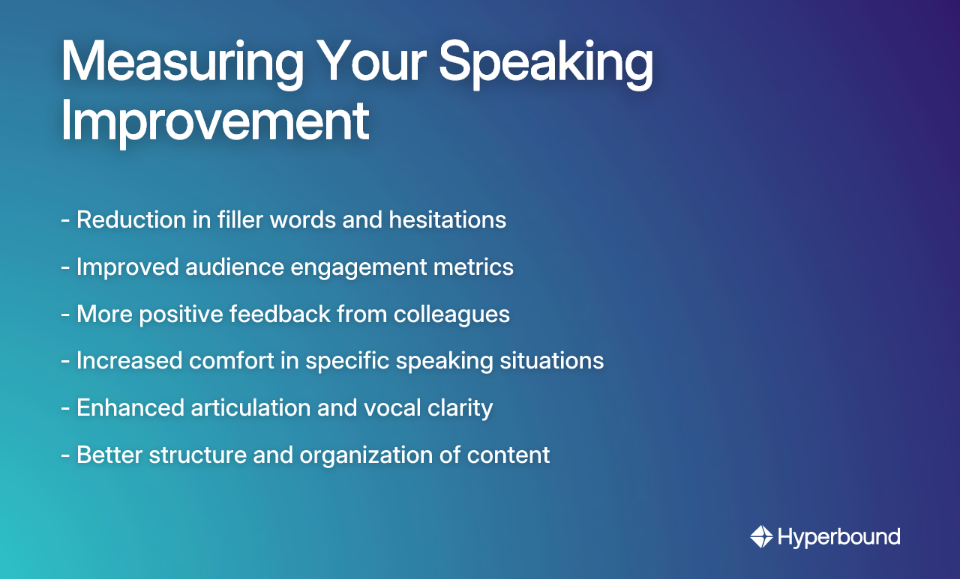
Work with your coach to define concrete measures of improvement:
Not every coaching relationship is a perfect match. Consider seeking a different coach if:
Finding the perfect speaking coach takes effort, but the investment pays tremendous dividends. When you find a professional who truly understands your needs—whether that's an SLP who can help with clinical speech concerns, a voice coach who can enhance your vocal image and elocution, or a public speaking coach who can refine your presentation techniques and body language—you gain more than just improved communication skills.
You gain a partner in your professional development who can help you overcome the obstacles that have been holding you back. As one successful coaching client shared, "Working with the right coach transformed my relationship with public speaking. What was once a source of anxiety is now one of my greatest professional assets."
With the right guidance, you too can develop the confidence and skills to communicate effectively in any situation. The racing heart, shaking voice, and forgotten words can become a thing of the past. In their place, you'll find the ability to express yourself with clarity, confidence, and impact—opening doors to new opportunities in your career and beyond.
Remember that the goal isn't to become someone else's version of a perfect speaker, but rather to become the most effective communicator you can be while maintaining your authentic voice. The right coach will help you not by imposing a standardized approach, but by bringing out your unique strengths and helping you develop a style that works for you.
Take the time to find that perfect match, and you'll be investing not just in better speaking skills, but in your entire professional future.
A voice coach focuses specifically on improving the technical aspects of your voice, such as tone, projection, and articulation, while a public speaking coach takes a more holistic approach to improve overall presentation skills, including content structure, body language, and audience engagement. You would see a voice coach to develop a more commanding or pleasant vocal quality. In contrast, you would hire a public speaking coach to help you craft and deliver compelling presentations, manage stage fright, and connect effectively with your audience. For clinical issues like a stutter, a Speech-Language Pathologist (SLP) is the appropriate professional.
The cost of a speaking coach can vary widely, typically ranging from $100 to over $500 per hour. Pricing depends on the coach's experience, location, and area of specialization. Many coaches offer package deals for a series of sessions, which can provide better value. It's important to view this as an investment in your professional development and inquire about pricing structures during your initial consultation.
You can often see noticeable improvements in specific areas within just a few sessions, but significant, lasting change typically requires a commitment of at least three to six months. The timeline depends heavily on your specific goals, the frequency of your sessions, and how consistently you practice between them. A good coach will work with you to set realistic expectations and establish clear metrics for measuring progress along the way.
You likely need a public speaking coach if you feel that your communication skills are holding you back professionally, you experience significant anxiety when speaking, or you want to elevate your presentations from good to great but don't know how. If you struggle to organize your thoughts, use excessive filler words, receive feedback that your message isn't landing, or simply want to speak with more confidence and authority, a coach can provide the personalized feedback and structured guidance needed to overcome these challenges.
Yes, online speaking coaches can be just as effective as in-person coaches, and they often offer more flexibility and a wider selection of specialists. The effectiveness of coaching depends more on the coach's skill and your rapport with them than the format. Virtual sessions allow for easy recording for later review, and many coaches are highly experienced in using technology to provide detailed feedback on everything from vocal tone to digital presence.
While resources like Toastmasters and YouTube videos are valuable for practice and general tips, they cannot replace the personalized, expert feedback that a dedicated coach provides. A coach identifies your specific challenges and creates a tailored program to address them, which is something generic advice cannot do. Toastmasters offers great practice opportunities but lacks the one-on-one expert guidance to correct deep-seated habits. Using these resources in conjunction with a coach is an excellent strategy to accelerate your progress.











Use Cases
Legal