
Is there anything more frustrating than having the perfect pitch ready, only to be stopped by the gatekeeper? You're not alone. Many reps feel like they "can't get to the actual business owner...so I can't even pitch the actual prospect." This barrier between you and your potential clients can be the difference between hitting your quota and missing it entirely.
The truth is, navigating gatekeepers isn't just about luck—it's a skill that requires confidence and practice. As one experienced salesperson noted, "if you sound confident enough, the GK will be reluctant to question further and may put you through directly." But how do you build that confidence without risking live opportunities?
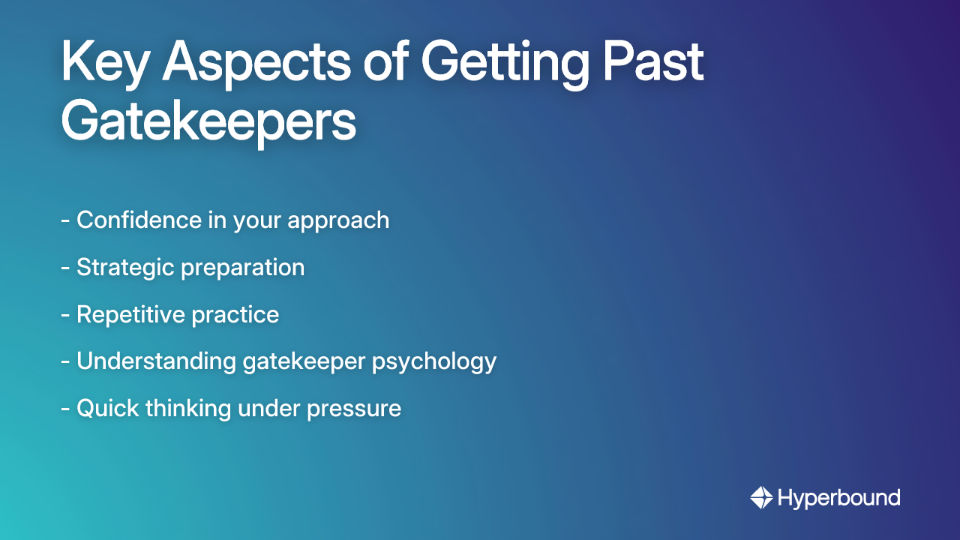
The answer lies in deliberate, repetitive practice. Just like athletes review game tape and rehearse plays, sales professionals need to develop "muscle memory" for those critical first few seconds of a call. Fortunately, technology has evolved to provide safe, scalable, and highly effective environments for mastering these crucial conversations.
Here are six powerful tools designed to help you and your team practice and master the art of getting past gatekeepers.
Overview: Hyperbound is an advanced AI Sales Coaching platform that transforms how sales teams learn, practice, and perform. It's specifically designed to create a safe, scalable environment for reps to master critical conversations—including the tricky art of navigating tough gatekeepers.
How it helps with gatekeepers: One of the biggest challenges in cold calling is "reacting to something completely out of left field in real time." Hyperbound addresses this directly by allowing you to create hyper-realistic AI Sales Roleplays where reps can practice their gatekeeper scripts against an AI persona that responds dynamically and realistically. Reps can practice dozens of scenarios in a single session without risking a real opportunity.
Key Features for Gatekeeper Practice:
Overview: Gong is a leading conversation intelligence platform that records, transcribes, and analyzes your team's sales calls, meetings, and emails.
How it helps with gatekeepers: While not a direct practice simulator, Gong is your "game tape." It allows reps and managers to review real-world gatekeeper interactions. You can create a library of best-practice calls where top reps successfully navigate gatekeepers and also analyze failed attempts to learn what not to do.
Key Features:
Overview: Similar to Gong, Chorus.ai (part of ZoomInfo) is a conversation intelligence tool that provides insights into sales conversations.
How it helps with gatekeepers: Chorus helps you identify trends in your team's gatekeeper interactions. You can search for calls where specific objections like "What is this about?" or "Is he expecting your call?" were raised and see how different reps handled them. This repository of real calls is an invaluable resource for team training and 1-on-1 coaching.
Key Features:
Overview: Second Nature is another AI-powered sales simulation and coaching platform designed to help reps practice sales conversations.
How it helps with gatekeepers: It offers a virtual practice environment where sales reps can role-play with an AI-powered "pitch partner" named Jenny. This allows for the repetitive practice needed to build confidence and test different approaches for handling gatekeepers without the pressure of a live call.
Key Features:
Overview: SalesHood is a sales enablement platform that combines training content, coaching, and peer learning in one place.
How it helps with gatekeepers: SalesHood facilitates structured role-playing and practice among team members. Managers can create exercises where reps record themselves practicing gatekeeper scripts and then submit the recordings for feedback from peers and leadership. This fosters a collaborative learning culture.
Key Features:
Overview: Outplay is a multi-channel sales engagement platform that helps teams automate and optimize their outreach across email, calls, social media, and more.
How it helps with gatekeepers: While primarily an engagement tool, platforms like Outplay often include call recording and analytics features. By automating other repetitive tasks, it frees up more of a rep's time to focus on skill development and practicing their calls, whether with a tool like Hyperbound or with a colleague.
Key Features:
Having the right tool is only half the battle. Use your practice time to master these proven strategies:
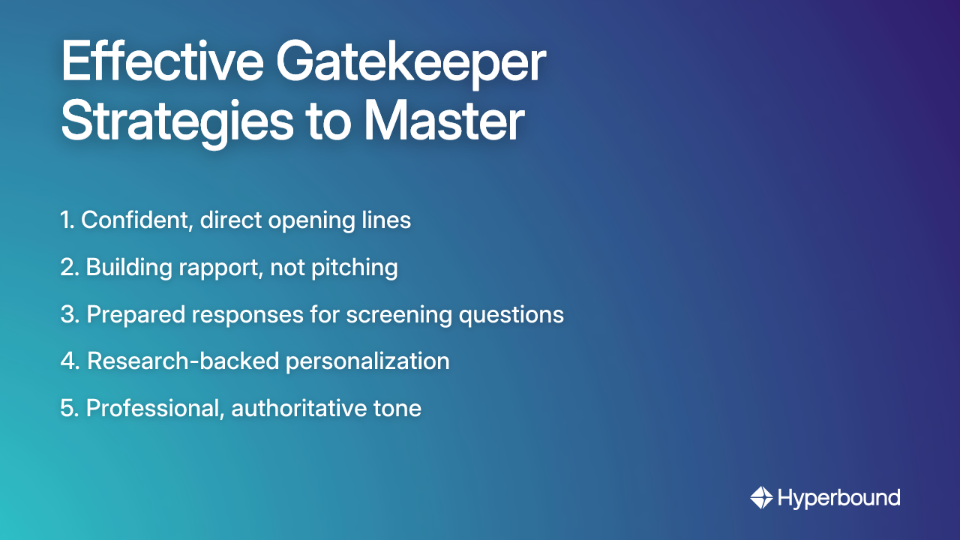
User research shows that vague requests like asking for "the person who handles X" are an immediate red flag. Instead, practice these approaches from Cognism:
Focus on your tone during practice. As one Reddit user pointed out, you need to "sound like the type of person their boss already knows and you're just calling a buddy." This confident familiarity can be the difference between being transferred or being screened.
A cardinal rule from experienced sellers: "you should NEVER pitch a gatekeeper." Their job is not to buy, but to screen. Instead, practice:
One sales rep suggests: "Treating the gatekeeper like a real person always helps. Little jokes, even if you use the same ones all the time, breaks the ice."
This is the most common test. Your practice sessions should heavily focus on responding without sounding like a typical salesperson. Try these approaches:
Always know the first and last name of your prospect. Using their first name personalizes the request and builds trust. As one Reddit user bluntly put it: "No one is getting anywhere with asking for decision makers, office managers, 'the person who handles X' or anyone who is clearly pronouncing anyone's name for the first time."
Practice your pronunciation. Mispronouncing a name is an instant giveaway that it's a cold call.
Gatekeepers are a permanent fixture in the sales landscape, but they don't have to be a permanent roadblock. The difference between a stalled call and a connected one often comes down to a few critical seconds of communication built on a foundation of confidence and skill.
Consistent, deliberate practice is the only way to build that foundation. By leveraging modern tools, you can move beyond theory and engage in active skill development. AI-powered platforms like Hyperbound offer a revolutionary way to get the reps in, providing a safe, scalable, and data-driven environment to build the muscle memory and confidence needed to turn gatekeepers from obstacles into allies.
Start practicing today, and watch more of your calls get through.
The most effective strategy is to combine a confident, authoritative tone with a direct and respectful approach. Your goal is to sound like someone who is expected, not a typical cold caller. This confidence, treating the gatekeeper as a professional rather than an obstacle, is often enough to get you transferred without extensive screening.
Practicing with AI provides a scalable, objective, and safe environment that traditional role-playing cannot match. AI sales simulators like Hyperbound allow reps to run through dozens of gatekeeper scenarios in a short amount of time, receiving instant, data-driven feedback on their performance. This allows for rapid skill development and muscle memory without waiting for a manager's schedule or introducing human bias.
You should never pitch your product or service to the gatekeeper. Their job is to screen calls, not to evaluate your solution. Pitching them immediately flags you as a salesperson and makes it more likely they will block you. Focus your conversation solely on being connected with your intended prospect.
Respond with a prepared, brief, and confident statement that avoids sounding like a sales pitch. A good strategy is to reference a prior (real or implied) interaction. For example: "I'm following up on an email I sent to [Prospect's Name] earlier this week," or "It's regarding a note they asked me to follow up on." The key is delivering the line with a tone that suggests the prospect is anticipating your call.
Conversation intelligence tools like Gong or Chorus act as your team's "game tape" for analyzing real-world interactions. They allow you to record, transcribe, and analyze actual calls where reps encounter gatekeepers. By reviewing what works for your top performers and what doesn't for others, you can build a library of best practices and identify specific areas for coaching and improvement.
Acknowledge their request politely and agree to it, but use it as an opportunity to ask a qualifying question. You can say, "Of course, I can do that. To ensure I send the most relevant information, could you tell me if [Prospect's Name] is the right person to discuss [specific business area]? A brief call would ensure I tailor it correctly." This shows respect for their process while gently reinforcing the value of a direct conversation.







Use Cases
Legal