You've just finished your 50th call of the day. Your throat is dry, your energy depleted, and worst of all—you have nothing to show for it but a growing sense of dread about tomorrow's 50 calls. Sound familiar?
The traditional sales mantra of "more dials equals more success" has created generations of burned-out sales professionals suffering from what psychologists now recognize as "rejection fatigue." This phenomenon occurs when the constant stream of "no's" activates the same brain centers as physical pain, creating a tangible emotional toll that can derail even the most determined full cycle AE.
"I just don't want to work or make any calls," confessed one sales rep on Reddit, capturing the sentiment of countless others. "Have booked like 2 meetings in 2 weeks. Before that, I'd book 3-4 a week."
This decline in performance isn't a personal failure—it's a predictable outcome of an outdated approach.
The obsession with call volume stems from a fundamental misunderstanding of sales effectiveness. Many sales organizations fixate on activity metrics—300 calls a day, 1000 dials a month—based on the flawed assumption that sales is simply a numbers game.
But the math doesn't add up. A salesperson making 100 quick, generic calls that generate minimal business is far less effective than one making two high-quality calls that build significant relationships and revenue.
What makes high-volume cold calling so destructive is the psychological impact of constant rejection. Research shows that social rejection activates the same brain regions as physical pain, creating genuine discomfort with each dismissal.
The emotional reactions to repeated rejection follow a predictable pattern:
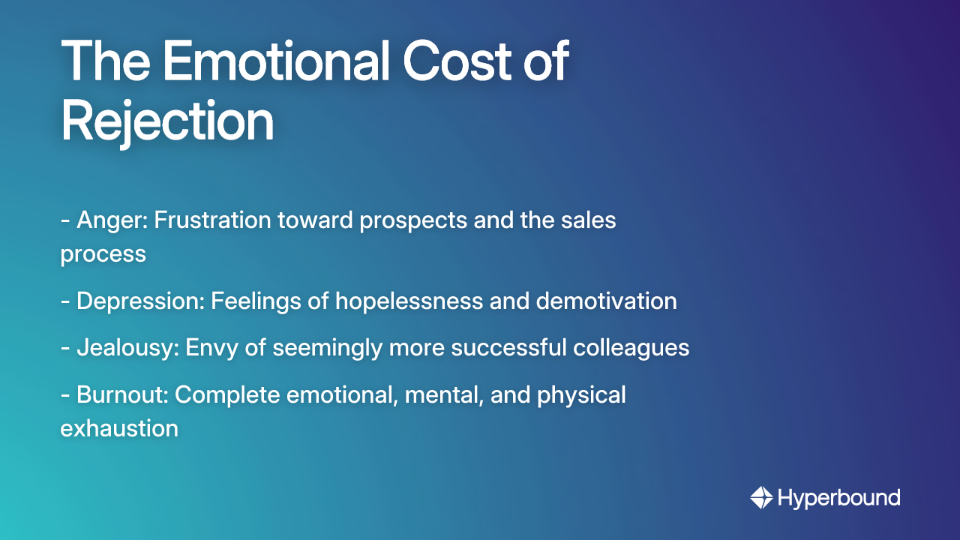
Over time, these emotional responses compound into full-blown burnout—a state of emotional, mental, and physical distress caused by prolonged exposure to stressors. Suddenly, simple tasks feel overwhelming. Motivation plummets. Negativity increases. Your performance drops, leading to more stress, creating a vicious cycle that's difficult to break, especially when working from home (WFH) where the isolation can amplify these feelings.
"I took a week off in May and feels that part of me never came back after vacation," shared another sales professional, highlighting how burnout can persist even after attempts to recharge.
The good news? There's a better way. Shifting from quantity to quality doesn't just feel better—it delivers measurable results.
Consider these compelling statistics:
These numbers tell a clear story: personalization pays off. But what exactly makes a "quality" call?
A truly valuable sales interaction isn't just a friendly chat—it's characterized by:
"The most important sales strategy I've ever learned is to focus on building genuine relationships with my prospects and customers," shared a veteran salesperson. This shift from transaction-focused to relationship-focused selling represents the evolution modern sales professionals must embrace to thrive.
Ready to make the shift? Here's how to implement a quality-first approach without sacrificing effectiveness:
Adopt a new worldview: "People don't want to be sold to; they want to be helped." This mental shift transforms every conversation from a potential transaction into an opportunity to provide value.
Before picking up the phone, leverage tools like Sales Nav and BoomInfo to:
This research helps you refine your ideal customer profile (ICP) and ensures you're focusing on accounts with the highest potential for meaningful engagement.
Replace generic scripts with openers that demonstrate your research and genuine interest:
"I noticed your company just announced [specific initiative]. Many of our clients in similar situations have struggled with [related challenge]. I'm curious if you're experiencing something similar?"
This approach demonstrates curiosity over desperation and shows you've done your homework—dramatically increasing your chances of engaging the prospect.
Acknowledging that "doing hyper-personalized messages all day will drive someone insane," consider implementing a strategic hybrid approach:
This approach allows you to maintain necessary activity levels while focusing your deepest personalization efforts on the most promising leads.

Quality-focused selling isn't just about better results—it's about creating a sustainable career path that prevents the "soul numbing burnout" that plagues so many in our profession.
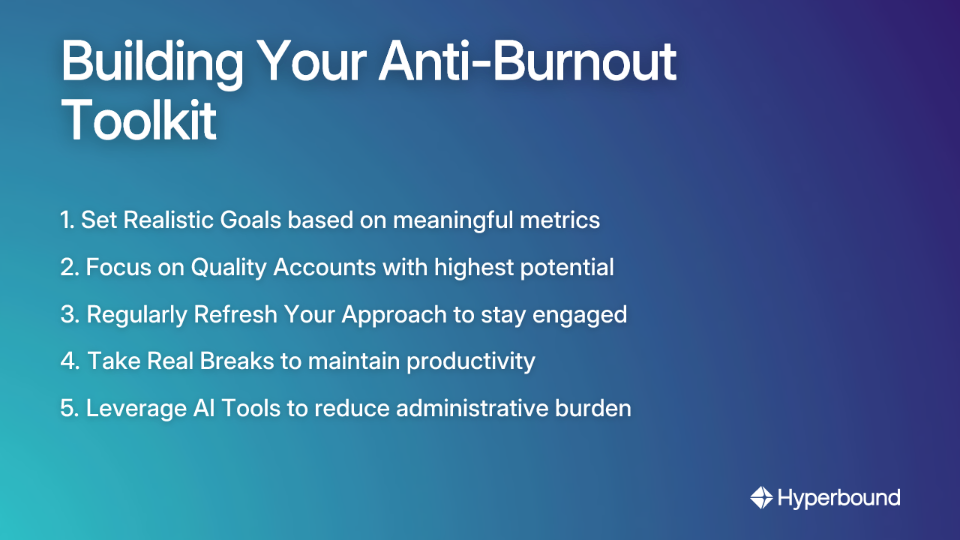
For sales leaders reading this, understand that a supportive culture with open communication and recognition for quality work (not just activity metrics) is crucial. A toxic culture focused solely on call volume is a primary driver of burnout and turnover.
Providing effective sales tools for lead generation and prospecting that reduce administrative burdens is equally important—these investments can increase revenue by at least 10% in 6-9 months while freeing up your AEs for high-value activities.
Sometimes the best thing you can do is "give yourself some slack." If your performance is suffering and the thought of making another call fills you with dread, take a short break or a long weekend to reset your mindset. This isn't weakness—it's strategic self-management.
The high-volume "dial until you drop" approach to sales is not just ineffective—it's unsustainable. By shifting your focus from call quantity to interaction quality, you'll not only book more meetings and close more deals, but you'll also build a sales career that energizes rather than depletes you.
Remember, as one successful sales professional put it: "Sales is WAY less complicated than we make it. The top sales people don't do anything special; it's more what they don't do that is the difference."
Stop just selling. Start helping. Your prospects, your performance metrics, and your mental health will all thank you.
Rejection fatigue is the emotional and psychological exhaustion sales professionals experience from constant rejection, particularly during high-volume cold calling. This phenomenon occurs when the brain's pain centers are activated by social rejection, leading to tangible emotional distress, demotivation, and a significant decline in performance.
Focusing solely on call volume is a bad strategy because it prioritizes quantity over quality, leading to sales burnout and less effective outcomes. This "grind culture" approach is based on the flawed assumption that more dials automatically equal more success. In reality, a few well-researched, personalized calls are far more effective at building relationships and generating revenue than hundreds of generic ones.
To improve the quality of your sales outreach, shift your focus from selling to helping, conduct deep prospect research, and craft personalized call openers. Before calling, use tools like Sales Nav to understand your prospect's role, company news, and potential challenges. Use this research to create an opener that demonstrates genuine interest and value, which dramatically increases your chances of engagement.
Key signs of sales burnout include a persistent lack of motivation, feelings of hopelessness or anger toward the sales process, a noticeable drop in performance, and complete emotional, mental, and physical exhaustion. If simple tasks feel overwhelming and the thought of making another call fills you with dread, you may be experiencing burnout that requires strategic changes to your work approach.
A hybrid approach to sales outreach strategically balances volume and personalization. It involves using a semi-personalized, higher-volume strategy to identify interested prospects first. Once a lead shows engagement, you then shift them into a hyper-personalized follow-up sequence. This method allows you to maintain activity while focusing your most intensive efforts where they'll have the greatest impact.
Sales managers can reduce burnout by creating a supportive culture that values quality interactions over mere activity metrics. This includes setting realistic goals based on meaningful outcomes, fostering open communication, recognizing quality work, and providing tools that reduce administrative tasks. Investing in technology to streamline prospecting frees up AEs to focus on high-value, relationship-building activities, which boosts both morale and revenue.











Use Cases
Legal