
You've rehearsed your pitch. You've researched your prospect. You're ready to make that cold call. But within the first ten seconds, you hear that dreaded click as your prospect hangs up. What went wrong?
If you're like most sales professionals, you're facing a silent killer in your cold call strategy: compound friction. This occurs when the already challenging task of cold calling is made even more difficult by adding mandatory recording disclosures to your opening lines.
"Anytime you add friction to a process, your job gets harder," explains one sales veteran on Reddit. And in the high-stakes world of cold calling, where you have mere seconds to make an impression, that additional friction can be fatal to your conversion rates.
Let's face it: cold calling is already an uphill battle:
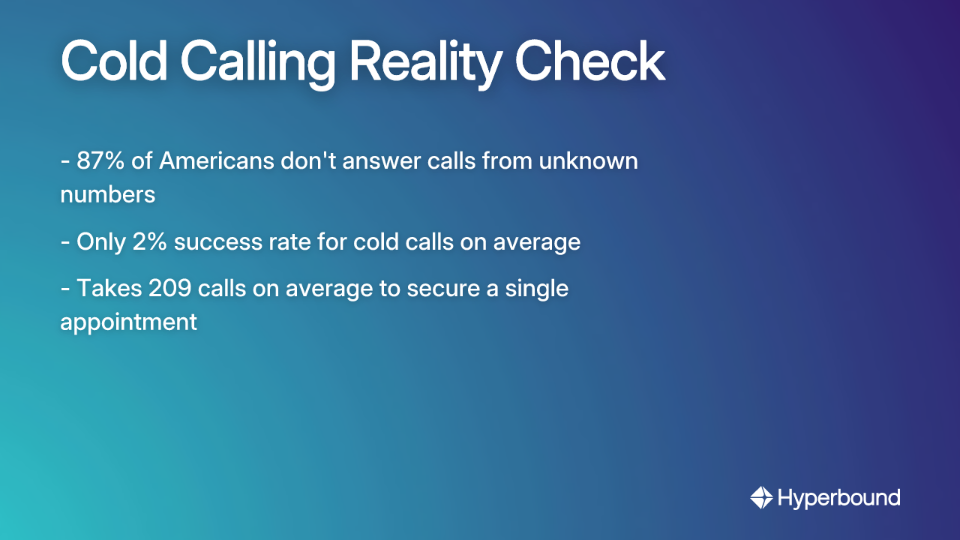
When you add the awkward "This call may be recorded" disclosure to an already precarious opening, you're essentially placing another hurdle in an already difficult obstacle course. One sales professional laments, "Idk how you guys do the cold call, the cold email sucks enough." Adding recording disclosures only compounds this challenge.
Before we tackle the recording disclosure issue, let's examine what makes a cold call opening effective or ineffective. Gong's analysis of 300 million sales calls reveals some startling insights:
Both of these approaches were failing before you even added the recording disclosure requirement. Now imagine prefacing these weak openers with "This call is being recorded..." and you can see why your prospects are hanging up faster than you can say "compliance issues."
Let's address the elephant on the line: why do we need to disclose recordings in the first place?
The answer lies in wire tapping laws and compliance issues. In many states, recording a call without informing all parties is illegal. Your VoIP system might be configured to record calls automatically for training and call coaching purposes, but without proper disclosure, you could be exposing your company to legal risk.
The disclosure requirement creates several challenges:
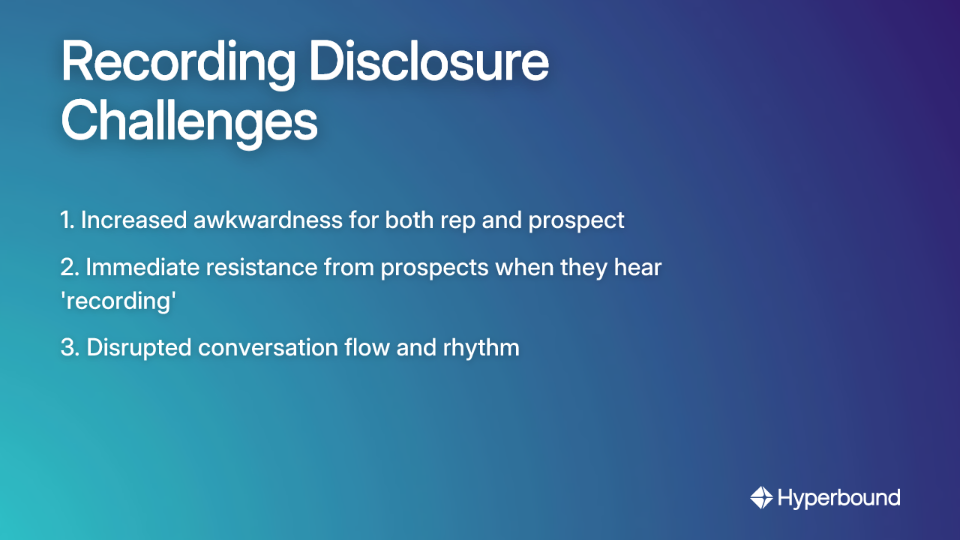
Despite these challenges, data shows that certain opening structures significantly outperform others, even with the recording disclosure included:
This structure follows a simple formula:
Example Script: "Hi [Name], this is [Your Name] with [Company] on a recorded line. Full disclosure, this is a cold call, and I know you hate receiving them, but do you have 30 seconds so I can explain why I called?"
This approach works because it's honest and disarms the prospect. The recording disclosure becomes just another element of your transparency, rather than a separate awkward statement.
This approach shifts focus away from the "cold" nature of the call by implying a connection.
Example Script: "Hey [Name], this is [Your Name] from [Company] on a recorded line. That name ring a bell? (They say no)... No problem. I know there's never a good time for a cold call, but I can explain why I'm calling in 17 seconds. If you don't like it, I'll hang up on myself. Sound fair?"
This approach is pattern-interrupting and gives the prospect control, making the recording disclosure less jarring.

There are two schools of thought on when to disclose that you're recording the call:
How it works: Weave the disclosure into your first 5-10 seconds as shown in the scripts above.
Pros: Gets the legal requirement out of the way, demonstrates transparency, and prevents having to interrupt the flow later.
Cons: Can be jarring if not delivered confidently.
Expert advice: "Just say it confidently and quickly then move on. Most people will not make it a big deal."
How it works: "Get through the intro and your couple starter questions, build a little rapport and then let them know like 4-5 minutes in."
Pros: The prospect is more invested in the conversation after a brief connection is made.
Cons: Carries a legal risk in two-party consent states if the recording starts before disclosure. Can feel deceptive if not handled smoothly.
The consensus among high-performing sales professionals? "I've seen it done two ways and both can be successful if done properly." The key difference-maker is your tone and delivery.
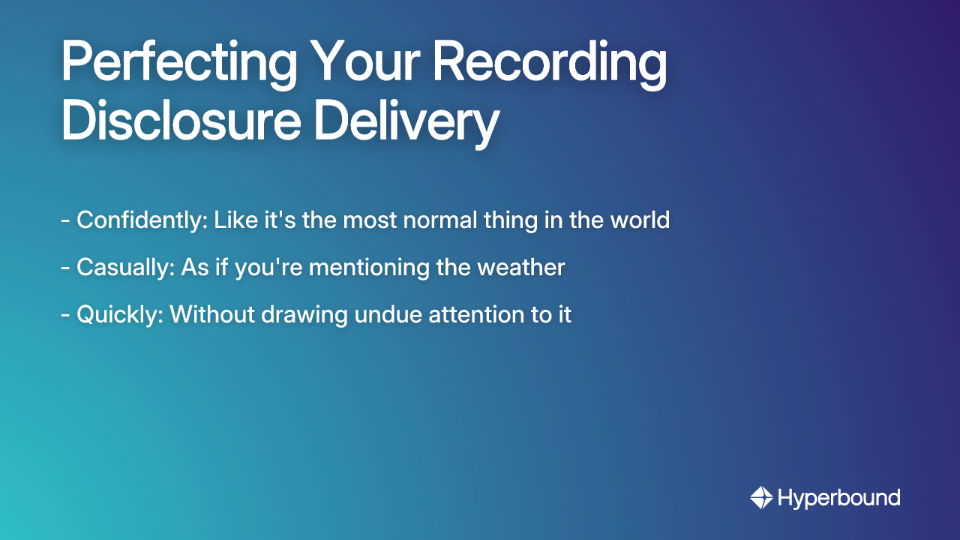
When it comes to recording disclosures, "tone is everything in sales anyways," as one experienced cold caller puts it. The disclosure should be delivered:
One effective approach: "Say it like it's a favor for you." This subtle reframing can turn the disclosure from an awkward legal requirement into something that benefits the conversation.
If you're skeptical about which approach works best, the answer is simple: test it yourself. A/B testing different opening scripts with your recording disclosure can reveal surprising insights specific to your industry and prospect base.
Here's what the data generally shows:
.png)
These numbers will vary based on your industry, but they illustrate an important point: how you integrate the disclosure matters significantly more than the fact that you have to include it.
While opening lines are crucial, they're just the beginning of your cold calling strategy. To truly measure success, track these funnel metrics:
To put this in perspective:
The right opener with a seamlessly integrated disclosure can dramatically improve your reach rate, which has a cascading effect on your entire sales funnel.
The most successful sales professionals don't see recording disclosures as obstacles—they view them as opportunities to demonstrate professionalism and build trust.
When a prospect hears "This call is being recorded" delivered with confidence, they subconsciously register that:
In other words, what seems like friction can actually become a feature that differentiates you from less professional competitors.
The key to a successful cold call opening with a recording disclosure comes down to four principles:
Remember that 93% of leads convert after the sixth call attempt, yet 44% of salespeople give up after just one attempt. A well-crafted opening that handles the recording disclosure effectively gives you a significantly better chance of keeping prospects on the line—not just for the first call, but for the follow-ups that actually lead to conversions.
The recording disclosure doesn't have to be the kiss of death for your cold calls. When handled properly, it's just another opportunity to demonstrate your professionalism and separate yourself from the competition. So next time you pick up the phone, don't let your cold call opening be dead on arrival—let it be the beginning of a successful sales conversation.
You must disclose that a call is being recorded primarily to comply with wiretapping laws in many states, which require all parties on the line to consent to being recorded. Failing to disclose can expose your company to significant legal risks. Beyond legal compliance, it's also a matter of professional transparency that helps build trust with the prospect.
The best way is to integrate the disclosure seamlessly into a proven opening structure, such as the Permission-Based or Familiarity Opener. For example: "Hi [Name], this is [Your Name] with [Company] on a recorded line. Full disclosure, this is a cold call...". This approach is honest, disarms the prospect, and treats the disclosure as a normal part of your introduction rather than an awkward legal statement.
The two most effective strategies are to either disclose immediately within the first 10 seconds or after building a small amount of rapport within the first few minutes. Immediate disclosure is transparent and gets the legal requirement out of the way. Disclosing after a brief warm-up can make the prospect more receptive but carries a legal risk in two-party consent states if the recording began before the disclosure.
The key is to deliver it with a confident, casual, and quick tone. Your delivery matters more than the words themselves. Practice saying it as if it's the most normal thing in the world, like mentioning the weather. A confident tone signals professionalism and can build subconscious trust.
If a prospect objects, respect their wishes immediately and offer an alternative. You can say, "No problem at all, I can turn the recording off," (if your system allows) or "I understand completely. Would you prefer if I send you an email with this information instead?" The priority is to respect their privacy and maintain a positive interaction, even if it means ending the call.
Yes, integrating your recording disclosure into a well-crafted opening script can significantly improve your success rate by reducing immediate hang-ups. Data shows that a smooth, integrated disclosure can cut hang-up rates compared to a disjointed one. This improves your reach rate, which positively impacts your entire sales funnel.











Use Cases
Legal