You've set up a ChatGPT widget on your sales landing page with high hopes. After all, the buzz around AI chatbots promises 24/7 lead qualification, instant answers to prospect questions, and a frictionless buying experience. But as weeks go by, you're left wondering: Are these AI conversations actually translating to closed deals, or are they just creating more noise in your sales pipeline?
"One of the hardest parts of scaling sales is the need to customize to the prospect," notes a sales professional on Reddit. This personalization paradox sits at the heart of modern B2B sales challenges – the more you grow, the harder it becomes to deliver the tailored experiences buyers expect.
ChatGPT-style widgets aim to solve this dilemma by automating personalized interactions at scale. But the question remains: Do they actually help close deals?
The data makes a compelling case for AI chat integration on sales pages:
Beyond the numbers, AI widgets are changing how B2B sales teams operate through several key capabilities:
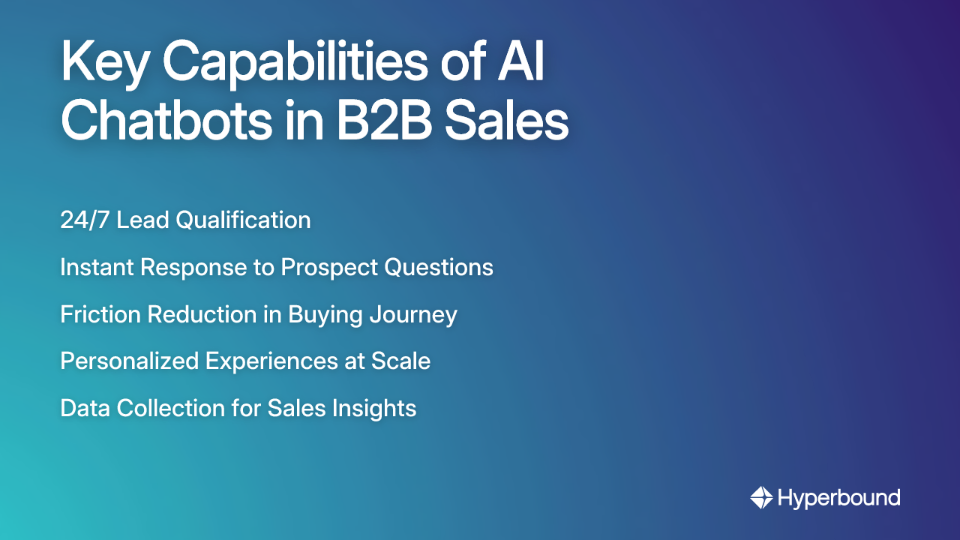
24/7 Lead Qualification: Your sales team sleeps, but your AI Research Agent never does. It can engage visitors, answer questions, and identify high-intent buyers at 3 AM just as effectively as at 3 PM.
Friction Reduction: Today's B2B buyers expect immediate answers. When a prospect lands on your page with a specific question about integration capabilities or pricing for their unique needs, waiting until "someone gets back to them" creates unnecessary friction that kills deals before they start.
Personalized Landing Pages at Scale: The most sophisticated implementations can dynamically adjust content based on visitor behavior and known data points, creating semi-personalized experiences without manual effort.
Many companies deploy chatbots as a trendy tech feature without strategic integration. One sales professional laments, "I was doing this manually in my prospecting process. Real pain in the ass." The right AI implementation can alleviate this pain, but success depends on thoughtful execution:
Before implementation, determine what you want your ChatGPT widget to achieve:
These goals will dictate how you configure, train, and measure your AI assistant.
"The Research Agent might be tricky depending on the quality and quantity of input data," warns one sales professional. This is the most critical implementation step.
A generic chatbot is worse than useless—it actively damages trust. Your AI needs comprehensive training on:
The more thoroughly you train your AI on high-quality, sales-relevant content, the more effectively it can qualify leads and address prospect concerns.
Your chatbot shouldn't operate in isolation. Set up real-time alerts to notify reps when a high-intent buyer is on the site. Ensure qualified leads and their chat transcripts are automatically routed into your CRM with appropriate Custom Objects to capture the conversation context.
This integration ensures smooth handoffs between AI and human touchpoints in the sales process.

Never trap a prospect in an endless AI loop. Implement clear escalation paths for:
The best implementations use AI to qualify and engage but know when to bring in the human experts—and ensure those experts are prepared to turn a smooth AI handoff into a closed deal.
Don't get distracted by vanity metrics like "total conversations." Focus on revenue-centric KPIs that tie directly to your pre-enabling goals:
Despite their capabilities, AI chatbots have clear limitations. As one sales veteran put it, "Realistically once you're in an industry long enough you just know your prospects problems by TALKING to people." This human insight remains irreplaceable in complex B2B sales.
The most successful organizations recognize that AI and humans excel at different aspects of the sales process. Your ChatGPT widget should handle initial qualification and information sharing, but human reps need to take over in several key scenarios:
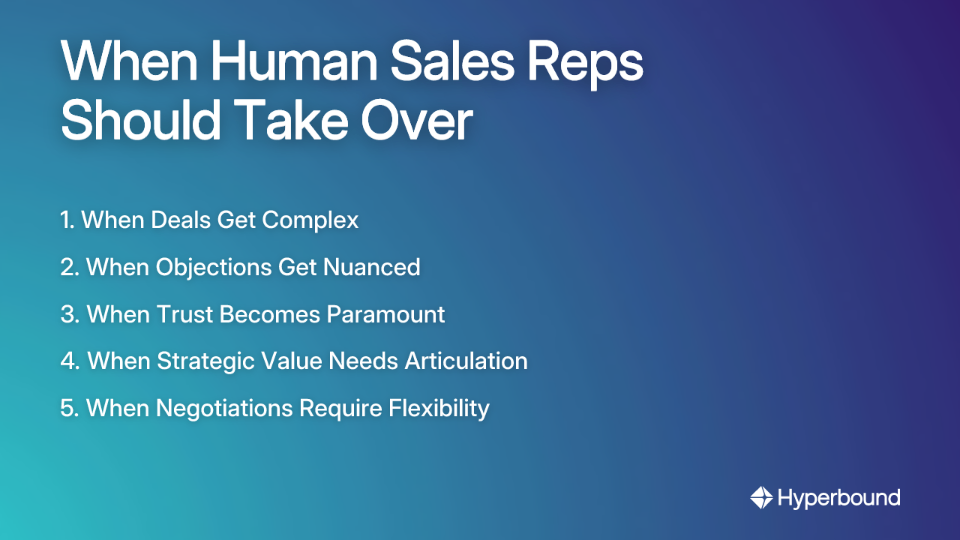
For enterprise deals with custom requirements, multiple stakeholders, or significant strategic implications, human expertise is non-negotiable. Your AI can gather preliminary information, but a skilled rep needs to navigate the complexities of enterprise buying committees.
While AI can handle standard objections using your battle card knowledge, sophisticated buyers often raise nuanced concerns that require creative responses and real-world experience. Human reps can read between the lines and address the underlying concerns that prospects may not explicitly state.
High-stakes purchases require trust that AI simply cannot build. When a prospect is considering investing significant budget in your solution, they want reassurance from a human who can be held accountable for promises made during the sales process.
The handoff from AI to human represents a critical moment in the sales process. An unprepared rep can quickly undo all the goodwill and momentum built by your AI assistant.
This is where sales readiness platforms like Hyperbound become invaluable. Once your ChatGPT widget has qualified a lead and surfaced their key pain points, your sales rep needs to be fully prepared to address those specific concerns.
Hyperbound's AI Sales Roleplays allow reps to practice for the exact scenarios your chatbot uncovers—from handling specific objections to delivering a crisp value proposition tailored to different industries. By using AI Real Call Scoring, managers can ensure that conversation quality remains high when reps engage these AI-qualified leads.
So, do ChatGPT widgets actually help close deals? The answer is a qualified yes—when implemented strategically as part of a holistic sales approach.
AI chatbots excel at:
But they cannot replace the human elements that ultimately close complex B2B deals: empathy, creativity, relationship building, and the ability to navigate organizational politics.
The future of sales isn't AI versus human—it's both working in concert. The most successful organizations use AI to handle repetitive qualification tasks, which frees their highly-skilled (and highly-paid) sales professionals to focus on what they do best: building relationships and closing deals.

By thoughtfully implementing a ChatGPT widget that integrates with your CRM, respects the niche differences in your market, and knows when to hand off to human experts, you can create a sales engine that's greater than the sum of its artificial and human parts.
You should use a ChatGPT widget to increase lead conversion, provide 24/7 support, and reduce friction in the buying process. These AI tools automate initial lead qualification and answer prospect questions instantly, allowing your human sales team to focus on high-value conversations and closing deals.
To properly train an AI sales chatbot, you must provide it with a robust and comprehensive knowledge base. This includes your product documentation, pricing, common objections, competitive information, customer success stories, and technical specifications. The quality and depth of this training data directly determine the AI's effectiveness.
The biggest mistakes to avoid are deploying a generic, untrained bot, failing to integrate it with your CRM, and not providing clear escalation paths to a human rep. A poorly implemented chatbot can damage trust and frustrate prospects, so it's crucial to define clear goals and integrate it thoughtfully into your existing sales workflow.
A human sales rep should take over from an AI chatbot when a deal becomes complex, objections get nuanced, or the prospect asks to speak to a person. AI is best for initial qualification and information gathering, but human expertise is essential for navigating enterprise deals, building trust, and handling high-stakes negotiations.
You measure the success of a sales AI widget by focusing on revenue-centric KPIs, not vanity metrics like the number of conversations. Key metrics include the conversion rate of chats to qualified demos, the quality of leads generated, the impact on your sales cycle length, and the amount of pipeline revenue influenced by the AI.
The main difference is that a ChatGPT widget uses artificial intelligence to understand and respond to user queries automatically, 24/7, while a traditional live chat requires a human operator to be available. AI chatbots can handle a high volume of initial interactions and qualify leads at scale, whereas live chat provides a direct, real-time connection to a person for more complex issues.










Use Cases
Legal