You've spent weeks chasing the elusive "decision-maker." Your sales team has sent countless emails to C-suite executives, hoping for that one reply that will open the door to a deal. But the silence is deafening. Sound familiar?
If you're still training your sales teams to hunt for the mythical single decision-maker who can say "yes" with a stroke of a pen, you're setting them up for failure in today's B2B landscape.
"99% of SDRs and marketers are doing precisely the opposite. They outreach only decision-makers hoping the timing is right, and there is a chance to book a call. In most cases, they never get even a polite 'no' as a reply," notes one sales professional.
The reality? The B2B buying landscape has fundamentally transformed. Success today depends not on finding one person, but on building consensus across a growing committee of stakeholders. This article outlines the training strategy your team needs to adapt and win in this new reality.
Time for a history lesson. Not long ago, B2B purchasing decisions were relatively straightforward. A department head identified a need, secured budget approval from finance, and made a purchase. The entire process might involve just 2-3 people.
Today? The average software buying committee consists of 6 to 10 members across different departments and levels of seniority. In mid-size or enterprise companies (100-500 employees), the number of people influencing a purchase can be around 7.
Several factors have driven this expansion:
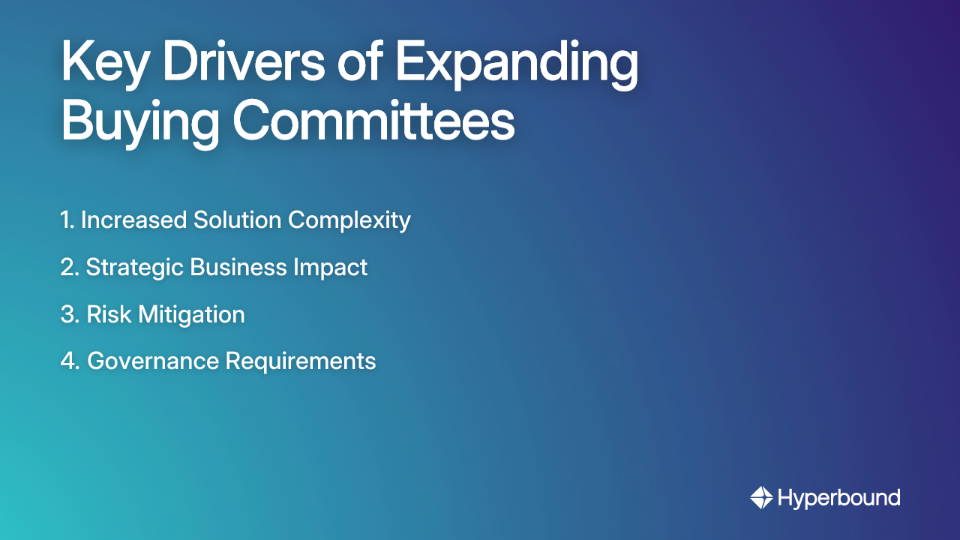
The days of the sole decision-maker are over. Your sales training needs to reflect this new reality.
Before we dive into training strategies, let's clarify who makes up today's buying committee. Many sales professionals express confusion about stakeholder identification: "Are they PMs? Anyone I collaborate with... The end user? I'm confused," as one professional puts it.
Here's a comprehensive breakdown of the key players:
.png)
Now that we understand the complex landscape of modern buying committees, let's explore four essential training principles to help your sales team navigate it successfully.
Train your team to go beyond simply identifying stakeholders. They need to analyze them methodically.
Actionable Training Tips:
Abandon the single-threaded approach that focuses exclusively on executives. Multithreading—engaging multiple stakeholders simultaneously—is essential for building broad support.
Actionable Training Tips:
Many sales professionals have discovered that "once you engage with the lower-grade employees who are not decision-makers but might be interested in your product, [you] generate much more quality opportunities." This insight should be central to your training approach.

Each stakeholder has different priorities, speaks different jargon, and needs different information to make decisions. Your team needs to communicate accordingly.
Actionable Training Tips:
Many sales professionals struggle with discovery calls involving multiple stakeholders. As one rep with nearly a decade of experience admits: "I've worked in this industry for almost 10 years and never had this scenario this early and I'm struggling with how to structure the call."
Actionable Training Template:
Mastering this multi-stakeholder call structure takes practice. Reps need a safe environment to try these techniques, refine their language, and learn to pivot based on different stakeholder responses. AI sales roleplay platforms like Hyperbound allow reps to practice these exact scenarios against dynamic AI buyer personas, ensuring they are prepared for the real thing.
To support your newly trained sales team, introduce methodologies and technologies specifically designed for complex, multi-stakeholder sales processes.
The fundamental shift in B2B buying demands a corresponding shift in how we train our sales teams. The goal is no longer to chase a single, elusive decision-maker. Instead, sales professionals must become orchestrators, skillfully building consensus across diverse and influential stakeholders.
This shift requires more than new tactics—it requires a new mindset. Your training programs should emphasize:
When sales teams understand the complexity of modern buying committees and are equipped with the strategies to navigate them effectively, they transform from frustrated cold-callers into trusted advisors capable of orchestrating complex deals.
The evolution of buying committees from small groups to diverse teams represents both a challenge and an opportunity. Those who adapt their training strategies to this new reality will gain a significant competitive advantage, while those who cling to outdated approaches will find themselves increasingly frustrated by low response rates and stalled deals.
Stop training your team to hunt for kings. Start training them to build coalitions. It's time to update your sales playbook for the way decisions are actually made today.
A B2B buying committee is a group of individuals from different departments within an organization who collectively influence and make purchasing decisions. Unlike the traditional model of a single decision-maker, today's committees include diverse roles such as technical evaluators, end-users, department heads, and financial stakeholders. The goal of the committee is to ensure a new solution aligns with the company's strategic goals, technical requirements, and budget while mitigating risks.
The single decision-maker has been replaced by a buying committee primarily due to the increasing complexity, cost, and strategic impact of modern B2B solutions. Companies form committees to mitigate risks associated with large investments. With solutions affecting multiple departments, input is needed from various stakeholders to ensure compatibility, user adoption, and compliance with governance requirements. This collaborative approach ensures a more thoroughly vetted purchasing decision.
The most common roles on a buying committee include the Champion, the Economic Buyer, the Technical Buyer, End Users, and Department Leaders. Each role has a unique focus: the Champion advocates for your solution internally; the Economic Buyer controls the budget; the Technical Buyer assesses feasibility and integration; End Users are concerned with daily usability; and Department Leaders evaluate the impact on their team's workflows. Identifying and engaging each of these players is crucial.
Multithreading in sales is the practice of building relationships with multiple stakeholders within a target account simultaneously, rather than focusing on a single point of contact. This strategy is essential for navigating modern buying committees. By engaging with different members—from end-users to C-level executives—you build broader support, gather diverse insights, and protect your deal from stalling if your primary contact leaves the company or loses influence.
To effectively engage different members of the buying committee, you must personalize your communication and content to address each stakeholder's specific priorities and concerns. This means speaking the language of each role. For an Economic Buyer, focus on ROI and business cases. For a Technical Buyer, provide security documentation and integration details. For End Users, highlight day-to-day benefits and ease of use. A one-size-fits-all approach will fail to resonate with the diverse needs of the committee.
The biggest mistake sales reps make is continuing to focus all their efforts on finding and convincing a single, high-level decision-maker while ignoring the other influential members of the committee. This outdated, single-threaded approach leads to stalled deals because it fails to build the necessary consensus for a purchase. Successful modern selling requires an orchestration mindset, where the salesperson works to align the entire committee by addressing their collective needs and building widespread support for the solution.










Use Cases
Legal