Your phone rings for the ninth time today. It's the same sales rep who's been calling relentlessly since you filled out that contact form yesterday. Your finger hovers over the "block caller" button as you wonder: Is this really how business gets done?
The alarming truth is that some sales professionals believe bombarding prospects with calls and emails is the path to conversion. But what happens when persistence crosses into pestering? Let's explore what your prospects are really thinking when you're blowing up their phone.
"I had this life insurance guy calling me everyday, sometimes multiple times, for weeks, leaving a message almost every time. It was so annoying, after a while it just kinda became a joke to see how long he would keep going," shared one frustrated prospect in a Reddit discussion.
This phenomenon – let's call it the "Life Insurance Guy Syndrome" – represents everything wrong with overzealous follow-up approaches. When prospects describe your outreach strategy as "trolling" or respond with "Multiple times a day? Smells like desperation and that you're car's out for repo. Never," it's time to reevaluate your tactics.
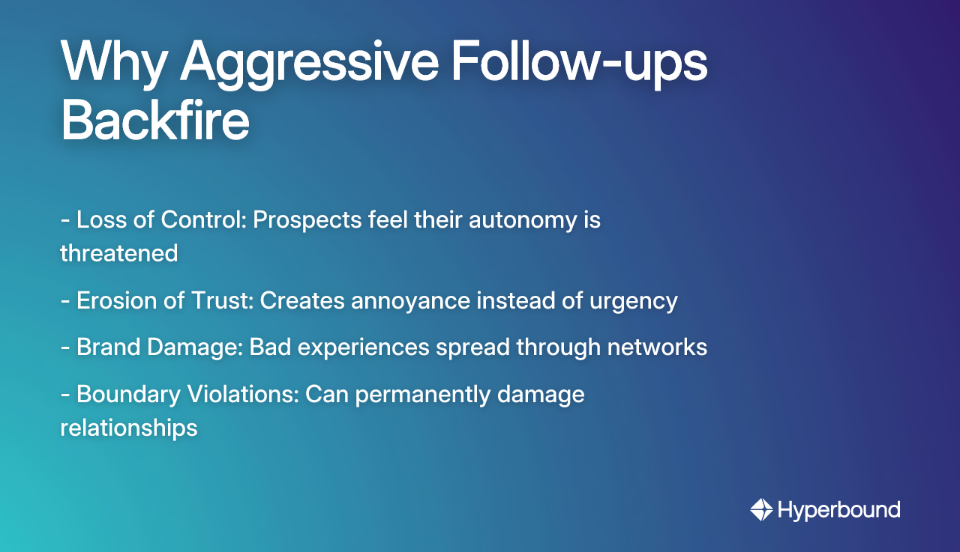
The psychology behind this negative reaction is straightforward:
One particularly egregious example from the user research involved a sales rep who, after being repeatedly ignored, went behind the prospect's back to email a junior technician – a breach of professional boundaries that permanently damaged the relationship.
Despite the negative reactions to aggressive follow-ups, sales reps face a genuine dilemma backed by compelling statistics:
This creates a challenging paradox: follow up too little, and you miss opportunities; follow up too much, and you alienate potential customers. One sales professional in our research posed this question that perfectly captures the dilemma: "How do you know they have zero interest if you're not talking to them? Or if the timing is just bad and they may be ready down the road?"
The answer isn't to stop following up. It's to stop following up badly.

The most effective follow-ups follow the 80/20 rule: 80% value-add and only 20% sales pitch. This transforms you from a pest into a valued resource.
Actionable ways to add value in every touchpoint:
As one sales professional put it, "My follow-ups are about delivering timely insights, not just checking in to see if they're ready to buy."
Forget calling nine times a day. A structured, patient cadence is both more professional and more effective for lead management.
Implement this research-backed schedule from Artisan.co's follow-up guide:

"You need to let stuff cook a bit sometimes. Don't annoy them by calling multiple times a day or even week (depends on the market and sales cycle)," advised one experienced sales professional in our research.
The most respectful approach? Simply ask prospects about their preferred contact method and timing during your initial conversation. This demonstrates that you value their preferences and time.
A staggering 67% of B2B buyers report frustration with non-personalized messages, according to McKinsey research. Generic "just checking in" messages scream mass outreach and are easily ignored.
Instead:
The perfect follow-up email, according to Hiver's guide, should:
Not every lead will convert, no matter how perfect your follow-up strategy. Recognizing when to stop is as important as knowing how to persist.
If you've followed your cadence over several weeks with no response, it's time to send a "goodbye for now" message. This politely closes the loop, confirms you won't be following up further on this specific inquiry, and leaves the door open for them to re-engage in the future.
One sales professional in our research shared their approach: "If I don't get a response after 3 phone calls + 3 e-mails + 1 LinkedIn Message + 1 voicemail, I am not contacting them any further."
The most successful sales reps aren't the most aggressive ones – they're the ones who respect their prospects' time while demonstrating genuine value. By shifting from a high-frequency, low-value approach to a strategic, high-value cadence, you transform the follow-up process from an annoyance to an alliance.
Remember: people don't forget to buy something they truly want or need. Your job isn't to badger them into submission but to stay visible and valuable until the timing is right for them to make a decision.
When you approach follow-ups with respect, patience, and value, closing becomes the natural outcome of a strong relationship. It’s a skill that requires coaching and practice to perfect, but it's the difference between a one-time sale and a long-term alliance.
As one wise sales veteran put it: "The goal isn't to be the loudest voice in their inbox. It's to be the most valuable one."

Most successful sales require between 6 to 8 follow-ups or "touches" to convert a lead. While only 2% of sales are made on the first contact, statistics show that number jumps to 80% after the fifth follow-up. The key is to space these touches out over several weeks using a planned cadence to avoid overwhelming the prospect.
The best sales follow-up frequency is a structured cadence that spaces out contact over several weeks, rather than bombarding a prospect with multiple calls or emails in one day. A proven effective schedule is to make initial contact on Day 1, then follow up on Day 4, Day 8, Day 14, and Day 21. This respects the prospect's time while keeping your solution top-of-mind.
Being too persistent in sales is counterproductive because it erodes trust, makes prospects feel a loss of control, and can damage your brand's reputation. Aggressive tactics generate annoyance and resentment, not urgency. This "Life Insurance Guy Syndrome" pushes potential customers away and can lead them to share their negative experience with their network, causing long-term harm.
You can add value in your sales follow-ups by sharing relevant resources, offering unique market insights, and practicing active listening. Instead of simply "checking in," send helpful content like industry reports, case studies, or educational blog posts that address your prospect's specific challenges. Frame your message around insights from previous conversations to show you've been paying attention to their needs.
A salesperson should consider pausing follow-ups on a prospect after a series of well-spaced attempts across multiple channels over several weeks receives no response. If you have completed your follow-up cadence (e.g., 6-8 touches over 3-4 weeks) without any engagement, it's time to send a polite "goodbye for now" message. This professionally closes the loop and leaves the door open for them to re-engage when the timing is better.
A personalized follow-up message references specific details from previous conversations, their company's recent announcements, or challenges unique to their role or industry. Avoid generic templates and instead try something like, "In our last call, you mentioned struggling with [specific challenge]. I found this case study about how a similar company solved it and thought you'd find it valuable." This shows you're focused on their problems, not just your sales quota.









Use Cases
Legal