
Are you tired of cold outreach that falls flat? With connect rates sometimes dipping below 1%, it's easy to feel like outbound sales is a losing game. The once-reliable methods of cold calling and email blasts are yielding diminishing returns as prospects build stronger defenses against interruptions.
Meanwhile, your sales development representatives (SDRs) are drowning in time-consuming administrative tasks, struggling with high competition in cold emailing, and battling audience fatigue. The result? Slow pipeline growth, mounting costs, and team burnout.
But what if there was a way to break through this cycle without hiring more people or working longer hours?
Enter AI chat systems - not as replacements for your sales team, but as powerful tools to augment their efforts, automate tedious tasks, and engage prospects more effectively. When deployed strategically, these systems can transform your outbound sales approach from frustrating to fruitful.
The landscape of outbound sales has changed dramatically in recent years. As one sales professional on Reddit put it, "Sub 1% connect rate makes outbound almost pointless." This sentiment reflects a growing reality:
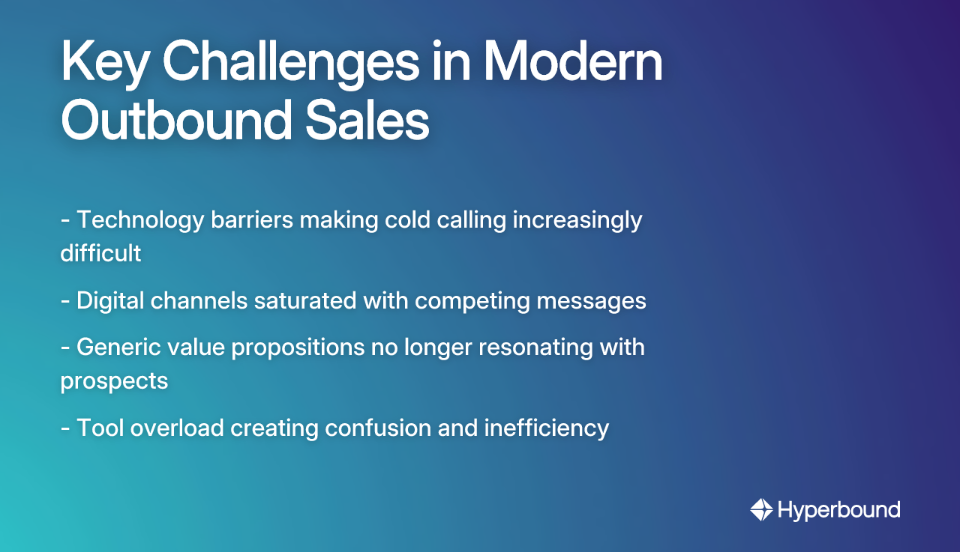
The consequences are clear: SDRs spend excessive time on manual research, data entry, and fruitless outreach attempts. According to UserGems, this leads to slow pipeline growth, inflated customer acquisition costs, and high burnout rates among sales teams.
AI-powered chatbots utilize conversational AI and sales force automation to enable self-service interactions with prospects and customers. But what makes them particularly valuable for outbound sales?
The statistics tell a compelling story:
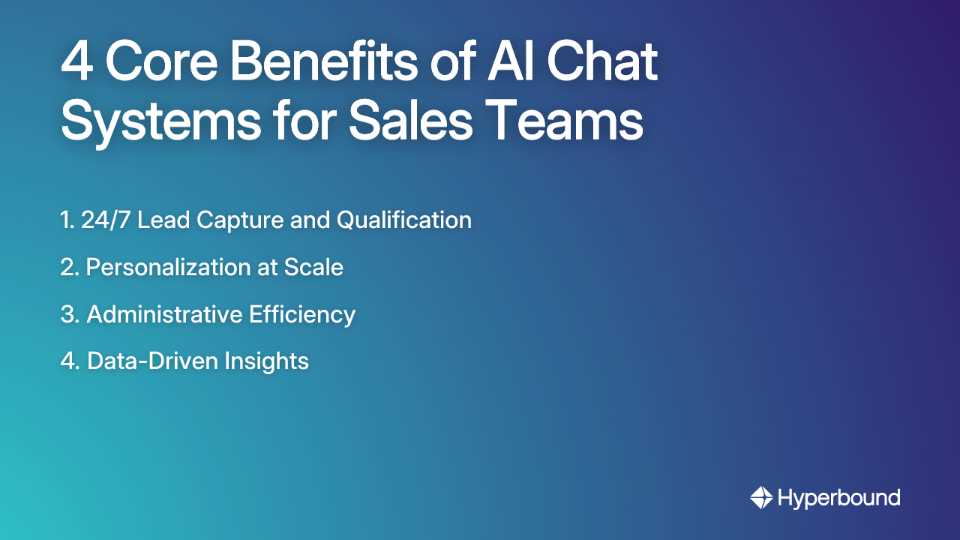
Beyond the numbers, AI chat systems deliver four core benefits that directly address the challenges of modern outbound sales:
Successfully implementing an AI chat system requires a thoughtful approach. Here's a step-by-step framework to guide you:
Before selecting any technology, clarify what you want your chatbot to accomplish:
Be specific about your objectives. For example, rather than "increase leads," aim to "increase qualified leads who match our ICP by 30% within three months."
With your goals defined, evaluate potential platforms based on:
Map out decision trees that guide prospects through qualifying questions and appropriate responses. Consider:
Remember, 46% of customers prefer having the option to reach a human (Zendesk), so design your flow with a seamless transition in mind.
Honesty builds trust. Be upfront that users are interacting with a bot—48% of people find it "creepy" when bots impersonate humans (Zendesk). Consider messages like:
"Hi there! I'm [Bot Name], an AI assistant for [Company]. I can help answer your initial questions and connect you with our team. What brings you here today?"
Regularly review analytics to assess performance and refine your approach:
Use these insights to continuously improve your system's effectiveness.
Let's explore three specific, actionable use cases for AI chatbots in outbound sales:
One of the biggest challenges in outbound sales is efficiently identifying and qualifying leads. AI chatbots excel here by:
This addresses the common pain of "low connect rates on cold calls" by focusing your team's energy on pre-qualified prospects who have already shown interest.
Generic value propositions are losing resonance with prospects, as noted in user research. AI can help by:
Sales professionals report that "time-consuming administrative tasks distract from actual selling efforts" (Reddit). AI chatbots can reclaim this lost time by:
This automation can save sales professionals over 2 hours daily (Huble), allowing them to focus on strategic, high-value interactions.
Traditional automation tools often come with significant challenges: costly subscriptions, steep learning curves, data quality issues, and complex integration requirements. Modern AI chat systems aim to solve these problems while delivering specific benefits for outbound sales.
Here are five top options to consider:
As you implement AI chat systems, be aware of these potential challenges:
Many companies misuse chatbots, focusing solely on customer support rather than sales generation (Reddit). Design your workflows specifically for lead qualification and sales funnel progression.
Data synchronization and API integration challenges can limit effectiveness. Ensure your chosen platform integrates well with your existing tech stack and test thoroughly before full deployment (Sobot.io).
With increasing regulation like GDPR, ensure your chatbot collects and stores data appropriately. Be transparent about data usage and obtain necessary permissions to build trust with prospects (Sobot.io).
While automation is powerful, 75% of customers expect to have the option of speaking with a human (PatentPC). Limit bot responsibilities to basic tasks and ensure complex issues are escalated appropriately.
AI chat systems aren't about replacing your sales team—they're about empowering them to work smarter, not harder. By automating repetitive tasks, personalizing outreach at scale, and qualifying leads efficiently, these tools address the most pressing challenges in modern outbound sales.
The goal is to free your SDRs from administrative burdens so they can focus on what humans do best: building relationships, understanding complex needs, and closing deals.
And to ensure your team excels in those critical human interactions, AI-powered coaching platforms are the final piece of the puzzle. Tools like Hyperbound analyze your top performers' winning behaviors and create realistic AI roleplays for your entire team to practice. By mastering everything from discovery calls to objection handling in a safe environment, your reps will be fully prepared to turn the opportunities created by your AI chat system into closed deals.
As one successful sales leader put it, "Treat calls as a follow-up to context, not a cold interruption." (Reddit) AI chat systems provide that context, warming up prospects before human interaction and making every conversation more meaningful.
By implementing the framework outlined in this guide and carefully selecting the right tools for your specific needs, you can transform your outbound sales approach from frustrating to fruitful—and reclaim the effectiveness that traditional methods have lost.
An AI chat system for sales is a tool that uses conversational AI and automation to engage with potential customers, qualify leads, and streamline sales processes. It acts as a digital assistant for your sales team, handling initial interactions on your website or other digital channels to capture and qualify leads 24/7.
AI chatbots improve outbound sales primarily by automating lead qualification, personalizing outreach at scale, and handling administrative tasks, which saves significant time for sales reps. This allows your team to focus on high-intent, pre-qualified prospects, leading to higher conversion rates, increased sales opportunities, and a more efficient sales pipeline.
No, AI chatbots are not designed to replace your sales team but to augment their capabilities. The goal is to automate repetitive, low-value tasks like initial lead capture and scheduling, freeing up your sales development representatives (SDRs) to focus on complex, high-value activities such as building relationships, understanding nuanced customer needs, and closing deals.
The first step is to clearly define your goals, such as what you want the chatbot to accomplish (e.g., book demos, qualify leads against your Ideal Customer Profile). Next, choose a platform that fits your needs and integrates with your existing tools like your CRM. Finally, design the conversation flow with clear questions and a seamless handoff to a human agent.
A sales chatbot is specifically designed to generate and qualify leads for the sales funnel, with goals like booking meetings or routing prospects to the right sales rep. In contrast, a support chatbot is focused on resolving customer issues, answering questions about existing products, and providing post-sale assistance to improve customer satisfaction.
To ensure a positive user experience, be transparent that the user is interacting with a bot. Design conversational flows that are helpful and natural, and always provide a clear and easy option to connect with a human representative. The bot should handle initial qualifying questions, then seamlessly transition the prospect to a sales rep for more complex conversations.








Use Cases
Legal