"The beginning is the most important part of any work." – Plato
You've just taken on a new sales leadership role, or perhaps you're tasked with improving your team's onboarding process. Either way, you're facing a critical challenge: how do you effectively ramp up new sales talent while setting realistic expectations that lead to long-term success?
The stakes couldn't be higher. According to industry data, ineffective onboarding is one of the primary reasons for high turnover in sales organizations. New hires often feel they're being set up for failure due to inadequate training, poor support systems, and unrealistic performance timelines that don't align with actual sales cycles.
As one sales professional noted on Reddit, "Most places have NO REAL ON-BOARDING. If onboarding takes 4 weeks and the company's usual sales cycle is 4-6 months, the new hire is disadvantaged from the start." This sentiment echoes across forums where sales professionals share their frustrations about being forced to self-navigate complex products and processes without proper guidance.
A sales ramp plan is a structured approach that allows for a gradual increase in a salesperson's commission or target earnings during their initial employment period. According to PaletteHQ, its purpose is to give new hires adequate time to learn products, processes, and customer relations before being held to a full quota.
A well-designed 100-day ramp plan serves as a blueprint for sales leaders to build a structured, supportive, and high-performance environment from day one. It balances the company's need for productivity with the reality that new hires need time to become fully effective.
This comprehensive guide will walk you through creating an effective 100-day ramp plan that addresses the common pain points experienced by sales teams and sets both new hires and leaders up for sustainable success.
Before diving into the specifics of your 100-day plan, it's crucial to understand what "ramp-up time" actually means and how to calculate it realistically.
Ramp-up time refers to the period a new sales representative needs to become fully trained and productive after being hired. According to XactlyCorp, tracking this metric is essential for evaluating training effectiveness, accurate sales forecasting, and planning for team capacity.
One of the biggest mistakes organizations make is underestimating how long it takes for a new hire to reach full productivity. Industry benchmarks from HubSpot indicate that the average ramp time for new sales reps is 3.2 months. However, this can vary significantly depending on your industry, product complexity, and sales cycle length.
To create a data-driven 100-day ramp plan, consider these three calculation methods:
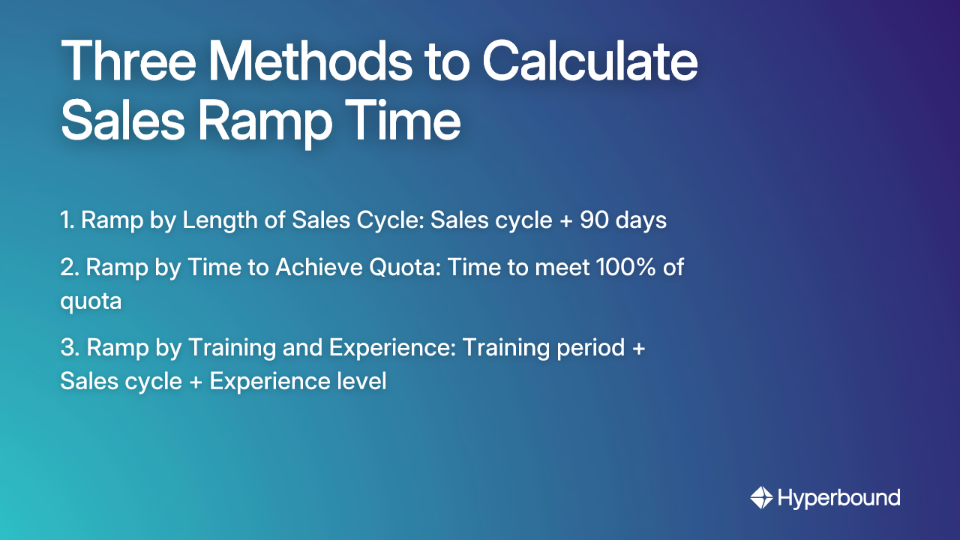
Formula: Sales Ramp Up Time = Average Length of Sales Cycle + 90 Days
This approach acknowledges that reps need to experience at least one full sales cycle, plus additional time for training and onboarding. For example, if your typical sales cycle is 45 days, your total ramp time should be around 135 days.
The additional 90 days serve as a buffer for training, learning your Ideal Customer Profile (ICP), and understanding the product ecosystem before the pressure of full quota kicks in.
Formula: Sales Ramp Time = Average Length of Time to Meet 100% of Quota
This calculation looks at historical data of how long it typically takes new hires to reach their full quota. If you find that most successful reps take 4 months to hit 100% of quota, then your ramp plan should reflect this reality.
During this period, consider implementing a draw against commission model to provide financial stability for your new hires while they build their pipeline.
Formula: Sales Ramp Time = Training Period + Length of Sales Cycle + Level of Experience
This nuanced approach recognizes that one size doesn't fit all. A junior rep might need more handholding than a seasoned Account Executive (AE). Your ramp plan should adjust accordingly, potentially extending beyond 100 days for less experienced hires.
With a realistic understanding of ramp time, let's break down an effective 100-day plan into distinct phases. This framework, inspired by Stratechi's 100-day plan, provides a step-by-step guide for both new sales leaders and those implementing onboarding programs.
The work begins before your new role or team member's first day. This preparatory phase is often overlooked but is critical for a strong start.
For Leaders:
For Onboarding Programs:
The first 50 days are about absorbing information, building relationships, and identifying opportunities without making drastic changes.
For Leaders:
For Onboarding Programs:
The second half of your 100-day plan focuses on implementing changes based on your diagnosis and driving results.
For Leaders:
For Onboarding Programs:

An effective 100-day ramp plan must also proactively address common sales team challenges. Here's how to integrate solutions for the most frequent hurdles within your plan:
The Problem: One-time training leads to poor knowledge retention. As one sales professional noted on Reddit, "Quality of training is more crucial than the speed at which it is delivered."
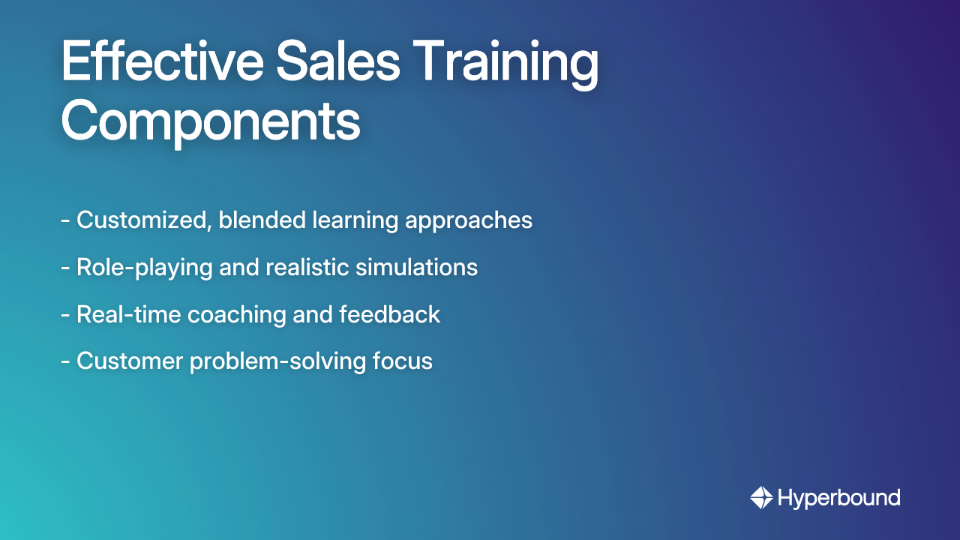
The Solution: Your 100-day ramp plan must include ongoing training, not just initial onboarding. Implement:
The Problem: Misalignment leads to poor lead quality and disjointed customer experiences, frustrating new hires who feel they're working with subpar resources.
The Solution: During the first 50 days of your plan:
Learn more about aligning sales and marketing teams to ensure new hires have the support they need.
The Problem: Low morale directly impacts performance and retention, especially during the challenging ramp-up period.
The Solution: Use your 100-day plan to build a positive culture:
Explore additional strategies to motivate your sales team during the critical ramp period.
The Problem: Teams are often hesitant to adopt new tools like CRM or AI platforms, creating inefficiencies and data gaps.
The Solution: During your diagnosis phase:
For a successful technology rollout, follow these best practices.
A successful 100-day ramp plan requires clear accountability structures. This directly addresses the user research theme of needing robust accountability systems.
The ramp plan is not just a schedule; it's a compensation and performance agreement. According to PaletteHQ, you should:
For example:
This gradual approach creates clarity and removes ambiguity, addressing a key pain point for new hires who often feel overwhelmed by unrealistic early expectations.
Frame the ramp plan as a developmental tool, not a punitive one:
As one sales leader advised on Reddit, "Expectations setting (and re-setting), Accountability convos, and more difficult follow-up convos are key." These ongoing dialogues ensure new hires never feel lost or unsupported.
Modern sales technology can significantly enhance your accountability framework:
With the right technology, accountability becomes a continuous process rather than a periodic review, allowing for real-time course correction.
Individual accountability works best within a supportive team environment:
As noted in a Reddit discussion, "New hires need team support and a collaborative culture to succeed." Your accountability framework should encourage collaboration as much as individual performance.
A well-structured 100-day ramp plan is far more than an onboarding checklist or a simple timeline. It's a strategic framework for diagnosis, planning, execution, and team development. Whether you're a new sales leader establishing your vision or designing an onboarding program for your team, this comprehensive approach addresses the most common pain points identified by sales professionals:
Remember what one experienced sales leader shared: "If onboarding takes 4 weeks and the company's usual sales cycle is 4-6 months, the new hire is disadvantaged from the start." Your 100-day ramp plan recognizes this reality and creates the space and structure for genuine, sustainable success.
By implementing a comprehensive ramp plan that incorporates realistic timelines, phased responsibility, ongoing training, and clear accountability, you'll transform the often chaotic onboarding experience into a predictable pathway to excellence.
For further reading on optimizing your sales performance management, explore the Accelerate Your Sales Performance Management Journey guide from Xactly.
The first 100 days set the tone for everything that follows. Make them count by implementing a thoughtful, structured approach that balances high expectations with the support needed to meet them. Your team's success—and your own—depends on it.

A sales ramp plan is a structured onboarding program that gradually increases a new salesperson's quota and responsibilities over a set period, typically 100 days. It gives them time to learn the product, processes, and market before being held to full performance expectations, reducing early turnover and setting them up for long-term success.
A 100-day ramp plan is important because it provides a realistic timeframe for new hires to become fully productive, aligning expectations with the reality of sales cycles. This structured approach improves training effectiveness, reduces new hire turnover, boosts team morale, and allows for more accurate sales forecasting.
You can calculate a realistic sales ramp-up time by adding 90 days to your average sales cycle length, using the historical average time it takes new hires to reach 100% of their quota, or creating a formula that combines the training period, sales cycle length, and the new hire's experience level. A data-driven approach is crucial for setting achievable goals.
A typical 100-day sales ramp plan is broken into three phases. Phase 0 (Before Day 1) involves preparation and groundwork. Phase 1 (Days 1-50) focuses on listening, learning, and diagnosing the environment. Phase 2 (Days 51-100) is about developing strategy, driving change, and executing on key opportunities based on the initial diagnosis.
Compensation during a ramp-up period should be structured to provide financial stability while incentivizing learning and gradual performance. This often involves a guaranteed draw against future commissions or a tiered quota system where the target increases progressively—for example, 25% of quota in the first month, 50% in the second, and 75-100% by the end of the ramp period.
After the 100-day ramp plan concludes, the salesperson is expected to be fully productive and operating at 100% of their quota. The focus then shifts from foundational onboarding to continuous development, which includes ongoing coaching, advanced skills training, and performance management based on established KPIs.
What challenges have you faced when onboarding new sales team members? Share your experiences and best practices in the comments below!









Use Cases
Legal